

Ghana’s petroleum revenue debate must now move beyond transparency and disclosure to a harder measure of success: whether the country’s oil wealth is producing tangible and lasting development outcomes, the Deutsche Gesellschaft für Internationale Zusammenarbeit (GIZ) has said.
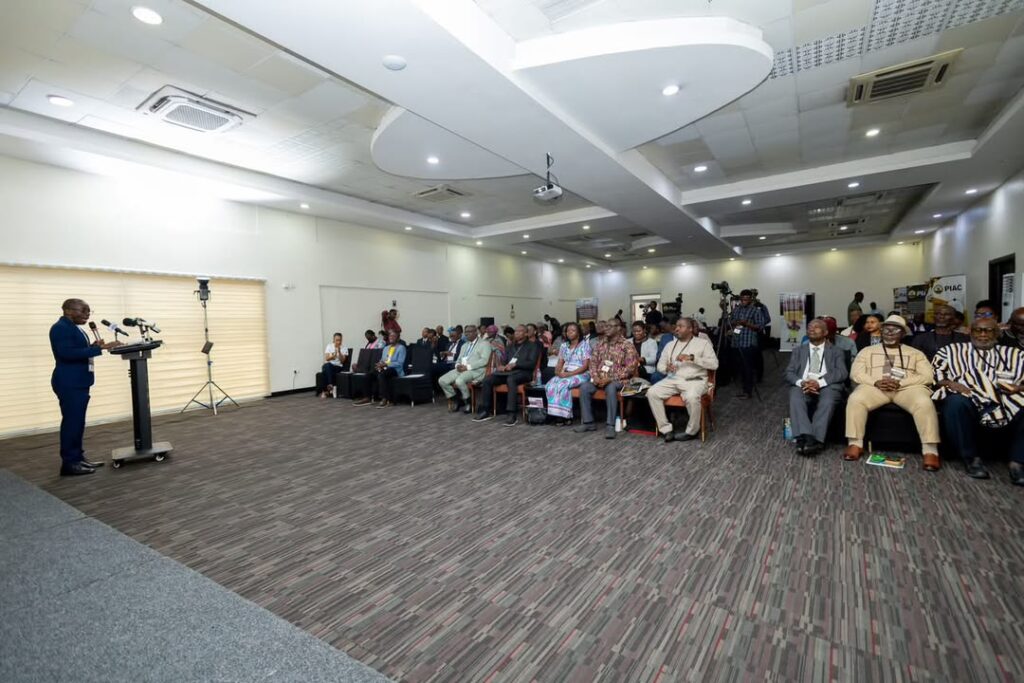
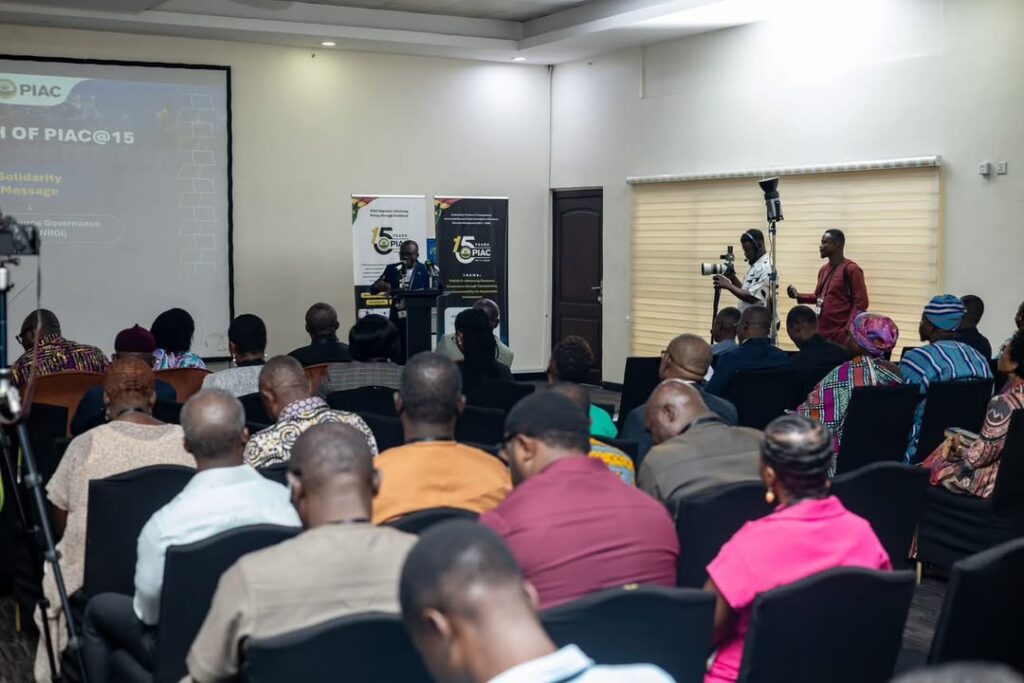
The call came from Mr Kweku Batin of GIZ at the launch of activities marking the 15th anniversary of the Public Interest and Accountability Committee (PIAC), an institution established under Ghana’s Petroleum Revenue Management Act to monitor and evaluate the management and use of petroleum revenues.
Mr Batin said PIAC’s 15-year record had helped strengthen public scrutiny of Ghana’s petroleum revenue regime, while also bringing questions about the use of oil revenues closer to citizens.
The anniversary is being observed under the theme, “Advancing Resource Governance through Transparency and Accountability for Sustainable Development,” placing the focus not only on how petroleum revenues are accounted for but also on the development value ultimately generated from them.
“Fifteen years of asking difficult questions. Fifteen years of refusing to look away. For 15 years, PIAC have reminded us that Ghana’s natural resources belong to the people of Ghana and must ultimately serve their interest.”
Kweku Batin, GIZ
The significance of that argument has grown as Ghana’s petroleum sector enters a more challenging phase.
Oil production has been declining from mature fields, fiscal pressures remain important, and the country faces the reality that petroleum revenues are derived from resources that cannot be replenished indefinitely.
That makes the quality of revenue management increasingly important.
Every cedi or dollar generated from petroleum that is poorly allocated, inefficiently spent or tied up in underperforming projects represents more than a missed budget opportunity; it can mean a lost opportunity to convert a finite natural asset into infrastructure, human capital and productive capacity.
From Revenue Disclosure To Real Development Impact
GIZ’s partnership with PIAC has therefore extended beyond institutional support to mechanisms intended to make petroleum accountability more visible to the public.
Mr Batin said GIZ had supported PIAC’s public forums and town hall engagements across Ghana, creating opportunities for citizens outside the policy and administrative centres to question how petroleum revenues are being managed.
“We have supported PIAC in bringing accountability closer to citizens through public forums and town hall meetings across the breadth of the country, ensuring that citizens in every corner of Ghana have a voice in how their resources are managed.”
Kweku Batin, GIZ
The approach is particularly relevant because petroleum revenue management can easily become a technical exercise dominated by budget classifications, statutory allocations and financial reports.
Yet the ultimate test of petroleum revenue governance occurs beyond financial statements.
A road financed with petroleum revenue must be completed and usable.
A health facility must provide the intended service.
An education project must improve access or quality. An energy project must deliver the capacity or reliability for which public funds were committed.
This is where PIAC’s project-monitoring function becomes important.
GIZ has supported inspection visits to projects financed through the Annual Budget Funding Amount (ABFA), allowing petroleum-revenue accountability to extend from financial records to physical infrastructure.
“Accountability must go beyond reports and documents. It must be visible in places where public resources are invested.”
Kweku Batin, GIZ
That principle represents an important evolution in Ghana’s petroleum governance.
Knowing how much revenue was collected and where it was allocated provides only part of the picture.
Determining whether the allocation produced value is the more demanding stage of accountability.
Digital Transparency Expands The Accountability Chain
GIZ has also supported efforts to make petroleum information more accessible through digital platforms.
According to Mr Batin, assistance has included strengthening PIAC’s digital presence, redesigning its website and developing a public data dashboard intended to make petroleum-sector information easier for citizens to access.
“We have also provided assistance towards the strengthening of PIAC’s digital presence and public access to information, including the redesigning of its website and the development of a public data dashboard.”
Kweku Batin, GIZ
The importance of such tools extends beyond convenience.
Petroleum revenue information becomes more useful when journalists, researchers, civil society organisations and citizens can examine allocations, expenditure and project implementation without relying entirely on specialised institutional channels.
Greater accessibility can also strengthen the quality of public debate.
Instead of discussing petroleum revenues only when annual reports or budget statements are released, stakeholders can increasingly track the movement and use of those resources over time.
That matters for Ghana’s energy sector because petroleum revenue decisions are closely linked to wider questions about energy security, infrastructure financing and the country’s transition towards a less hydrocarbon-dependent economy.
Ghana’s Energy Transition Raises The Stakes
The future relevance of petroleum revenue accountability is also being shaped by the energy transition.
Ghana is attempting to maximise the economic value of its remaining petroleum resources while simultaneously expanding renewable energy and strengthening the electricity and gas sectors.
That creates a narrow policy window for ensuring that petroleum revenues support investments capable of generating value beyond the life of oil production.
The implication is straightforward: petroleum revenue should increasingly be viewed as a temporary financial resource that can help build more permanent economic assets.
For PIAC, this places greater emphasis on the quality of its recommendations and the extent to which government institutions respond to identified weaknesses.
“Transparency is not a threat to good governance, but a foundation of good governance.”
Kweku Batin, GIZ
That foundation, however, becomes meaningful only when transparency leads to corrective action.
A committee can identify weaknesses in petroleum revenue management, publish findings and engage citizens, but the broader governance system must still act on those findings.
Otherwise, transparency risks becoming an exercise in disclosure without sufficient consequence.
Fifteen Years On, The Standard Must Rise
Mr Batin said the 15th anniversary should be regarded as a point of transition rather than the conclusion of PIAC’s mandate.
Ghana’s resource landscape is changing, while petroleum production, fiscal conditions and the global energy system continue to evolve.
Those changes require institutions responsible for resource governance to adapt accordingly.
“Fifteen years is a milestone well celebrated. But it’s not a finish line. It is a larger path for the next chapter.”
Kweku Batin, GIZ
GIZ said its support for PIAC would continue through efforts to strengthen institutional capacity, public engagement and transparent resource governance.

The wider challenge for Ghana, however, extends beyond maintaining an accountability mechanism.
The country has spent more than a decade producing oil and receiving petroleum revenues.
The next stage should be judged increasingly by what those revenues have helped Ghana build, rather than simply how effectively the revenues have been reported.
For the energy sector, that distinction is critical.
Declining production means the country cannot rely indefinitely on petroleum receipts to finance development.
The value generated from today’s oil resources therefore needs to outlast the resources themselves.
PIAC’s next 15 years will consequently be measured not only by how closely it watches Ghana’s petroleum revenues, but by how effectively that scrutiny contributes to better decisions, stronger public accountability and more productive use of the country’s remaining oil wealth.
GIZ’s message is ultimately a simple but important one: transparency is the mechanism; measurable development must be the outcome.
READ ALSO: GRA Pushes for Data-Driven Collection to Improve Tax Reforms