Public Interest and Accountability Committee (PIAC) has called on the Government of Ghana to urgently design and implement a comprehensive framework aimed at revitalizing investment in the nation’s existing petroleum-producing fields to reverse the current downward trend in output.
This appeal follows the release of the 2025 PIAC Annual Report, which highlights a concerning sixth consecutive year of declining crude oil production since 2019, a situation that has severely impacted national petroleum receipts.
By tasking the Petroleum Commission with the development of this strategic framework, PIAC seeks to address the persistent structural and investment bottlenecks that have hindered the sector’s ability to reach its full resource potential.
“PIAC urges the government, through the Petroleum Commission, to develop a framework to improve investment in existing producing fields, particularly the TEN field where production has underperformed initial projections, improve the existing regulatory and fiscal frameworks, and data acquisition in new basins.”
PIAC 2025 Report

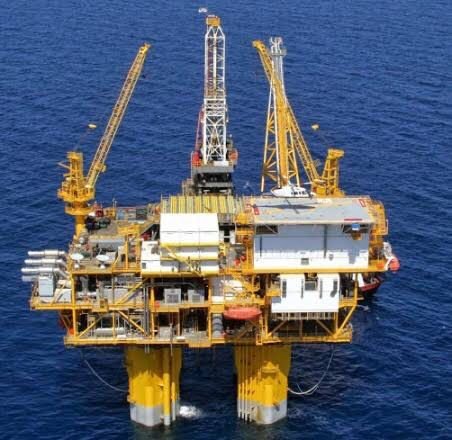
Expanding on this directive, the Committee emphasized that the proposed framework must prioritize enhancing the performance of underperforming assets, with a specific focus on the Tweneboa, Enyenra, and Ntomme (TEN) field.
Current data indicates that the TEN field has consistently fallen short of its initial production projections, necessitating a medium-term investment plan to improve reservoir interconnectivity and extend the field’s operational lifespan.
Furthermore, PIAC stresses that a robust framework should not only involve technical upgrades but also a total overhaul of existing regulatory and fiscal structures to make Ghana a more competitive destination for global oil and gas capital.
As the 2025 Annual Report notes, “these gains were tempered by a sixth consecutive decline in crude oil production since 2019,” making the need for data acquisition in new basins and policy consistency more critical than ever.
Strategic Framework as a Catalyst for Production Recovery
A structured investment framework serves as the primary engine for reversing production declines by providing “policy support” and “long-term resilience” to an aging upstream sector.
When the government improves the “regulatory and fiscal frameworks,” it reduces the risk profile for International Oil Companies (IOCs), encouraging them to deploy advanced secondary and tertiary recovery technologies in mature fields like Jubilee and TEN.
Clear framework allows for better “data acquisition in new basins,” which reduces geological uncertainty and attracts the fresh capital necessary to drill more appraisal wells.
By creating a predictable environment for “renewing upstream investment strategies,” the government can ensure that fields which have “underperformed initial projections” receive the technical interventions required to boost daily output and maximize the recovery factor.
Enhancing Field Interconnectivity and Reservoir Performance

The technical health of Ghana’s reservoirs remains a top priority for PIAC, particularly regarding the “interconnectivity of the TEN reservoir.”
A dedicated medium-term investment plan would facilitate the infrastructure upgrades needed to link separate reservoir compartments, thereby optimizing pressure maintenance and fluid flow.
“There is the need for a medium-term investment plan by the Government to improve the interconnectivity of the TEN reservoir for performance improvement,” the report highlights, suggesting that such targeted engineering work is the only way to secure the “extended life of the Field.”
These enhancements are expected to stabilize production levels, ensuring that the state can rely on a steady stream of revenue rather than the “significant fall in petroleum receipts” witnessed during the last reporting period.
Regulatory Reforms and Industrial Gas Pricing Sustainability

Beyond physical production, the financial sustainability of the entire value chain depends on “institutional and regulatory reform” to eliminate market distortions.
PIAC has explicitly tasked the Ministry of Energy and Green Transition to “clarify the policy framework governing industrial gas pricing” to prevent “revenue leakage” that threatens the stability of the Ghana National Gas Limited Company (GNGLC).
By ensuring that gas prices are strictly aligned with “cost-reflective tariffs,” the government can protect the financial health of national utilities while providing a fair pricing model for industrial consumers.
This holistic approach to reform balancing production incentives with fiscal discipline is essential to “unlock its full resource potential” and safeguard Ghana’s economic future in an increasingly competitive global energy market.
READ ALSO : Societe Generale Ghana Tops Losers List