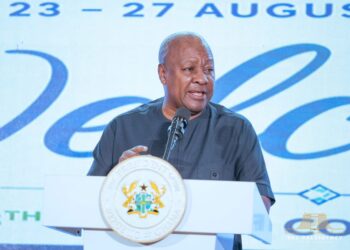
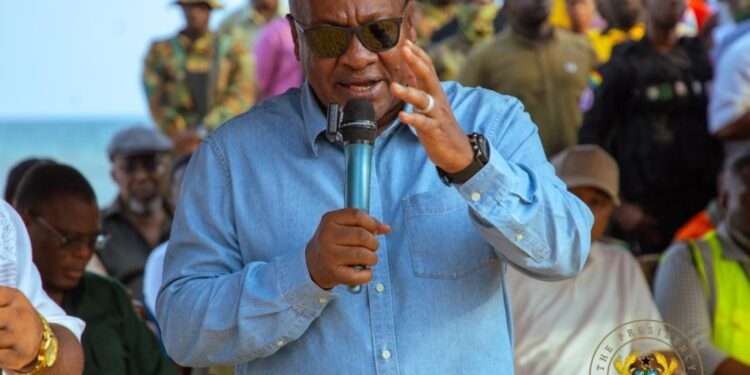
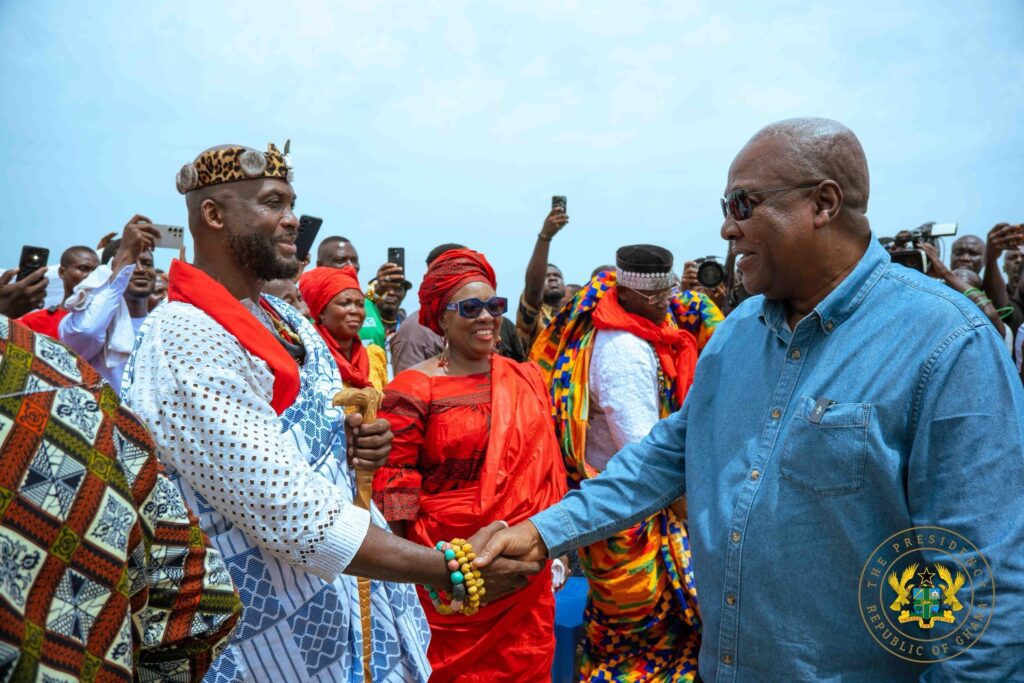
President John Dramani Mahama has visited communities affected by recent tidal waves in Fuveme in the Volta Region, assuring residents that the government will accelerate the implementation of the $150m World Bank-supported West Africa Coastal Areas Management Program aimed at protecting vulnerable coastal communities.
The President toured sections of the affected coastline after reports of the sea breaking through parts of the area, causing concern among residents over worsening coastal erosion and flooding.
We heard that the sea is breaking through, and so today we decided to come and take a look at what is happening. All this area is part of a project area that is called WACA, and it’s a World Bank project.
President John Dramani Mahama
President Mahama pointed to earlier sea defence interventions undertaken by successive governments to protect coastal communities in the Volta Region. He noted that previous administrations had already completed several important coastal protection projects in different parts of the region.
“Earlier, when I was President, we did the Keta sea defence, the whole area,” he stated. The President also recalled that the Rawlings administration undertook the original Keta Sea Defence Project, while his administration later implemented the Blekusu 1 project, with Blekusu 2 currently ongoing.

According to President Mahama, the remaining coastal stretch, including Fuveme, Ketu South, and parts of Anloga, is expected to be covered under the 150 million dollar WACA project.
Sea Defence and Environmental Protection Measures Planned
President Mahama disclosed that the WACA project will involve multiple coastal protection measures intended to reduce the impact of tidal waves and coastal erosion.
“There’s going to be sea defence and they’re also going to be groynes built into the sea to break the currents, the strong waves so that it will come back to the coast in a very gentle manner”.
President John Dramani Mahama
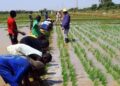
The President further explained that environmental restoration measures would form an important component of the project. “There will also be planting of coconut trees on the beaches in order to stabilise the soil,” he disclosed.
He added that mangrove planting activities would also be carried out within estuary areas to help strengthen natural coastal barriers against sea encroachment. Environmental experts have long identified mangrove restoration and vegetation protection as important strategies for reducing coastal vulnerability and erosion.
President Says WACA Project Delayed by Elections
President Mahama revealed that implementation of the WACA project had stalled temporarily in 2024, mainly due to election-related disruptions. However, he assured residents that work resumed after his administration took office, and significant progress has already been made.
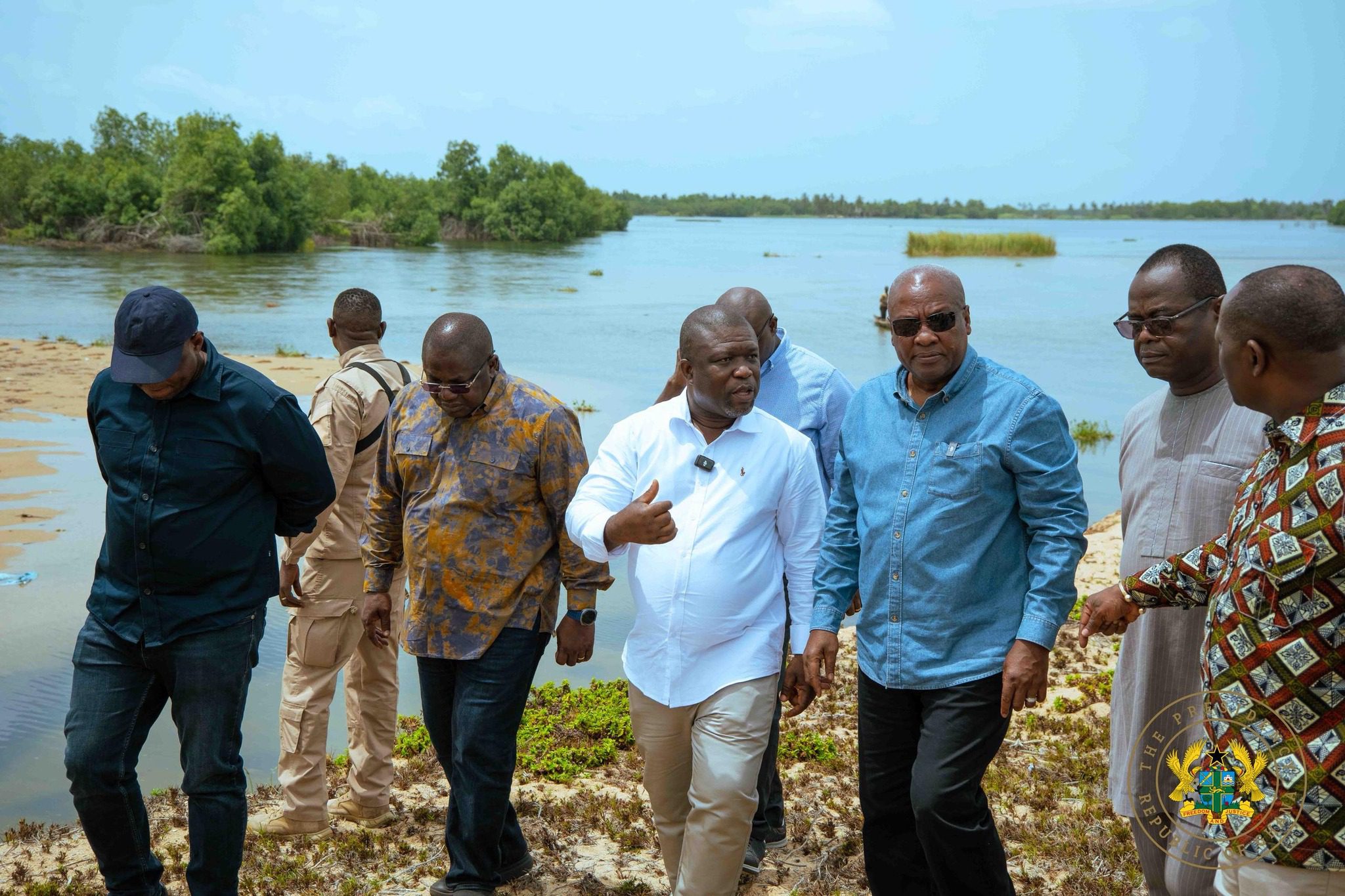
“When we came, we continued it, and so I’m happy to announce that the feasibility study is finished. They are at the design stage. After the design stage, they’ll do the procurements, which is the actual construction of the WACA project.”
President John Dramani Mahama
President Mahama assured residents that the government intends to speed up the implementation to ensure work begins as soon as possible. “I’m sure that very soon we’ll try and speed it up. Very soon, you’ll see that work will start on your coastal area,” he said.
The President also addressed concerns over the possible reallocation of World Bank project funds. According to him, although some World Bank-funded projects have been repurposed to support other national priorities, the government has protected funding earmarked specifically for the WACA project.
He acknowledged that some other projects had stalled and their resources redirected elsewhere, but stressed that the coastal protection project remains a priority. The President appealed to residents for patience and cooperation as the government proceeds with the remaining technical and procurement processes.
Immediate Measures Planned to Reduce Pressure
While awaiting full implementation of the WACA project, President Mahama announced plans for immediate intervention measures aimed at reducing pressure from the tidal waves.
According to him, the government will engage the Volta River Authority to explore dredging activities within the estuary to improve water flow. The President explained that siltation within the estuary is contributing to the tidal wave problem by forcing water to seek alternative outlets into the sea.
He added that dredging would help ease water flow and reduce the immediate effects on affected communities. “If we dredge it, it allows more water to flow out into the sea,” President Mahama explained.
He reiterated that while temporary measures would be implemented immediately, the long term solution remains the full execution of the WACA coastal protection project.
READ ALSO: Ghana, IMF Begin Crucial Sixth Review As Economy Stabilises Strongly