• About
  • Advertise
  • Privacy Policy
  • Contact
Wednesday, April 29, 2026
  • Login
The Vaultz News
  • Top Stories
  • News
    • General News
    • Education
    • Health
    • Opinions
  • Economics
    • Economy
    • Finance
      • Banking
      • Insurance
      • Pension
    • Securities/Markets
  • Business
    • Agribusiness
    • Vaultz Business
    • Extractives/Energy
    • Real Estate
  • World
    • Africa
    • America
    • Europe
    • UK
    • USA
    • Asia
    • Around the Globe
  • Innovation
    • Technology
    • Wheels
  • Entertainment
  • 20MOBPL2DNew
  • Jobs & Scholarships
    • Job Vacancies
    • Scholarships
No Result
View All Result
The Vaultz News
  • Top Stories
  • News
    • General News
    • Education
    • Health
    • Opinions
  • Economics
    • Economy
    • Finance
      • Banking
      • Insurance
      • Pension
    • Securities/Markets
  • Business
    • Agribusiness
    • Vaultz Business
    • Extractives/Energy
    • Real Estate
  • World
    • Africa
    • America
    • Europe
    • UK
    • USA
    • Asia
    • Around the Globe
  • Innovation
    • Technology
    • Wheels
  • Entertainment
  • 20MOBPL2DNew
  • Jobs & Scholarships
    • Job Vacancies
    • Scholarships
No Result
View All Result
The Vaultz News
No Result
View All Result
in Extractives/Energy

Policy Analyst Raises Concern over Gov’t Local Ownership Approach

Bless Banir Yarayeby Bless Banir Yaraye
April 29, 2026
Reading Time: 5 mins read
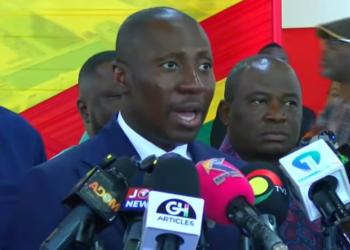
Bright Simon, Vice-president, IMANI

Bright Simon, Vice-president, IMANI

Bright Simons, the Vice President of IMANI Africa and a renowned policy analyst, has raised a red flag regarding the government’s strategy for fostering local ownership within Ghana’s extractive sector, arguing that the current model sets indigenous companies up for failure.

He contends that rather than nurturing national champions, the state is handing over technically depleted or operationally distressed assets to local players a move he describes as offering “poison chalices” to Ghanaian investors.

According to Bright Simons , this trend prioritizes short-term financial engineering over the long-term strategic development of the nation’s mineral wealth.

“In a way, we are giving poison chalices to certain companies that we claim are national champions. We are setting them up to fail by giving them very complex mines with a lot of difficulty that even international investors couldn’t handle. We are handing these over to our people because existing mines are already producing and can be used to milk the assets.”

Bright Simons

Bright Simons  observes that the government appears focused on mines that have already been “pre-built” and are entering highly complex technical phases.

ADVERTISEMENT

By the time these assets are transitioned to local ownership, they often carry a burden of difficulty that even well-resourced international investors have struggled to manage.

WhatsApp Image 2025 11 19 at 15.59.28 6cc2cad9
Hon. Emmanuel Armah-Kofi Buah, Lands Minister

This approach, he suggests, is driven by the fact that these mines are already producing, making them attractive for raising loans rather than for genuine industrial growth.

The Crisis of Distressed Asset Transfers

The transition of the Golden Star Bogoso Prestea mine to Blue Gold serves as a primary example of the “difficult place” local entities find themselves in.

When international investors “literally couldn’t handle it and had to run away,” the asset was left to indigenous hands that are now “caught” with the same systemic issues.

This pattern suggests that local companies are being positioned as “last resort” owners for mines that have reached a point of diminishing returns or extreme technical volatility.

By pushing local ownership at this specific juncture, the state essentially transfers the highest risk to those with the least access to global capital markets.

Instead of being supported, these local companies are burdened with legacy environmental liabilities and operational inefficiencies that were established under previous regimes.

WhatsApp Image 2025 11 29 at 09.28.21 436b59c8
Bright Simon, Vice-president, IMANI

Strategic De-risking of Greenfield Sites

To rectify this, Bright Simons  proposes a shift in focus toward “greenfield sites” in regions such as the Upper West and Upper East, where gold deposits are known to exist but remain underdeveloped.

He argues that sovereign wealth funds, including the Minerals Income Investment Fund (MIIF), should deploy resources to “de-risk” these areas early in the exploration cycle.

ADVERTISEMENT

By conducting the necessary geological and feasibility groundwork, the state can create a stable entry point for Ghanaian owners to join the project from the ground up.

669658763 1415966660550084 3681682897083216868 n
Mining site

A “strategic development of the resource” would involve using national funds to move projects from the speculative phase to the proven reserve phase.

This would allow indigenous firms to grow alongside the asset’s lifecycle, gaining technical expertise during the less volatile early stages of construction and production.

Currently, the absence of this state-led de-risking means that local companies are sidelined during the lucrative “easy” years of a mine’s life, only to be invited in when the “poison chalice” is the only thing left on the table.

Impact on the National Extractive Narrative

The current approach risks damaging the reputation of indigenous mining firms, labeling them as incapable when, in reality, they have been handed impossible mandates.

WhatsApp Image 2025 10 29 at 11.14.43 afac7e1f
Lands and Natural Resources Minister, Hon. Armah-Kofi Buah

If these national champions continue to fail because they are assigned the most complex mines without the requisite support, it reinforces a narrative that only foreign entities can manage large-scale extractives.

This undermines the very concept of “Local Content” that the Ghanaian government claims to champion.

Furthermore, the practice of using existing, producing assets primarily as collateral for loans rather than reinvesting in new discoveries threatens the sustainability of the sector.

When the goal is to “milk the assets” for immediate fiscal relief, the long-term health of the mine is often sacrificed.

For Ghana to truly benefit from its mineral wealth, the policy framework must move away from opportunistic takeovers of declining mines and toward a robust, state-supported pipeline of new projects where local ownership is woven into the fabric of the mine from the very first drill hole.

READ ALSO: 2026/27 Ghana Premier League Season to Begin in September

Sign Up to Our Newsletter

Fresh updates, Straight to your inbox

Tags: Bright Simonscurrent modelGhana’s extractive sectorgovernment’s strategy for fostering local ownershipindigenous companiesred flagRenowned policy analystVice President Of IMANI Africa
Share1Tweet1ShareSendSend
Please login to join discussion
Previous Post

Defence Ministry Denies Military Land Sale to Ibrahim Mahama

Next Post

The Politics of Electricity

Related Posts

Bright Simon, Vice-president, IMANI
Extractives/Energy

Bright Simons Demands “Detailed White Paper” on Bogoso-Prestea Mine’s Concerns

April 29, 2026
GoldBod CEO with GGSA Staff
Extractives/Energy

GoldBod Reports ¢5.55bn Revenue in 2025

April 29, 2026
National Petroleum Authority (NPA) Staff
Extractives/Energy

NPA Signals Safety Commitment Across Downstream Petroleum Sector

April 29, 2026
Emmanuel Kwamena Anyimah
Extractives/Energy

Adamus Lease Revocation: Mining Privilege Comes with Responsibility–MinCom Deputy CEO

April 28, 2026

Sign Up to Our Newsletter

Fresh updates, Straight to your inbox

Recent News

Tuna Observer Refresher Training

Historic MSC Certification Forces Radical Tuna Industry Transparency

April 29, 2026
Emergency services at the scene

Two Stabbed in Golders Green as Police Arrest Suspect

April 29, 2026
ECG

The Politics of Electricity

April 29, 2026
Bright Simon, Vice-president, IMANI

Policy Analyst Raises Concern over Gov’t Local Ownership Approach

April 29, 2026
Deputy Defence Minister, Ernest Brogya Gyenfi

Defence Ministry Denies Military Land Sale to Ibrahim Mahama

April 29, 2026
Next Post
ECG

The Politics of Electricity

The Vaultz News

Copyright © 2025 The Vaultz News. All rights reserved.

Navigate Site

  • About
  • Advertise
  • Privacy Policy
  • Contact

Follow Us

Welcome Back!

Login to your account below

Forgotten Password?

Retrieve your password

Please enter your username or email address to reset your password.

Log In
No Result
View All Result
  • Top Stories
  • News
    • General News
    • Education
    • Health
    • Opinions
  • Economics
    • Economy
    • Finance
      • Banking
      • Insurance
      • Pension
    • Securities/Markets
  • Business
    • Agribusiness
    • Vaultz Business
    • Extractives/Energy
    • Real Estate
  • World
    • Africa
    • America
    • Europe
    • UK
    • USA
    • Asia
    • Around the Globe
  • Innovation
    • Technology
    • Wheels
  • Entertainment
  • 20MOBPL2D
  • Jobs & Scholarships
    • Job Vacancies
    • Scholarships

Copyright © 2025 The Vaultz News. All rights reserved.

This website uses cookies. By continuing to use this website you are giving consent to cookies being used. Visit our Privacy and Cookie Policy.

Discover the Details behind the story

Get an in-depth analysis of the news from our top editors

Enter your email address