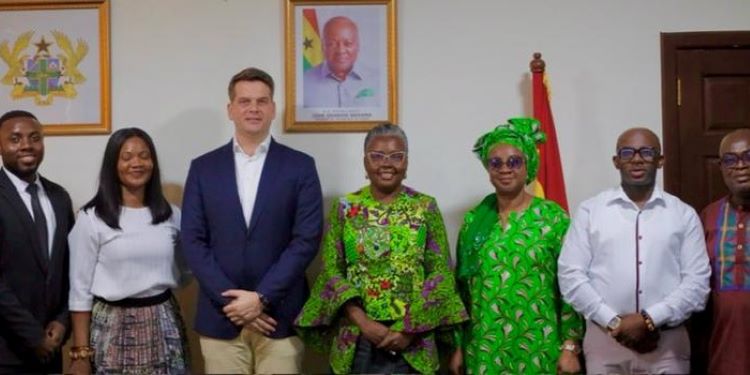
The Chamber of Aquaculture Ghana has led a high-level private sector delegation, including senior executives from De Heus Animal Nutrition Ghana, to hold critical bilateral consultations with the Ministry of Fisheries and Aquaculture Development (MoFAD).
The engagement, which took place at the Ministry’s headquarters this week, with the Sector Minister, Hon. Emelia Arthur, was aimed at forging stronger public-private partnerships to eliminate chronic production bottlenecks, improve input supply chains, and build operational resilience within the country’s aquaculture sector.
Discussions between the government officials and the aquaculture executives focused heavily on tackling the severe systemic challenges currently limiting the growth of domestic commercial fish farms, with a particular emphasis on smallholder and commercial operations located across the Volta Lake basin and adjacent coastal regions.
“Hon. Emelia Arthur welcomed the delegation, highlighting the importance of stronger collaboration between government and the private sector. Key areas for cooperation identified include structured farmer training, capacity-building programmes, and enhanced technical support services to boost productivity and resilience”
Ministry of Fisheries and Aquaculture Development
The consultative session centered on three primary operational crises that continue to restrict national fish production metrics: erratic access to highly specialized fish feed, a shortage of high-yielding, disease-resistant fingerlings, and the lack of a standardized nationwide technical support system for rural fish farmers.
According to data tabled during the meeting, small-scale fish farming operations remain highly vulnerable to input price shocks, with feed costs alone frequently consuming up to 70 percent of an average farm’s total operational budget.

The Chamber of Aquaculture Ghana noted that the rising costs of imported raw feed materials, such as specialized soybean meal and fishmeal on the global market, have severely inflated the price of locally distributed aqua feed over the past fiscal year.
Furthermore, delegates pointed out that smallholder operators are currently recording high mortality rates due to substandard juvenile fish distributed by uncertified local hatcheries, highlighting the urgent need for stricter regulatory standards and better public-private distribution networks.
The Chamber used the platform to advocate for immediate state alignment with major multinational input suppliers to streamline import pipelines and domestic manufacturing channels.
The organization emphasized that without an organized intervention to stabilize the cost and quality of feed and juvenile fish stocks, local producers will remain uncompetitive against cheap imported fish alternatives, threatening the financial survival of thousands of rural livelihoods.
Feed And Advisory Support
During the strategic deliberations, senior representatives from De Heus Animal Nutrition Ghana reaffirmed the company’s long-term commercial commitment to stabilizing and scaling Ghana’s domestic fish market.
The multinational firm detailed an expanded operational strategy that combines the high-volume distribution of premium quality aqua feeds with the widespread deployment of field-level technical advisory services directly to landing sites and farm clusters. The team urged local producers to depart from fragmented, short-term harvesting methods and instead adopt integrated, full-scale production cycles.
Placing a specific strategic emphasis on upgrading the country’s catfish value chain, the company argued that adding value through processing, proper cold-chain management, and commercial filleting could significantly enhance farm-gate prices, reduce post-harvest losses, and secure long-term commercial sustainability.
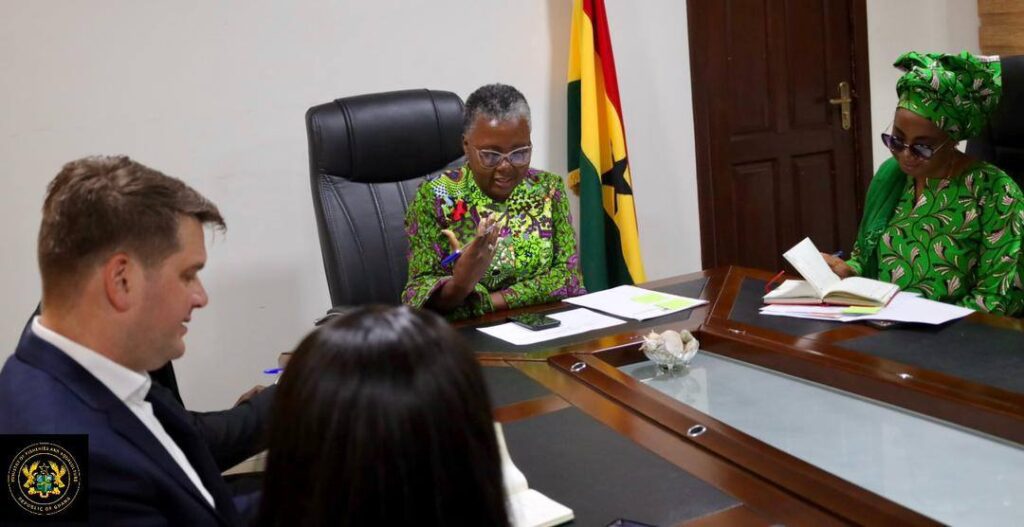
The company’s advisory framework seeks to train local farmers in advanced feed conversion ratios (FCRs), helping them monitor exact daily feed inputs against fish weight gain, with the technical advisory services including regular water quality monitoring, disease prevention protocols, and optimized stocking density guidelines for intensive cage culture systems on the Volta Lake.
Hon. Emelia Arthur endorsed the proposed collaborative roadmap. She highlighted that the state cannot achieve its national food security targets through top-down regulatory policies alone, noting that deep integration with specialized private entities is essential to modernize traditional fish farming practices.
MoFAD added that it is moving to formalize specific cooperative frameworks with the Chamber of Aquaculture and De Heus to launch structured, grassroots farmer training programs.
These joint state-private initiatives will prioritize intensive capacity-building campaigns and enhanced technical support services designed to boost the overall biological productivity and climate resilience of active fish ponds and cages nationwide.
Hon. Arthur’s policy directives align directly with MoFAD’s broader implementation of the Blue Economy Initiative and ongoing efforts to integrate the national 24-hour economy concept into the fisheries and aquaculture sectors to expand youth employment.
Building strong public-private structures, the ministry intends to scale up national aquaculture production far beyond previous baselines, which recorded approximately 116,107 metric tons in annual output, to aggressively bridge the country’s widening annual fish deficit.
The meeting concluded with MoFAD reiterating its statutory commitment to actively championing national policies and macro-level partnerships that directly address the immediate financial and operational needs of local fish farmers.

The ministry indicated that it will continue to examine tariff structures, input logistics, and regulatory protections to foster a highly favorable investment climate for licensed aquaculture companies operating within Ghana’s territorial waters.
READ ALSO: Ghana’s Banking Sector Showing Strong Recovery Signs- BoG