

Public Interest and Accountability Committee (PIAC) has highlighted that global oil demand growth for 2026 is projected to hold steady at 1.4 million barrels per day (mb/d), despite significant geopolitical volatility in the Middle East.
According to the committee’s latest analysis of market data, this forecast aligns with the most recent Monthly Oil Market Report (MOMR) from OPEC, which anticipates a total world demand of approximately 106.5 mb/d.
This resilience in demand comes at a time when the “Iran conflict and the resulting price surge” have forced other international agencies to reconsider their outlooks, creating a complex landscape for producers and consumers alike.
Expanding on this outlook, the projections indicate a stark divide between developed and emerging economies, with non-OECD countries expected to be the primary engines of consumption.
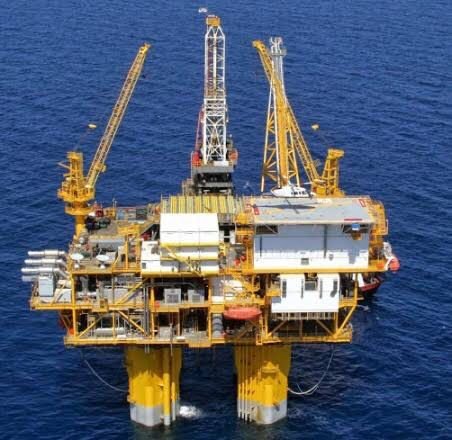
While the OECD is forecast to see a marginal growth of only 0.15 mb/d in 2026, non-OECD nations are expected to expand by approximately 1.2 mb/d, driven largely by industrial and economic activity in Developing Asia.
However, the International Energy Agency (IEA) offers a more cautious perspective, having slashed its own 2026 growth forecast to 720,000 barrels per day.
The IEA warns that “further demand destruction could occur” if prices remain elevated, particularly in the transportation and industrial sectors, as soaring costs begin to dampen consumption in price-sensitive emerging markets.
“According to OPEC’s most recent Monthly Oil Market Report (MOMR), the global oil demand growth forecast for 2026 remains at 1.4 mb/d year-on-year. This assessment projects total world demand of approximately 106.5 mb/d. The divergence across agencies reflects differing assumptions about the duration of the Strait of Hormuz disruptions and the extent of demand destruction from elevated prices.”
Public Interest and Accountability Committee (PIAC)
Market Divergence and Geopolitical Volatility

The significant “divergence of approximately 0.5 mb/d across agencies” underscores the uncertainty currently gripping the global energy market.
While OPEC remains optimistic about steady growth, the US Energy Information Administration (EIA) projects a 1.2 mb/d increase for 2026, noting that almost all growth is concentrated in non-OECD Asia.
Specifically, China and India are expected to add 0.2 mb/d and 0.3 mb/d respectively, though these figures carry “heightened uncertainty given the volatile price environment.”
Furthermore, the suspension of flights at major Middle Eastern hubs has already “materially reduced global jet fuel demand,” leaving diesel and jet fuel markets particularly vulnerable to extended disruptions in exports.
Implications for Ghana’s Upstream and Downstream Sectors
For Ghana, a mid-tier producer and a heavy importer of refined products, these global shifts present a double-edged sword.
On the upstream front, elevated prices and a steady demand forecast of 1.4 mb/d could bolster the government’s efforts to “sustain investor confidence” and attract fresh capital into the Jubilee and TEN fields.
High global prices generally improve the fiscal attractiveness of Ghana’s offshore basins, potentially accelerating exploration activities.
However, the “volatile price environment” mentioned in the Public Interest and Accountability Committee (PIAC) report suggests that any windfall from crude exports may be offset by the rising costs of oil-field services and equipment, which tend to inflate during periods of geopolitical instability.
Downstream Vulnerabilities and Economic Pressures

Conversely, the downstream sector faces severe headwinds as “soaring prices and the economic impact” of the Middle East conflict filter through to the local pump.
Since Ghana remains a net importer of refined fuels, the anticipated “demand destruction” warned of by the IEA could manifest locally as reduced consumption in the transport and industrial sectors.
Elevated global benchmarks for diesel and jet fuel are particularly concerning for the Ghanaian economy, as they exert “foreign exchange pressures” and drive up the cost of living.
Without a fully operational local refinery to buffer these shocks, Ghana remains exposed to the “limited flexibility” of global markets to replace lost Middle Eastern production, making the PIAC’s 2026 forecast a critical metric for national budgetary planning.
READ ALSO: Senator Canavan Pushes Economic Revolution Agenda