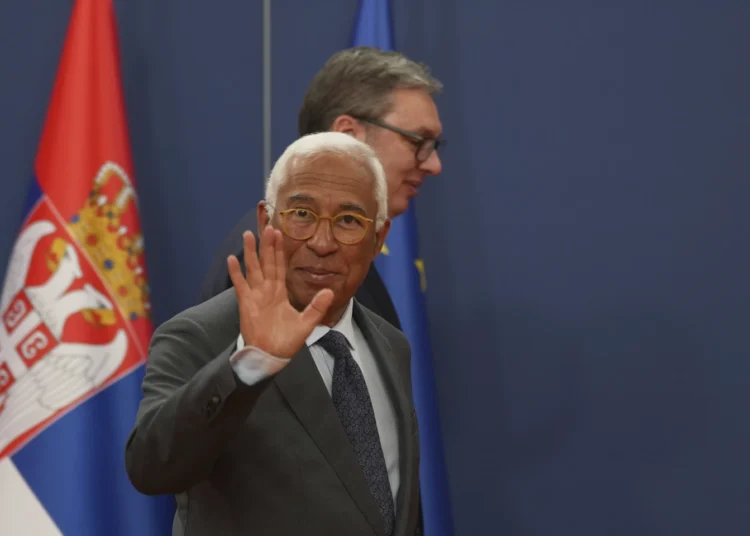
European Council President António Costa has called for greater unity among the European Union’s 27 member states as leaders prepare for crucial negotiations on the bloc’s next long-term budget, describing the coming months as decisive for Europe’s political and economic future.
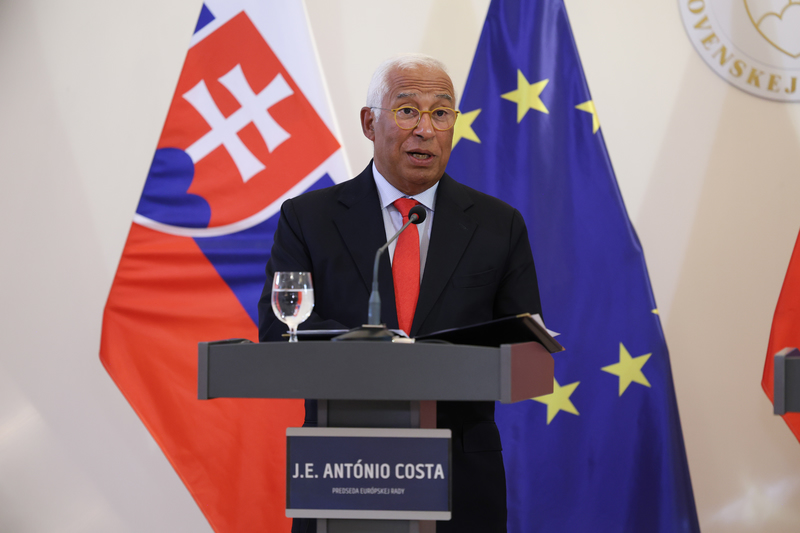
Speaking in Bratislava after meeting Slovak Prime Minister Robert Fico, Costa said that the European Union must approach negotiations on its 2028-2034 budget with an open mind and a sense of collective responsibility, while ensuring that the final agreement reflects the bloc’s changing economic, security and strategic priorities.
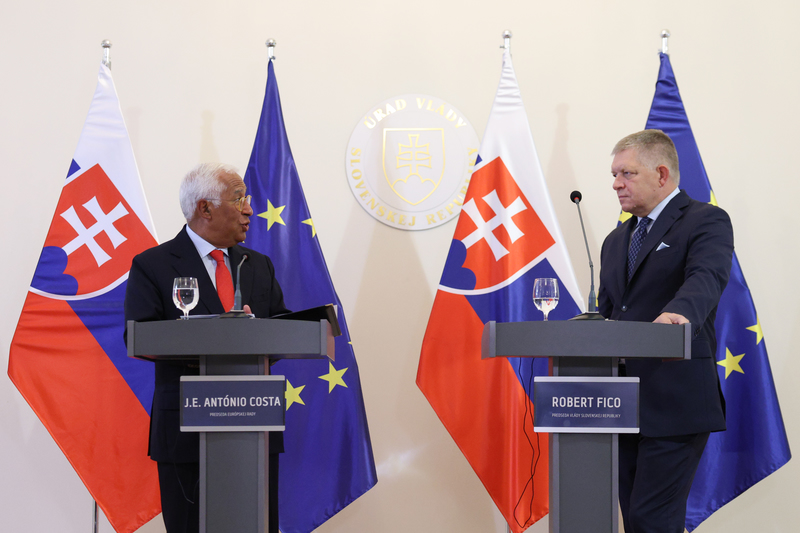
Costa’s visit to Slovakia marked the first stop of his annual “Tour des Capitales,” during which he plans to meet most EU leaders between August 25 and September 17. The visits are intended to allow the European Council President to hear directly from national leaders before major discussions in Brussels and help shape the agenda for the political season ahead. “Listening to every leader in their home country, every year, and hearing your views directly is very important for me,” Costa said, describing his meeting with Fico as part of a broader effort to understand the priorities and concerns of member states.
He stressed that the European Union’s unity could only be built by taking into account the positions of all 27 countries. “The Union is a union of nations, and unity among the 27 member states can only be built on the basis of all national positions,” Costa said.
A central focus of the discussions was the European Union’s next Multiannual Financial Framework, which will cover the period from 2028 to 2034. Costa described the budget as one of the most important decisions of the current political cycle and argued that it should be viewed as more than a financial exercise. “A budget is not just about numbers,” he said, adding, “It is the ultimate political choice, a choice about our future, about the Europe we want to build together.”
According to Costa, the next EU budget will need a different structure from previous spending plans as Europe responds to growing geopolitical and economic challenges. He said that competitiveness, industrial transformation, defence, security and strategic resilience must be central to the bloc’s financial priorities.
At the same time, he stressed that traditional EU funding programmes, including Cohesion policy and the Common Agricultural Policy, must continue to play an important role in supporting prosperity and balanced development across the bloc.
Costa pointed to Slovakia as an example of why the EU’s future budget must balance several priorities. He described the country as both an important industrial economy, particularly in the automotive sector, and a significant agricultural player. The challenge, he said, will be to meet Europe’s growing ambitions while recognising that the EU operates with limited financial resources.
Most of the European Union’s budget is financed through contributions from member states, and Costa said those contributions must remain within reasonable limits.
Costa also stressed the importance of concluding negotiations before the end of the year, warning that delays could create problems when the current financial framework expires. He warned that interruptions in EU funding in 2028 could affect a wide range of groups, including farmers, businesses, students, researchers and innovators.
While acknowledging that negotiations would not be easy, Costa said he was encouraged by what he described as a constructive spirit among European leaders and he is confident that an agreement can be reached.
Costa Hails Slovakia’s Support
Costa thanked Fico for Slovakia’s approach to the budget discussions and also praised the country’s continued support for European Union enlargement.
He said that the EU’s support for countries seeking membership, including those in the Western Balkans as well as Moldova and Ukraine, was an investment in Europe’s security and prosperity. He added that enlargement should continue through a merit-based process and that candidate countries should be treated equally.
Costa also used the meeting to underline the importance of strengthening Europe’s strategic autonomy following years of geopolitical instability and growing security concerns. “The geopolitical developments of recent years have shown us one thing clearly: Europe needs to accelerate its path towards greater strategic autonomy,” he said.
However, Costa argued that Europe’s ability to become more strategically independent depended first on the unity of its member states. “The most important condition for greater European autonomy is our own unity,” he said.
He described fostering that unity as the central purpose of his meeting with Fico and the wider series of meetings he will hold with European leaders in the coming weeks.
As negotiations over the EU’s next long-term budget gather momentum, Costa’s tour is expected to provide an opportunity for member states to outline their priorities on issues ranging from defence and industrial competitiveness to agriculture, regional development and enlargement.
READ ALSO: CTE Affects Nearly a Quarter of Former NFL Players, Study Reveals