
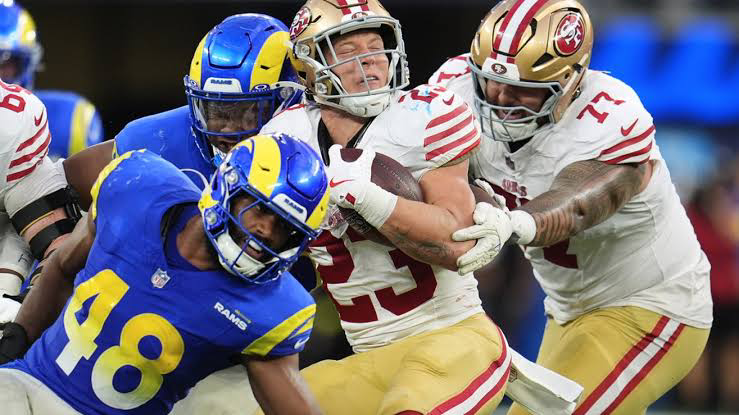
A new study published in the British Medical Journal has found that nearly a quarter of former National Football League (NFL) players who died between 2016 and 2021 may have had chronic traumatic encephalopathy (CTE), highlighting the potential long-term neurological risks associated with repeated head impacts in American football.
The retrospective population-based cohort study examined 1,712 former NFL players who died between 2008 and 2021. Of those, 338, representing 19.7%, donated their brains for neuropathological examination. Researchers found CTE in 315 of the 338 examined brains, equivalent to 93.2% of the donors.
Because only a proportion of deceased NFL players donated their brains, researchers did not claim that 93.2% of all former players had CTE.
Instead, they calculated a possible prevalence range. Across the full cohort, the estimated prevalence at death ranged from 18.5% to 98.7%, while among players who died between 2016 and 2021, when brain donation was most frequent, it ranged from 24.5% to 97.7%.
The researchers said the lower estimate is particularly significant because it represents a conservative minimum based only on confirmed CTE cases among brain donors. “At minimum, nearly a quarter of all former NFL players who died during 2016-21 had CTE neuropathology at death,” the study concluded.
CTE And Dementia Linked
The study also found a relationship between severe CTE and dementia. Among the 338 brain donors, 104, or 30.8%, had stage IV CTE, the most severe classification used in the study.
Meanwhile, 202 donors, representing 59.8%, had dementia diagnosed by study clinicians based on medical records and clinical histories.
Stage IV CTE was associated with a 44% higher risk of clinician-diagnosed dementia, with the researchers reporting a risk ratio of 1.44 and a 95% confidence interval of 1.16 to 1.78. The association was statistically significant, with P<0.001.
The findings add to growing evidence that repeated head impacts may have consequences extending well beyond an athlete’s playing career.
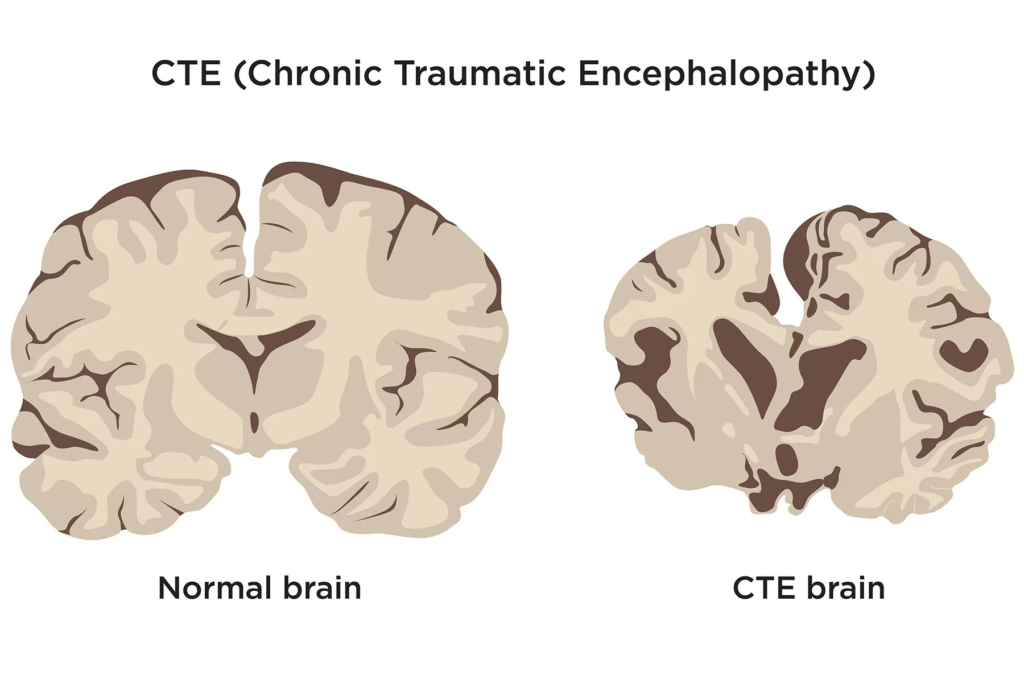
CTE is a neurodegenerative disease associated with repeated exposure to head impacts. According to the study, it can currently be diagnosed definitively only after death through neuropathological examination.
Its defining feature is the accumulation of abnormal phosphorylated tau protein around blood vessels in specific areas of the brain.
The researchers stressed that dementia was more common among players with severe CTE, but the findings should not be interpreted as proof that CTE is the sole cause of dementia in former NFL players. Many participants had other neurodegenerative conditions, including Alzheimer’s disease, which can coexist with CTE.
The study also exposed limitations in relying solely on death certificates to identify dementia and neurodegenerative disease. Of the 202 donors diagnosed with dementia by study clinicians, only 82, or 40.6%, had a neurodegenerative disease recorded as either the primary or secondary cause of death.
Only 63 of the 338 donors, or 18.6%, had a neurodegenerative disease listed as their primary cause of death.
Brain Donation Remains A Major Limitation
The researchers acknowledged that brain donation is not random. Families may be more likely to donate the brains of former players who experienced neurological or behavioural symptoms, potentially increasing the proportion of CTE identified among donors.
To address this selection pressure, the researchers used inverse probability weighting, taking into account factors including age at death, playing position, Hall of Fame status, number of Pro Bowl appearances, years in the NFL, body mass index and cause of death.
The study builds on earlier research from the Boston University CTE Center, where 110 of the first 111 former NFL players examined had CTE. The latest research expands the evidence by examining a much larger and more systematically identified population of deceased NFL players.
The authors said the findings provide important epidemiological evidence because former NFL players represent a “fully enumerated cohort” with substantial exposure to repetitive head impacts.
The study does not establish that every former NFL player who develops CTE will develop dementia, nor does it determine the precise prevalence of CTE among all living former players.
However, the researchers argue that the findings strengthen concerns about the long-term neurological consequences of repeated head impacts and demonstrate why better understanding of CTE remains a significant public health issue in contact sports.
READ ALSO: Jirapa MP Says GoldBod Dispute Requires Facts And Parliamentary Process