Mike Fraser, Chief Executive Officer (CEO) of Gold Fields Limited, has reported a robust financial and operational output for the first half of the year, driven primarily by a notable 18% increase in sales volumes that reached 1.269Moz.
This substantial gain in total volume was further amplified by a favorable global commodity market, which saw the gold producer secure a higher average realised gold price of US$4,678 per ounce.
Consequently, the company’s adjusted free cash flow experienced an extraordinary surge, more than doubling to US$2,225 million compared to the US$925 million generated in the corresponding first half of 2025 (H1 2025). This massive liquidity surge provided the mining giant with a firm financial foundation to reinforce its capital structure, de-risk its current operations, and drive consistent dividend distributions to equity holders.
“Gold Fields Limited delivered a strong first half as sales volumes rose by 18% to 1.269Moz, supported by a higher average realised gold price of US$4,678/oz, which resulted in adjusted free cash flow more than doubling to US$2,225 million from US$925 million in H1 2025. This gave us the platform to strengthen our balance sheet further, continue investing in the long-term growth and resilience of our business, while delivering upper quartile shareholder returns.”
Mike Fraser, Chief Executive Officer (CEO) of Gold Fields
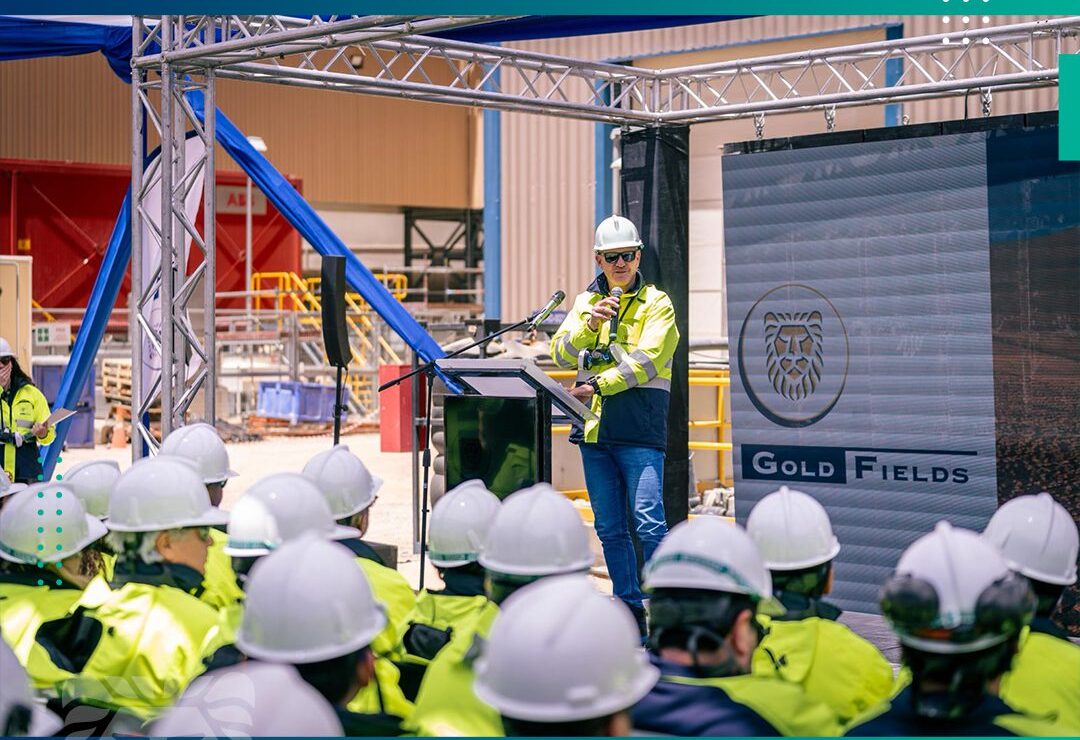
Dwelling on these impressive H1 outcomes, the structural foundation created by this elevated cash flow allows Gold Fields to build long-term business resilience while systematically reinvesting in foundational growth assets across its international portfolio.
Management’s strategic deployment of capital helped solidify an enviable financial stance while simultaneously keeping the firm on course to deliver upper-quartile shareholder returns relative to industry peers.
The impressive corporate performance was undergirded by solid operational momentum across the global portfolio, where total Group attributable gold production rose 12% year-on-year to 1.267Moz.
This steady volume surge keeps the gold miner firmly positioned to hit the upper threshold of its full-year guidance metrics.
A critical driver behind this operational leap was the Salares Norte facility, which transitioned into steady-state production to deliver a massive 173% increase in gold-equivalent yield to 337koz.
Concurrently, Australia’s Granny Smith mine registered a 10% uptick in production on the back of record haulage fleet availability and efficient autonomous truck performance, while South Deep made steady progress in stope turnover and mining productivity, alongside positive recovery traction at Gruyere, Agnew, and Tarkwa during the second quarter.
Operational Accelerators and Mine-Level Drivers
The company’s operational transformation across several host jurisdictions was pivotal to generating these record-breaking balance sheet metrics.
Chief Executive Mike Fraser pointed out that operational momentum built throughout the previous year successfully carried into the current period, allowing primary assets to achieve record efficiencies.
At the flagship Salares Norte asset in Chile, reaching steady-state operational parameters unlocked massive throughput that significantly elevated group-wide attributable numbers.
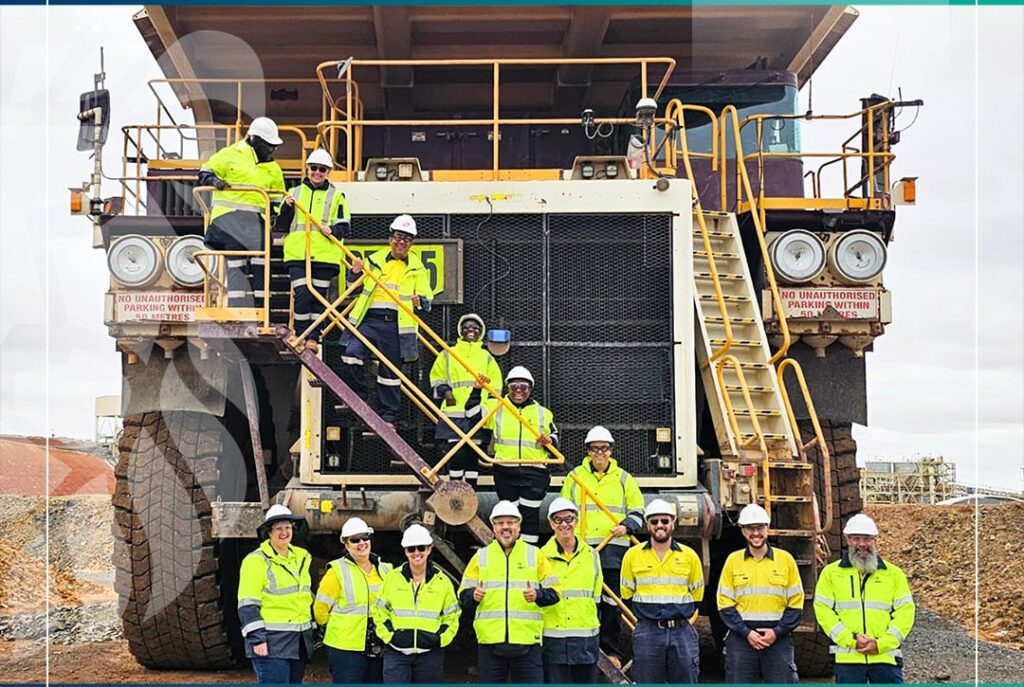
Furthermore, the deployment of cutting-edge technology proved to be a key differentiator in performance outcomes.
At the Granny Smith operation, management’s strategic emphasis on “record haulage fleet availability and autonomous truck performance” directly facilitated the 10% step-up in gold output, illustrating how automated fleet integration yields direct operational improvements.
Complementing these standout asset performances were sequential turnaround initiatives across Gold Fields’ broader asset base.
South Deep demonstrated consistent operational refinement, showing “incremental improvement in stope turnover and mining productivity” that bolstered underground operational consistency.
Additionally, complex sites like Gruyere and Agnew in Australia, alongside the giant Tarkwa mine in Ghana, recorded encouraging operational rebounds over the second quarter as dedicated “recovery plans gained traction.”
By stabilizing production profiles across these core assets, Gold Fields effectively mitigated operational risks, ensuring that high global metal prices translated straight into healthy cash margins and enhanced corporate liquidity.
Strategic Balance Sheet De-risking and Growth Investments
From a corporate finance perspective, transforming peak top-line realisations into an adjusted free cash flow of US$2,225 million fundamentally reshapes the mining house’s balance sheet strategy.
The cash infusion provides executive leadership with significant operational flexibility to pursue aggressive debt reduction, lowering leverage ratios and insulating the corporation against future market volatility.
With net debt obligations substantially curtailed, Gold Fields can comfortably fund its intensive organic growth pipelines without incurring prohibitive financing costs or diluting equity value.
Moreover, the double-digit expansion in cash flow creates a sustainable engine for ongoing capital expenditures required to maintain mine fleet modernizations and life-of-mine expansion initiatives.
By deploying internal cash reserves into mine life extension projects, the producer protects its operational asset base against reserve depletion without sacrificing financial flexibility.
This strategic reinvestment cycle ensures that the firm remains resilient during cyclical market downturns while maintaining the capital capacity to pay out competitive dividends, satisfying both income-focused and growth-oriented institutional investors.
Regional Macroeconomic Implications across Host Economies
The record financial performance generated by Gold Fields carries substantial macroeconomic ramifications for the host and catchment countries where the company operates, notably Ghana, South Africa, Australia, and Chile.
In West Africa, where the Tarkwa operation serves as a critical economic pillar, the recovery in production and expanded cash margins directly translate into increased fiscal receipts for state coffers.
Host governments rely heavily on mineral royalties, corporate income taxes, and dividend payments from local operational subsidiaries to finance infrastructure budgets and support national balance of payments stability.
Higher revenue realisations strengthen sovereign foreign exchange reserves, helping to stabilize regional currencies against severe inflationary pressures and macroeconomic headwinds.
Beyond direct fiscal contributions, the economic multiplier effect of Gold Fields’ expanded free cash flow significantly impacts local catchment communities and supplier ecosystems.
Increased operational activity at sites like South Deep in South Africa and Salares Norte in Chile stimulates sustained demand for local procurement, engineering sub-contracts, power utility consumption, and transportation services.
Furthermore, as Gold Fields allocates capital toward long-term business resilience, sustained community investment programs ranging from local healthcare facilities and education infrastructure to vocational training—receive guaranteed funding.
This institutional spending creates indirect employment, boosts localized household purchasing power, and helps mitigate socioeconomic vulnerabilities in rural mining corridors.
READ ALSO: CTE Affects Nearly a Quarter of Former NFL Players, Study Reveals