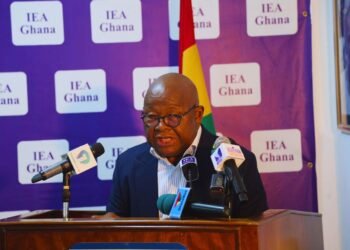
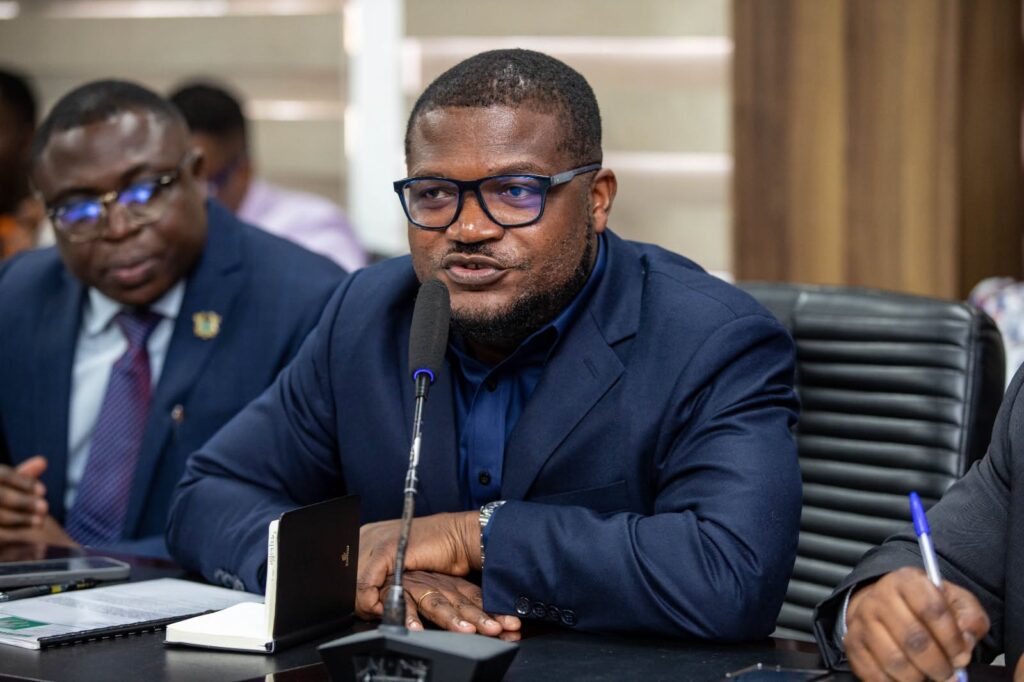
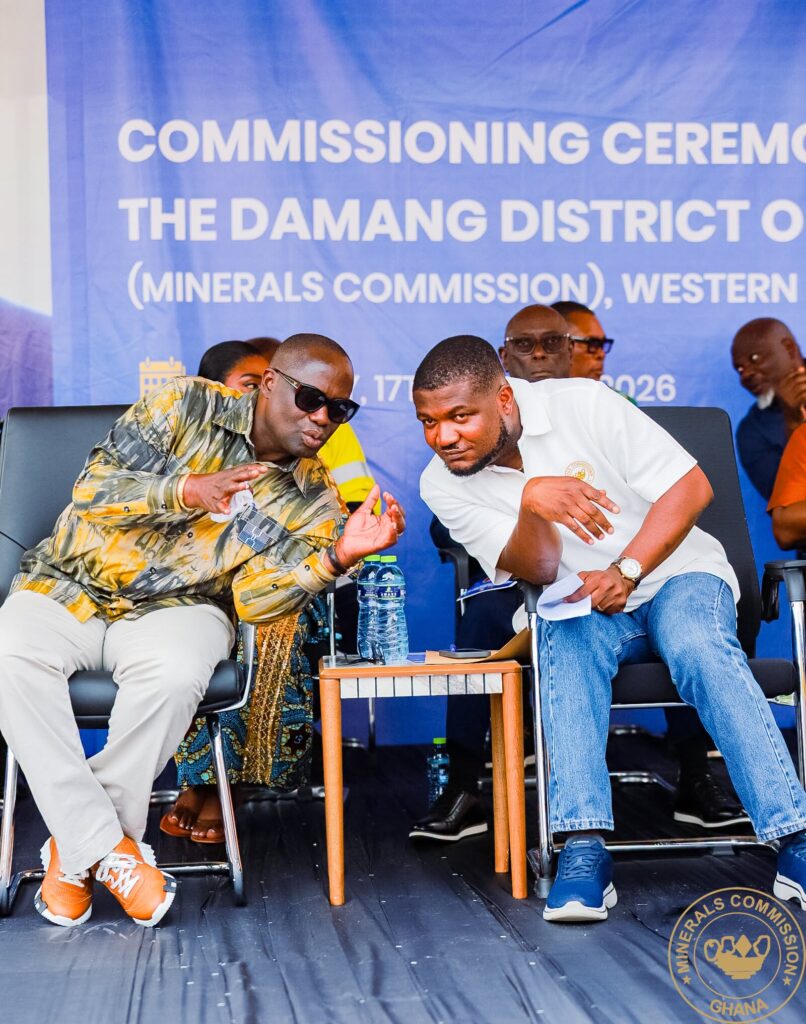
Chief Executive Officer of the Minerals Commission, Mr. Isaac Tandoh, representing the government of Ghana, has declared a decisive shift in the nation’s natural resource policy by demanding a transition away from simple resource extraction toward a partnership of sovereign equals with global industrial powers.
Speaking at the Ministerial session of the Second Russian-African Raw Materials Dialogue in Saint Petersburg, Russia, Mr. Tandoh asserted that Ghana, as the leading gold producer in Africa, will henceforth only prioritize international agreements that guarantee in-country value addition to its raw materials.
“Eight of the top twenty gold producing countries globally are African nations and yet only about 2% of the continent’s natural resources are processed locally. This is why as the leading producer of Gold on the continent, Ghana has set new priorities for our natural resources: we will only prioritize partnerships that enable us add value to our raw materials, locally. This was the key message delivered at the Ministerial roundtable at the ongoing Second Russian-African Raw Materials Dialogue in Saint Petersburg, Russia.”
Minerals Commission
Mr. Tandoh detailed how Ghana’s forward-looking strategy seeks to redefine economic engagement with foreign allies by insisting that resource exploitation be replaced with domestic processing capabilities.
He explained that although eight of the world’s top twenty gold-producing countries are located on the African continent, an astounding two percent of Africa’s natural resources undergo local processing, a stark disparity that West Africa’s leading mining powerhouse is determined to correct.
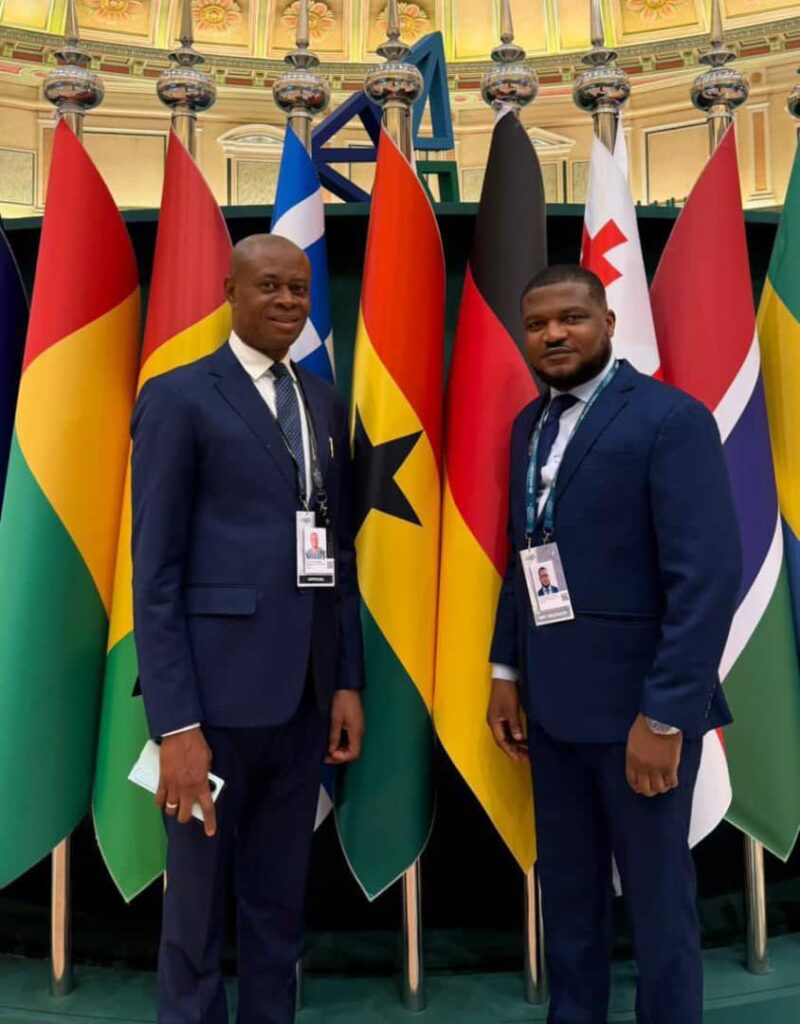
Addressing an international audience gathered at the summit which was organized by Russia’s Ministry of Foreign Affairs, the UNESCO International Competence Centre for Mining Engineering Education, and the Empress Catherine II Saint Petersburg Mining University he emphasized that future bilateral engagements must leave Ghanaian engineers, technicians, and regulatory bodies equipped with measurable, long-term technical capabilities rather than remaining a one-way transfer of raw wealth overseas.
Strategic Shift Toward Value Addition
Ghana is actively broadening its extractive footprint past traditional minerals like gold to incorporate critical resources, including lithium, iron ore, and bauxite.
To manage this expansion, the government is leveraging state-backed institutional frameworks such as the Ghana Integrated Iron and Steel Development Corporation (GIISDEC) and the Ghana Integrated Aluminium Development Corporation (GIADEC).
These state entities are tasked with creating integrated domestic supply chains that transform raw deposits into high-value industrial components prior to export.
To protect national interests and maintain modern oversight, Ghana has implemented comprehensive digital management tools across its mining sector.
Through the Minerals Commission, the government has deployed a digital Mining Cadastre Administration System (MCAS) paired with geofencing technology. This infrastructure ensures that mineral rights acquisitions and field operations strictly observe regulatory guidelines, preserving accountability for host communities and domestic stakeholders.
Aligning Bilateral Interests
Mr. Tandoh advocated for a formalized, institutionalized Ghana-Russia Mining Cooperation Framework founded on mutual reciprocity rather than historical dependency.
He observed that Russia’s foreign import demands for key strategic minerals directly align with Ghana’s rich natural resource offerings, creating an opportunity for mutually beneficial commerce.
To ensure maximum local impact, he insisted that all technical training programs, academic exchanges, and industrial capacity-building projects under this proposed framework be delivered directly through Ghanaian educational and research institutions.
Structural Drivers of the Initiative
The urgent necessity for this sovereign policy overhaul stems from the long-standing economic imbalance between raw resource supply and domestic value capture across the continent.
While African nations supply a major share of global industrial inputs, local economies have historically received only a tiny fraction of the market value generated along global supply chains.
By establishing localized processing, Ghana aims to shield its macroeconomic indicators from foreign commodity price swings, boost foreign exchange reserves, and retain critical tax revenues within the national economy.
Furthermore, building in-country industrial processing capacity is essential for generating skilled employment for local geology, metallurgy, and engineering graduates.
Establishing domestic refineries, smelters, and manufacturing plants transforms the mineral sector into an engine for national industrialization.
With global demand for critical transition minerals surging, Ghana’s policy insists that foreign partnerships directly build domestic expertise, securing economic autonomy and ensuring that natural wealth directly advances national development.
READ ALSO: IMANI Warns Ghana’s Health Financing Gains Face Risks