A coalition of over 20 Civil Society Organisations (CSOs) and fisheries industry groups has further urged President John Dramani Mahama to completely revoke all 10 offshore gold reconnaissance licences rather than simply maintaining their temporary suspension.
The civil society groups including the National Fisheries Association of Ghana (NAFAG), Environmental Justice Foundation (EJF), Friends of the Nation (FoN), A Rocha Ghana, and the Ghana National Canoe Fishermen Council stressed that while the Minerals Commission’s order halting Goldcoast GRC Ghana Limited’s operations is a welcome precautionary measure, suspension alone cannot resolve the critical risks confronting coastal communities and marine life.
They contend that temporary pauses leave open the possibility of future seabed disturbances, which directly threaten the livelihoods of millions of Ghanaians who rely on the ocean for food security and economic survival.
“However, while the suspension is welcome, we respectfully submit that suspension alone cannot resolve the fundamental concerns raised by stakeholders. The processes now initiated should not merely determine whether activities can resume, but whether offshore gold exploration and any eventual seabed mining activities are compatible with Ghana’s fisheries, blue economy aspirations, food security objectives and the interests of coastal communities. Decisions affecting these marine ecosystems therefore require the highest standards of transparency, legality, scientific scrutiny and public participation.”
CSOs
Expanding on their call, the petitioners highlighted that the controversial licenses cover approximately 10,000 square kilometres of Ghana’s continental shelf, intersecting shallow coastal waters that sustain essential artisanal fisheries.

The civil society network emphasized that offshore gold exploration and potential seabed mining are fundamentally incompatible with Ghana’s blue economy aspirations, ecological protection, and food security goals.
Pointing to statutory concerns, the CSOs noted that Section 32(3) of the Minerals and Mining Act, 2006 (Act 703) prohibits holders of reconnaissance licences from engaging in invasive activities like drilling or excavation.
Furthermore, Section 99(6) raises strict legal questions regarding the use of floating platforms and dredging equipment within Ghana’s territorial waters and exclusive economic zone.
Coupled with provisions under the Fisheries and Aquaculture Act, 2025 (Act 1146) protecting the 12-nautical-mile Inshore Exclusion Zone, the coalition insists that the current administrative pause must serve as a springboard for full licence cancellation rather than a temporary delay prior to environmental destruction.
Marine Ecosystem Threats and Socio-Economic Risks
The push to permanently halt offshore gold exploration stems from severe concerns over irreversible damage to marine biodiversity and coastal economies. Benthic marine habitats along Ghana’s continental shelf are exceptionally vulnerable to industrial disturbance.
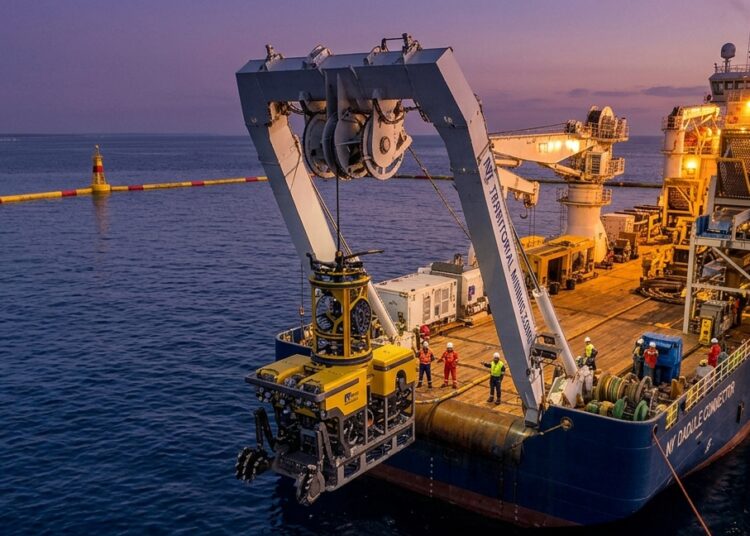
Exploration techniques including high-intensity acoustic profiling, seabed vibro-coring, bulk sampling, and eventual seabed dredging disrupt fish nursery grounds, destroy benthic organisms, and displace sensitive pelagic species.
Civil society groups argue that opening up 10,000 square kilometres of marine territory to extractive activities creates direct physical conflict with traditional fishing routes and industrial trawl paths.
For coastal populations, the sea serves as an irreplaceable socio-economic safety net.
The Fisheries Commission and artisanal fishing associations have repeatedly alerted state authorities that industrial exploration along shallow coastal belts threatens small-scale fishing fleets that supply local markets.
Depleting local fish stocks through mineral extraction risks deepening coastal poverty, increasing food insecurity, and disrupting the operations of thousands of women fish processors and traders.
Environmental advocates maintain that living marine resources provide enduring socio-economic returns for generations, whereas short-term mineral extraction poses catastrophic risks to ocean health.
Legal Imperatives and Inshore Zone Protections
The demand for complete revocation rests heavily on statutory compliance and regulatory boundaries established under national law.
Civil society organisations have called on the Government to enforce the Fisheries and Aquaculture Act, 2025 (Act 1146), which establishes an expanded 12-nautical-mile Inshore Exclusion Zone designed to safeguard artisanal fishing grounds from industrial encroachment.
Published mapping data associated with Goldcoast GRC Ghana Limited reveals significant geographical overlap between the licensed reconnaissance blocks and this protected inshore zone.
Legal experts note that progressing from initial reconnaissance to intrusive sampling methods like bulk dredging without statutory clarity violates established mining guidelines. As one civil society leader remarked, “Ghana stands at an important crossroads where decisions on offshore resources will define marine governance for decades.”
Ensuring that state agencies strictly adhere to constitutional and environmental frameworks prevents corporate overreach while safeguarding national maritime heritage and coastal livelihoods.
Transparency, Governance, and Civil Society Demands
To ensure full accountability and protect public interest, the coalition outlined three concrete demands for executive action.
First, the Government must maintain the suspension of activities while publishing all licence instruments, coordinates, maps, work programmes, and approvals associated with the ten offshore reconnaissance licences to ensure total transparency.
Second, state agencies must undertake a comprehensive legal, environmental, fisheries, and socio-economic review supported by Free, Prior, and Informed Consultations with affected fishing communities, fish processors, traditional authorities, academia, and civil society organisations.
Third, the Government must completely revoke all offshore gold reconnaissance licences in view of the significant risks posed to fisheries resources, marine biodiversity, coastal livelihoods, food security, and Ghana’s blue economy objectives.
The CSOs concluded that true success in ocean governance will not be measured by whether formal consultations are held, but by whether the Government decisively cancels these offshore concessions to preserve Ghana’s blue economy.
By taking a firm stance against unsustainable seabed exploration, Ghana can demonstrate regional leadership in ocean conservation and sustainable marine resource management.
READ ALSO: Cedi Climbs to GH¢11.65 After GoldBod’s FX Intervention