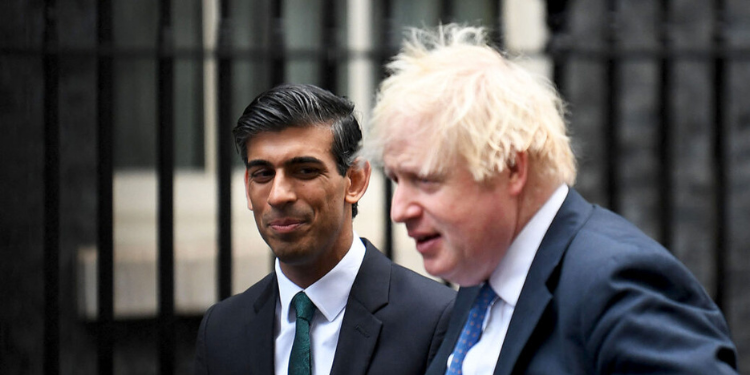
A long-running feud at the heart of the Conservative Party has been reignited after a new political biography claimed that Rishi Sunak and his allies played a significant role in the downfall of Boris Johnson, lending fresh weight to the former Prime Minister’s long-standing accusation that his then-Chancellor betrayed him.
Political biographer Sir Anthony Seldon, in his new book Sunak at 10 – the Last Conservative PM?, argues that although Sunak was not ultimately responsible for Johnson’s removal from office, his aides worked to weaken the prime minister with his tacit backing.
The claim revives one of the most bitter political disputes surrounding the Conservative Party’s turbulent period in government, when divisions between Johnson and Sunak increasingly defined the final months of the Johnson administration.
According to Seldon, Sunak “together with his lieutenants did play a significant role in bringing down Johnson,” despite repeated denials that he deliberately plotted against his former political ally.
The book, which is being serialised by The Independent, offers a detailed account of the deteriorating relationship between the two men and argues that the tensions between them went far beyond ordinary political disagreements.
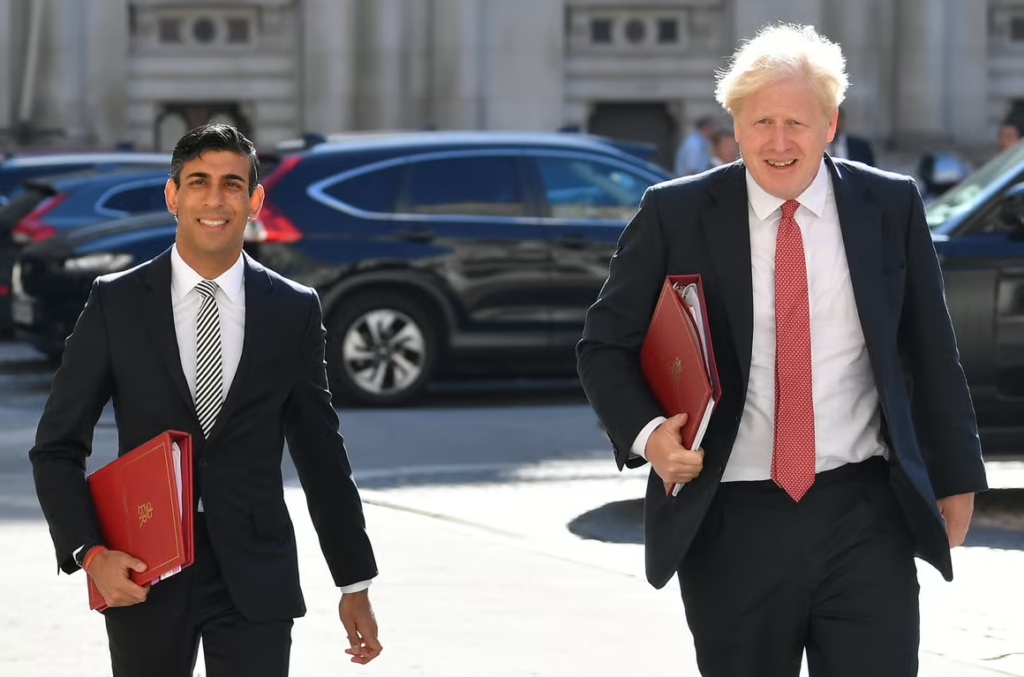
Seldon writes that Sunak’s aides “worked forensically with Sunak’s tacit support to undermine Johnson,” because they believed the continuation of his premiership was damaging the country.
The account nevertheless stops short of endorsing the argument that Sunak single-handedly engineered Johnson’s removal. Instead, Seldon maintains that the former Chancellor’s intervention was an important contributing factor but not the decisive cause of Johnson’s political collapse.
While Boris Johnson and his supporters have for years maintained that Rishi Sunak’s resignation represented a deliberate betrayal designed to clear the way for his own leadership ambitions, Seldon argues that the former Prime Minister’s political problems were ultimately rooted in his own conduct and shortcomings in office.
The dispute centres particularly on July 2022, when Sunak resigned as Chancellor amid a series of scandals engulfing the Conservative government. His resignation came just two days before Johnson was eventually forced to announce that he would step down as Prime Minister.
At the time, the resignation was viewed as a major blow to Johnson’s authority. Sunak’s departure was followed by a wave of ministerial resignations, helping create the political pressure that eventually made Johnson’s position untenable.
The incident permanently strained relations between the two politicians.
Johnson had previously considered Sunak a close political colleague, but his choice to retire at a key juncture was viewed by Johnson and many of his supporters as a betrayal.
The former Prime Minister later publicly claimed that Sunak was “a close colleague and friend who turned on me at a particularly critical time.“

Seldon’s account suggests that the hostility went deeper than a disagreement over the timing of a resignation. According to the book, Johnson and his supporters “despised” Sunak and became convinced that his conduct as Chancellor was part of a wider attempt to position himself for the Conservative leadership.
The tensions were particularly pronounced over the government’s enormous spending programme during the Covid-19 pandemic. According to Seldon, much of the “toxicity and vitriol” directed towards Sunak by Johnson and his allies stemmed from their belief that the financial support he authorised as Chancellor was designed to strengthen his own public profile ahead of a possible leadership contest.
That view became an essential aspect of the rivalry between the two politicians, despite Sunak’s supporters’ rejection of the notion that his decisions as Chancellor were driven by leadership ambition.
From Johnson’s Downfall to Sunak’s Rise to No 10
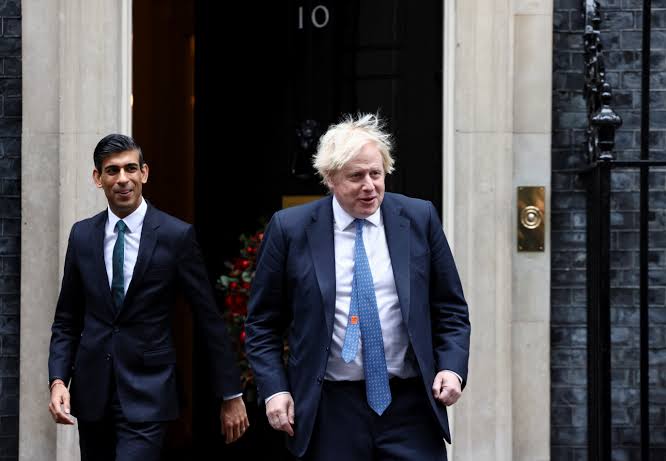
Rishi Sunak initially failed to capitalise on Johnson’s departure. Following the former Prime Minister’s resignation, the Conservative Party held a leadership contest in which Sunak reached the final stage but was defeated by Liz Truss.
Truss’s premiership, however, lasted only a matter of weeks. Her government’s economic programme triggered severe market turmoil, eventually forcing her to resign in October 2022.
Sunak then returned to the centre of the Conservative leadership contest and became Prime Minister, succeeding Truss and taking charge of a party already deeply divided by the events that had brought down Johnson.
His rise to Downing Street inevitably reinforced suspicions among Johnson’s supporters that the former Chancellor had positioned himself to benefit from the collapse of the previous administration.
Seldon acknowledges the significance of that perception but argues that it should not obscure the wider reasons for Johnson’s removal.
According to Seldon, Sunak himself contemplated resigning as Chancellor on three separate occasions before eventually leaving the government in July 2022. That suggests that the breakdown in relations was not simply the result of a carefully executed plan to remove Johnson, but reflected a prolonged deterioration in the relationship between the two senior Conservatives.

The resignation nonetheless became the defining moment in their political conflict.
Johnson was reportedly so furious with Sunak’s decision that he considered sending his former Chancellor a foul-mouthed video message. His former Downing Street Director of Communications, Guto Harri, has previously said Johnson regarded Sunak’s resignation as “the great betrayal of all time.”
The intensity of the dispute reflected the stakes involved. Johnson had won a large Conservative majority at the 2019 general election and initially enjoyed significant political authority. But a succession of controversies increasingly weakened his government, while internal divisions over his leadership became more pronounced.
Sunak’s resignation provided a decisive political shock at a moment when Johnson was already under severe pressure.
Yet Seldon’s assessment suggests that it would be misleading to portray the former Chancellor as the architect of Johnson’s downfall.
READ ALSO: Cameron Urged Sunak Not to Call 2024 Election Before Tory Rout, Book Reveals