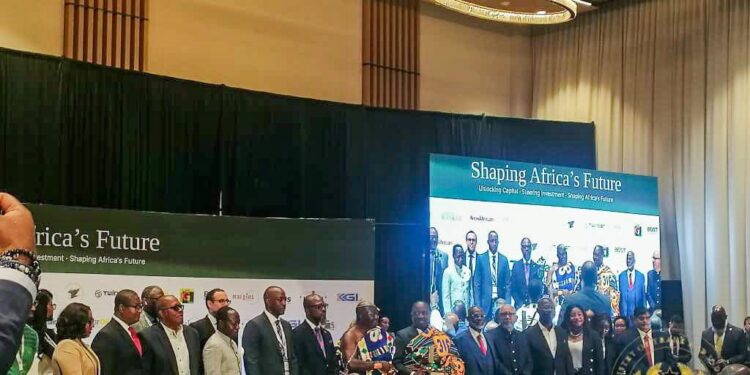
Ghana has made a strong and confident pitch to global investors at the Africa Business Investment Summit (ABIS) 2026, positioning itself as the most strategic entry point for investment in Africa on the back of economic reforms, industrial growth and continental trade opportunities.
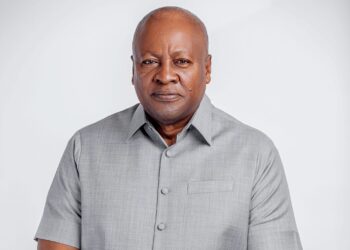
Delivering a keynote address on behalf of the President of the Republic of Ghana, His Excellency John Dramani Mahama, the Deputy Minister for Trade, Agribusiness and Industry, Hon. Sampson Ahi, MP, said Ghana is firmly convinced that Africa’s time has come and is ready to partner with investors who believe in the continent’s future.
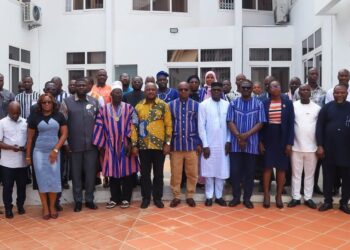
“Ghana believes in Africa’s moment,” he told a packed audience of investors, development finance executives, government officials and captains of industry at the MGM National Harbour in Washington, D.C.
The summit, which has become a premier platform for investment dialogue on Africa, brought together key stakeholders from across the world to explore opportunities for enterprise growth, trade and sustainable economic development on the continent.
Africa’s Vast Potential and AfCFTA
Hon. Ahi in his address painted a picture of a continent that is rich in opportunity. He described Africa as a continent endowed with abundant natural resources, a youthful and rapidly growing population, expanding consumer markets and a new generation of bold and innovative entrepreneurs.
He said, the operationalization of the African Continental Free Trade Area (AfCFTA) has fundamentally changed the investment narrative for Africa. The AfCFTA, he noted, has created the largest free trade area in the world by number of participating countries, connecting over 1.3 billion people with a combined Gross Domestic Product (GDP) of more than US$3.5 trillion.
For investors looking for scale, he argued, Africa now offers an integrated market that cannot be ignored, and Ghana is strategically positioned to be the gateway to the market.
Focusing on Ghana, the Deputy Minister said the country has undertaken a deliberate economic reset that has restored macro-economic stability and renewed investor confidence.
He disclosed that Ghana recorded real GDP growth of 6 percent in 2025, with non-oil GDP expanding even stronger at 7.6 percent during the same period, a clear indication that growth is broad based and not solely driven by extractives.
The strong performance, he said, has continued into 2026, with the economy recording first-quarter growth of 6.4 percent. This, coupled with improved fiscal discipline and a more stable macro-economic environment, has led to increased Foreign Direct Investment inflows.
Hon. Ahi stressed, that government’s vision goes beyond recovery. “Our agenda is not just about economic recovery; it is about economic transformation.’’
That transformation, he explained, will be driven by industrialisation, value addition, enhanced productivity and sustainable job creation.
The 24-Hour Economy and Nationwide Investment Drive
To achieve this, he outlined two flagship initiatives that are central to the government’s economic strategy. The first is the 24-Hour Economy Programme, which seeks to increase productivity by encouraging businesses and public institutions to operate around the clock in three shifts.
The policy is designed to create more jobs, boost industrial output, reduce unemployment and make Ghana a more competitive production hub. The second is the Investment Opportunities Mapping Project (IOMP), a comprehensive initiative to identify and package bankable investment opportunities in every district of the country.
The project aims to ensure that investment and development are not concentrated in a few urban centres but are equitably distributed across the country. The Deputy Minister used the platform to outline specific sectors where Ghana is inviting private capital.
He said, huge opportunities exist in energy, particularly renewable energy, as well as in technology and the digital economy, agriculture and agribusiness, mining and minerals value addition, tourism and creative arts, maritime development, infrastructure and large scale manufacturing.
On agriculture, he highlighted the Feed Ghana Programme, a strategic government intervention aimed at transforming agriculture into a major driver of economic transformation. The programme is designed to increase domestic food production, drastically reduce food imports, create jobs for the youth and ensure a reliable supply of raw materials for local industries.
In the area of industrialisation, Hon. Ahi pointed to the rapid development of industrial parks and Special Economic Zones as critical enablers for manufacturing growth.
He mentioned flagship projects such as the Greater Kumasi Industrial City and Special Economic Zone, the Dawa Industrial Zone near the coast, and the Tema Integrated Industrial Park. These enclaves, he said, offer world class infrastructure, fiscal incentives and proximity to ports and markets.
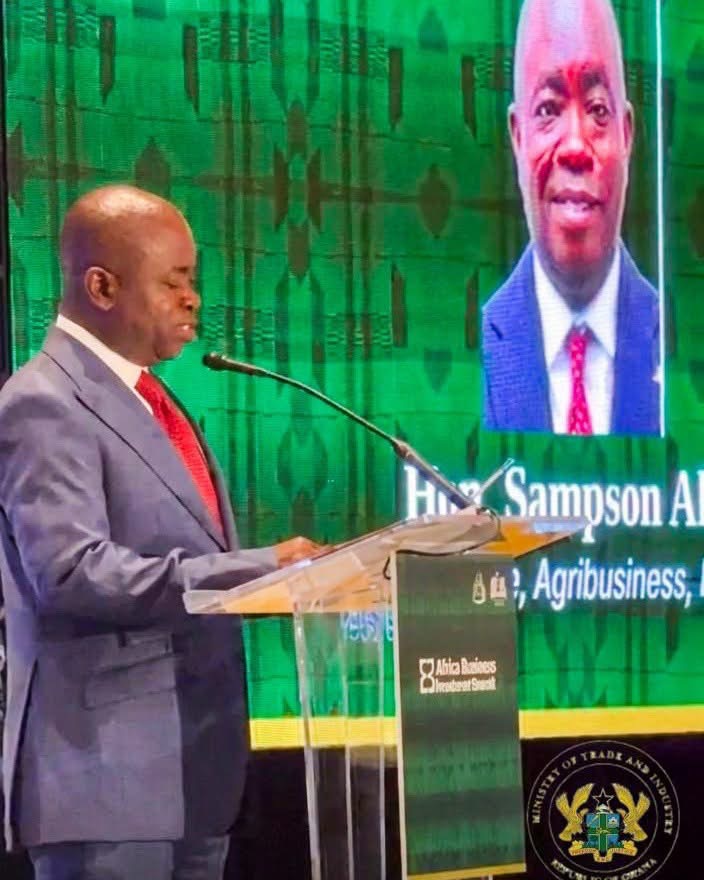
He further emphasised that Ghana’s hosting of the AfCFTA Secretariat in Accra gives the country a unique advantage.
“When you invest in Ghana, you invest in Africa. Businesses established in Ghana have preferential access to the entire continental market under AfCFTA rules. Let history record that we did not only gather to speak about Africa’s future. We gathered to invest in it, and to build it.’’
Mr. Ahi
The Call for Good Governance and Youth Empowerment
Also addressing the summit was the Asantehene, His Majesty Otumfuo Osei Tutu II, who was a special guest of honour. The revered traditional leader urged global investors to take Africa’s investment case seriously, while also challenging African leaders to do their part.
He stressed the need for African governments to create transparent systems, predictable policies and an enabling business environment that can attract and retain sustainable investment. He noted that good governance is not merely a political virtue but a powerful economic asset that directly impacts investor confidence and long term development.
Ghana’s Ambassador to the United States of America, H.E. Victor Smith, in his welcome address, set the tone for the summit with a passionate call for purposeful investment. He said investment in Africa must be transformative and people centred, capable of building a continent where young people can realise their dreams and aspirations at home, rather than being compelled to embark on perilous journeys abroad in search of opportunities.
He called for partnerships that create decent jobs, expand economic opportunities and empower Africa’s youth to become active participants and beneficiaries of the continent’s growth story.
The 2026 edition of the Africa Business Investment Summit ended with renewed optimism about Africa’s economic prospects and Ghana’s role as a leading force in shaping the continent’s investment future.
READ ALSO: GoldBod Operations Drove Currency Stability & Reserve Accumulation – IEA