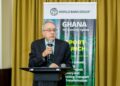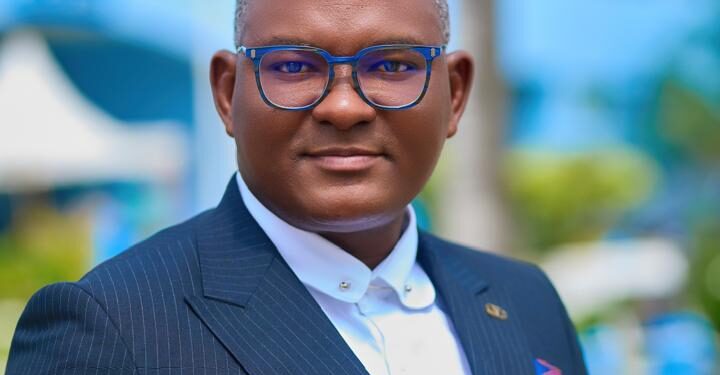
Dr. Victor Doke, an Analyst at the Kofi Annan International Peacekeeping Training Centre (KAIPTC), has opined that the United States’ expanded sanctions campaign against Iran is unlikely, on its own, to compel Tehran to make meaningful concessions over the conflict or its control of the Strait of Hormuz.
Dr. Doke said that Washington’s strategy of intensifying economic pressure could instead harden Iran’s position, particularly if the sanctions are extended to countries and companies that continue to maintain commercial and financial ties with Tehran.
The Trump administration has described the latest measures as part of “Operation Economic Outcast,” an expanded campaign targeting military procurement networks, oil traders, shipping companies, cyber actors and other entities accused of supporting Iran’s military and economic activities. Washington has also indicated that further measures could include secondary sanctions against countries and entities that continue to do business with Iran.
However, Dr. Doke argues that sanctions alone are unlikely to bring Tehran back to the negotiating table on terms acceptable to Washington. “If Iran is to kowtow to the U.S.’s pressure, then it means there has to be a total change of regime,” he said.

Fellow with the Faculty of Academic Affairs and
Research (FAAR) at the KAIPTC.
He noted that Iran’s political leadership is unlikely to view an agreement with Washington as mutually beneficial under the current circumstances. “They see it as a win-lose situation, not a win-win,” he said, arguing that Iran’s leadership would remain reluctant to enter an agreement it considers to be the result of American coercion.
His assessment comes as tensions between Washington and Tehran remain high following the expiration of a 60-day memorandum of understanding between the two countries amid deadlocked negotiations. Iranian officials and state-linked media have dismissed the latest sanctions as another extension of Washington’s longstanding pressure campaign, maintaining that previous sanctions have failed to produce fundamental changes in Iranian policy.
Also, the Analyst asserted that the greater pressure could also have consequences beyond Iran, particularly if secondary sanctions force other countries to choose between maintaining economic relationships with Tehran and complying with Washington.
He pointed to the competing interests of major powers, including the five permanent members of the UN Security Council, questioning whether they would collectively follow Washington’s lead or pursue their own economic interests. “If the sanctions begin to bite very hard, what it will mean is avenues for illegal trade with Iran and then other countries or other entities will now be very rampant,” he said.
He added that increased restrictions on Iranian oil exports could have a particularly significant effect on global markets.
“Oil prices will increase. When you talk about oil, there are a lot of things we get from oil. And so, what will happen is the third world countries and even some of the first world countries will feel the brunt.”
Dr. Victor Doke
Higher oil prices, he said, would feed into transportation and other costs, placing additional pressure on households and economies already struggling with high living costs. “Transportation costs will increase,” he said, adding, “People who barely can live, or have three meals a day would have a lot of difficulty.”
The potential disruption would extend beyond the direct effects on Iran, particularly for countries that depend on Iranian oil or could be exposed to volatility in international energy markets.
Doke compared the potential economic consequences with the wider effects experienced during the Russia-Ukraine war, warning that an escalation involving Iran could generate significant costs for countries far beyond the immediate conflict zone.
The Strait of Hormuz is particularly important in this calculation because of its role in global energy transportation. Any prolonged confrontation affecting shipping through the strategic waterway could add further uncertainty to already sensitive oil markets.
For Doke, however, economic pain does not necessarily translate into diplomatic compromise. He suggested that the Iranian government facing intense external pressure could instead seek alternative trading arrangements and strengthen ties with countries willing to continue doing business with it. “If there’s no regime change, everything will still be the same and could even get worse with allies supporting each other,” he said.
Nonetheless, Doke acknowledged that political change in Iran is possible, but said that the more immediate question is whether the pressure campaign produces a willingness on both sides to return to negotiations.
He warned that a strategy based primarily on coercion could have the opposite of its intended effect. “Sometimes it doesn’t work like that,” he said. “If a party who is so powerful coerces, uses coercion, then it makes the other parties have an entrenched position,” he added.
A sustained sanctions campaign could therefore leave the United States facing a difficult calculation: continue increasing economic pressure in the hope that it eventually forces Iran to negotiate, or pursue diplomatic avenues that could produce a compromise without further destabilising regional and global markets.
Doke Warns Of Humanitarian Crisis
Moreover, Dr. Doke said that the humanitarian implications should also remain central to any assessment of the strategy.
If sanctions continue to accumulate without producing negotiations, he warned, the resulting economic deterioration could create consequences inside Iran and in neighbouring countries. “They [Iran’s leadership] will have no alternative than to either resign or the people will revolt,” he said, adding that there could be “humanitarian crisis in Iran, not just Iran, but in neighboring countries.”
For now, Doke’s assessment is that sanctions may increase the cost of Iran’s position but are unlikely to resolve the underlying dispute by themselves.The central challenge, he said, is finding a path that brings both sides to negotiations without allowing economic coercion to further entrench their positions. “Let’s just hope that a decision for them to rescind and come to the negotiating table will happen,” he said. He added, “Otherwise, it means sanctions upon sanctions will be thrown at them [Iran].”
The effectiveness of the new campaign may therefore depend less on the severity of individual sanctions than on whether the pressure ultimately creates conditions for diplomacy—or instead pushes Iran and its partners toward deeper economic and political resistance.
READ ALSO: Bawumia’s Gold Program Boosted Foreign Reserves Without External Eurobond Borrowing – Gideon Boako