
Ghana’s approach to taxing petroleum products is coming under renewed scrutiny as another round of fuel-price increases takes effect, with a senior member of Parliament’s Energy Committee arguing that the current burden on consumers deserves a closer examination.
Deputy Ranking Member of the Energy Committee and Afigya Kwabre North MP, Collins Adomako-Mensah, says government should reassess the taxes and levies embedded in petroleum prices, particularly as international crude oil markets face renewed geopolitical pressure.
His intervention shifts the discussion away from whether government should simply provide another temporary cushion and towards a more fundamental question: how should Ghana distribute the cost of external oil-price shocks between consumers and the state?
Petrol prices are projected to rise by 4.80%, while diesel is expected to increase by 2.10% from September 1, based on the latest outlook from the Chamber of Oil Marketing Companies (COMAC).
Global Oil Shock Meets Domestic Tax Burden
The immediate trigger for the latest pressure is external, but the size of the increase consumers experience at the pump is also influenced by Ghana’s domestic pricing structure.
International crude prices have recently been affected by instability around the Gulf, creating additional uncertainty for oil-importing economies such as Ghana.
Although Ghana produces crude oil, domestic petroleum consumption still depends substantially on imported refined products, meaning movements in international markets can quickly affect local prices.
Mr Adomako-Mensah believes this is precisely when the tax component of petroleum pricing should be reassessed.
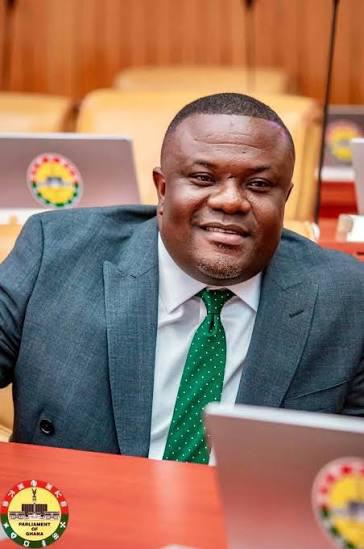
“Government must take a second look at the taxes and levies on the petroleum product at least in this particular period that we are having instability in the Gulf which is causing a surge in the crude oil prices.”
Collins Adomako-Mensah, Deputy Ranking Member, Parliament’s Energy Committee
The argument has an economic basis, but it also presents a fiscal dilemma.
Petroleum taxes and levies generate revenue for the state and support specific energy-sector obligations.
Reducing them could soften the impact on consumers, but the revenue foregone would have to be absorbed elsewhere.
The critical issue, therefore, is whether the existing tax burden remains appropriate when crude prices rise sharply, or whether exceptional market conditions warrant a temporary adjustment.
Temporary Interventions Face Sustainability Test
Government has already used interventions to moderate fuel-price pressures.
However, Mr Adomako-Mensah considers such measures inadequate when they are limited to short periods.
The concern is that temporary relief can treat the symptom without addressing the underlying structure that determines how much an international price movement eventually costs Ghanaian consumers.

“Clearly, the interventions either came in too late or it’s not enough for the consumer.”
Collins Adomako-Mensah, Deputy Ranking Member, Parliament’s Energy Committee
A recurring cycle of short-term interventions could also make energy-price management more difficult for businesses.
Transport operators, manufacturers and other fuel-intensive enterprises require some degree of predictability when planning costs.
A more structured response could involve establishing clear conditions under which selected petroleum taxes or levies are temporarily adjusted.
Such a framework would provide relief during exceptional shocks without necessarily creating a permanent reduction in government revenue.
That distinction is important because a blanket tax cut could create fiscal pressure even after international oil prices stabilise.
Energy Levies Add Another Layer
The debate also touches on Ghana’s broader energy-sector financing framework.
Mr Adomako-Mensah pointed to changes introduced following the 2025 Budget’s proposal to consolidate several energy-sector levies into an Energy Sector Shortfall and Debt Repayment Levy.
The government had maintained that the restructuring would not increase pump prices, but subsequent amendments, according to the MP, contributed to additional charges on petroleum products.
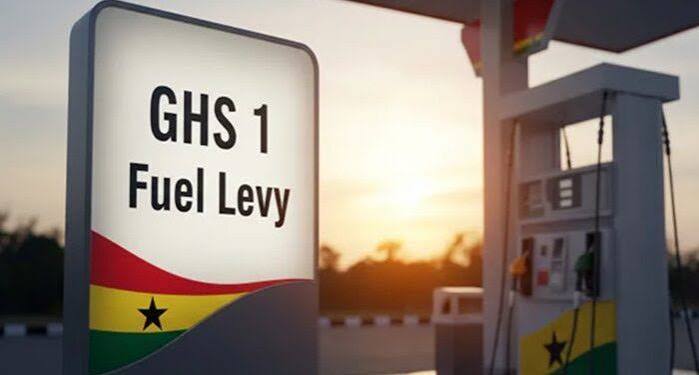
This makes the current debate more complicated than a simple question of taxation.
Ghana’s petroleum levies are connected to the financing of obligations within the energy sector, including the management of sector-related shortfalls and debt.
Any reduction must therefore be weighed against the consequences for the financial position of the sector.
Yet there is also a cost when the entire burden is transferred to consumers.
Higher fuel prices can increase transport fares and logistics expenses, while businesses may pass increased distribution and production costs through to final consumers.
The effect can therefore extend well beyond the filling station.
Fuel Prices Carry Wider Economic Consequences
The significance of the September increase lies partly in this multiplier effect.
Diesel is particularly important to Ghana’s commercial economy because it powers trucks, heavy-duty equipment and backup generation.
Petrol is equally important to private and commercial transportation.

When both products become more expensive, the effect can work through multiple channels.
Transport operators face higher operating costs; distributors pay more to move goods; farmers and agro-processors can face increased logistics expenses; and businesses dependent on generators may experience higher energy expenditure.
Consequently, fuel-price policy is also economic policy.
This strengthens the case for examining the complete petroleum-price structure rather than focusing exclusively on international crude prices.
The government’s fiscal position, however, cannot be ignored.
Petroleum taxes are a source of public revenue, while energy-sector levies have specific financing purposes.
Removing them without identifying alternative funding could simply move the financial burden from consumers to government. and ultimately back to taxpayers.
The better policy question is therefore not whether taxes should disappear, but whether their application can become more responsive to extraordinary market conditions.
Parliamentary Pressure For Deeper Review
Mr Adomako-Mensah has called for government to go beyond the short-term measures that have characterised recent interventions.
“I think government must dig deeper and do more instead of the one-month, two-month intervention that they’ve been putting in place.”
Collins Adomako-Mensah, Deputy Ranking Member, Parliament’s Energy Committee
That call comes at a point when Ghana is attempting to balance fiscal consolidation with the need to protect households from rising living costs.

A permanent reduction in petroleum taxes could undermine revenue mobilisation.
But leaving the entire international price shock with consumers could intensify cost-of-living pressures and increase operating costs across productive sectors.
A targeted and transparent mechanism could offer a more credible middle ground.
Such a system could identify exceptional international price movements and determine whether a portion of the shock should temporarily be absorbed through adjustments to selected taxes or levies.
It would also make government interventions less discretionary and potentially easier for businesses and consumers to anticipate.
For Ghana’s energy sector, the September price increase therefore raises a question larger than the immediate cost of fuel.
It exposes the need to reconsider how petroleum-price volatility is managed in an economy where fuel remains deeply embedded in transportation, commerce and production.
The challenge is to protect consumers without creating another fiscal liability for the state.
How Ghana resolves that balance could become increasingly important if geopolitical instability continues to produce volatility in global oil markets.
READ ALSO: GSE Opens September With Strong Volume and Mixed Results