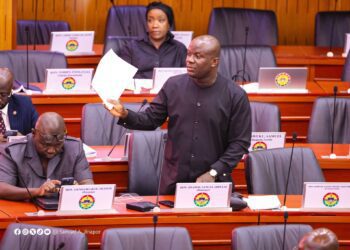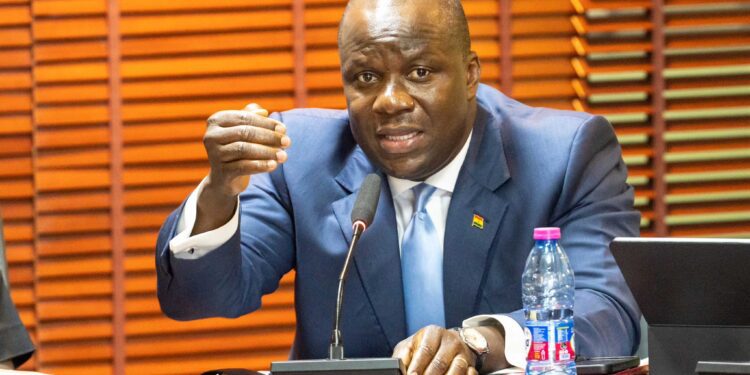
Hon. Samuel Abu Jinapor, MP for Damango and former Minister for Lands and Natural Resources, has stated that Ghana’s gold reserves expanded nearly fourfold under the Domestic Gold Purchase Programme initiated by the Flagbearer of the New Patriotic Party, Dr. Mahamudu Bawumia.
Addressing recent public discussions following Dr. Bawumia’s interaction with the Ghana National Association of Small-Scale Miners, Hon. Jinapor deemed it necessary to set the record straight regarding the true origins and execution of the policy.
He asserted that the interventions established by the former Vice President fundamentally altered the central bank’s foreign exchange management framework, allowing the nation to successfully shore up its monetary buffers.
“At the time of the launch of the Programme, Ghana’s gold reserve stood at 8.77 tonnes, and had been so for a very long time. And even though the Bank of Ghana’s target was to double this figure in five (5) years, as at December 2024, less than four (4) years into the implementation of this consequential Programme, the Bank of Ghana had almost quadrupled their reserves, from 8.77 tonnes to 30.53 tonnes.”
Hon. Samuel Abu Jinapor,
Expanding on the disclosure, Jinapor explained that the Domestic Gold Purchase Programme was conceived as a direct response to severe national economic distress.
Developed amidst the global economic headwinds of the COVID-19 pandemic and the Russia-Ukraine war, Dr. Bawumia led strategic consultations as head of the Economic Management T
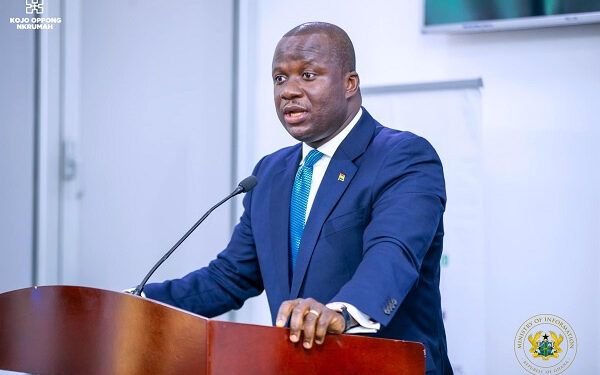
eam before instructing the Ministry of Lands and Natural Resources to engage all key industry stakeholders.
Following these structural deliberations, the scheme was formally launched on June 17, 2021, at the former head office of the Bank of Ghana. Prior to this intervention, Ghana’s gold holdings had remained static at 8.77 tonnes for decades.
Under the domestic purchasing mechanism, the Bank of Ghana acquired bullion locally from licensed aggregators and mining companies in local currency, driving overall reserves up to 30.53 tonnes by December 2024.
Architectural Shift in Reserve Management
The implementation of the Domestic Gold Purchase Programme marked a historic departure from Ghana’s historical reserve acquisition methods.
When the government first resolved to build national bullion reserves in 1960, the sovereign state purchased gold abroad and physically transported it to the Bank of Ghana’s vault. Under the new operational framework, the central bank buys gold directly from local producers, paying them the Cedi equivalent of prevailing market prices.

Reflecting on this paradigm shift during the initial launch, the Governor of the Bank of Ghana observed that the event was “historic as it marks the first time the Bank of Ghana is embarking on a domestic gold purchasing to augment our foreign reserves with a view to doubling Gold holdings in our foreign exchange reserves portfolio”.
He added that the policy initiative “marks a significant change in the modus operandi of Bank of Ghana’s foreign exchange reserves management operations”.
Economic Benefits and Balance Sheet Impact
Through a broader structural lens, this domestic purchasing mechanism delivered critical macroeconomic buffers during an period of heightened external volatility.
By acquiring gold locally in Cedis rather than relying exclusively on foreign exchange markets, the Bank of Ghana built up hard reserves while simultaneously reducing direct demand pressures on the US Dollar.
The accumulation of 30.53 tonnes of gold fortified the central bank’s balance sheet, creating an essential bulwark for the domestic currency.
This growing pool of physical bullion provided the monetary authority with enhanced balance sheet leverage to absorb foreign exchange shocks and maintain macroeconomic stability.
Furthermore, the program established a formalized off-take channel for domestic mining entities.
Direct purchasing arrangements with licensed aggregators integrated local producers into the central bank’s supply network, curbing illegal bullion leakage and capturing critical mineral value for the national economy.

The strategic shift to domestic gold purchasing underscores a vital evolution in how gold-producing nations manage their extractive wealth.
By transforming locally mined output directly into central bank reserves, the policy established an enduring template for sovereign asset building.
READ ALSO: Da Hammer Unveils Sika Featuring Sarkodie and Teephlow Thursday