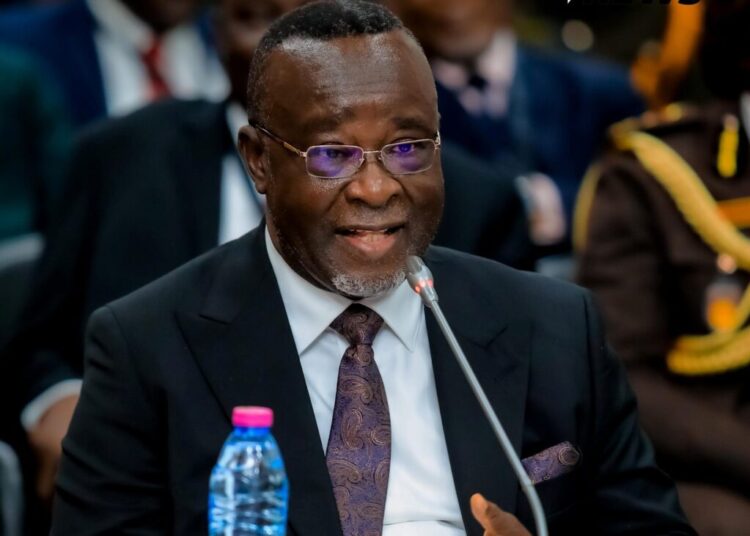
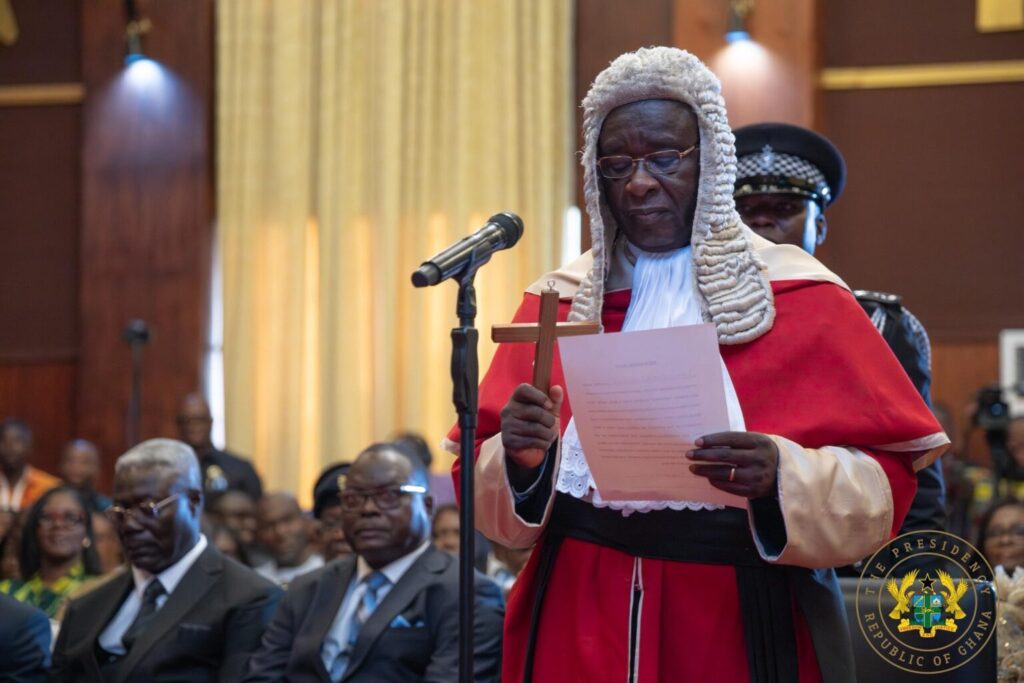
New Patriotic Party (NPP) Communications Director, Richard Ahiagbah has accused Chief Justice Paul Baffoe-Bonnie of abandoning the political neutrality expected of the head of the Judiciary. The comments follow remarks by the Chief Justice during visits to state institutions, where he questioned Ghana’s performance over the previous eight years while praising the work of some public organisations under the current administration.
Addressing NPP’s press release, Mr Ahiagbah argued that the Chief Justice occupies a constitutional position that requires him to remain above political contestation. In his view, public assessments that appear to compare the performance of political administrations could undermine confidence in the Judiciary’s independence.

The Communications Director described the Chief Justice’s conduct as particularly troubling because the Judiciary is expected to serve as a counterbalance to the Executive. He contended that the head of the Judiciary should not assume a role that could be associated with political communication.
“He is now a Chief Justice who is acting as a communicator for the NDC, and I think that this is most unfortunate.”
Richard Ahiagbah
Mr Ahiagbah’s criticism centres on remarks made by Justice Baffoe-Bonnie during a visit to the Minerals Income Investment Fund. The Chief Justice praised the institution and referred to the performance of some state organisations, asking what Ghana had been doing during the previous eight years.
The NPP Communications Director emphasised that such comparisons belong within the political arena and not within the public pronouncements of the country’s top judicial officer. He insisted that a Chief Justice must be seen as an impartial constitutional authority, particularly when political disputes are active before the courts.
He also questioned the Chief Justice’s decision to comment publicly on matters involving state institutions while, in his assessment, remaining silent on issues that the opposition considers important to the administration of justice. Mr Ahiagbah specifically referred to bail conditions imposed on some persons associated with the NPP and broader debates over the treatment of political opponents.
The Communications Director argued that if the Judiciary has an institutional interest in the protection of citizens’ rights, the Chief Justice should engage the agencies responsible for investigations and prosecutions. He cited the Economic and Organised Crime Office, the Bureau of National Investigations and the Criminal Investigations Department as institutions whose practices could be addressed through appropriate channels.
“He should go to EOCO, he should go to BNI and he should go to CID and tell them that those bail conditions are tantamount to abuse of citizens’ rights.”
Richard Ahiagbah
Mr Ahiagbah also questioned the appropriateness of the Chief Justice undertaking engagements with state owned institutions that involve commentary on their performance. The Communications Director argued that the Judiciary’s constitutional responsibility requires institutional distance from the Executive, particularly where public statements could be interpreted as endorsing government performance.
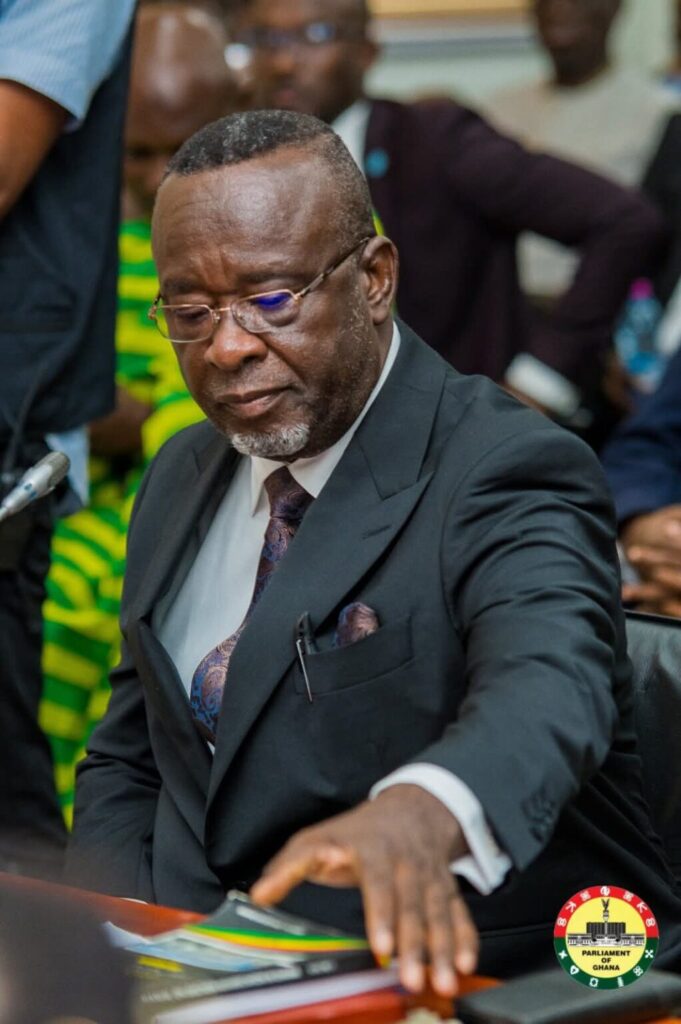
The controversy comes after the Chief Justice visited the Social Security and National Insurance Trust and the Minerals Income Investment Fund on September 2. During those engagements, he praised developments at the institutions and encouraged officials to contribute to the success of President John Dramani Mahama’s development agenda.
NPP Warns Against Judicial Bias As 2028 Election Approaches
New Patriotic Party (NPP) Communications Director Richard Ahiagbah also warned that perceived political bias within state institutions could deepen public distrust ahead of Ghana’s next general election. His remarks form part of the party’s wider response to Chief Justice Paul Baffoe-Bonnie’s recent public comments on government performance and the treatment of opposition figures.
Mr Ahiagbah pointed to what he described as unequal treatment of NPP members involved in legal cases. He particularly cited what the party regards as onerous bail conditions imposed at the investigative stage, arguing that such practices require stronger institutional scrutiny.
The Communications Director acknowledged that courts can vary bail conditions once matters reach the Judiciary. However, he contended that this does not remove the responsibility of the institutions that initially impose the conditions to respect the constitutional rights of suspects.
In his view, the issue should be addressed through a broader institutional conversation about how citizens are treated when they come into contact with the criminal justice system. He argued that senior judicial leadership should be attentive to practices that may affect confidence in the administration of justice.
Mr Ahiagbah also raised the NPP’s earlier objections to the removal of former Chief Justice Gertrude Torkornoo. He argued that the failure of the current Chief Justice to publicly comment on that controversy forms part of what the party considers an uneven approach to politically sensitive matters.
The Communications Director further contrasted the treatment of opposition figures with instances where persons associated with the governing National Democratic Congress benefited from prosecutorial decisions. He referenced the use of nolle prosequi in some cases and argued that the perceived differences deserve public scrutiny.
According to Mr Ahiagbah, the NPP’s present intervention is intended to alert Ghanaians to what the party considers a worrying direction within the country’s democratic institutions. He argued that citizens should ultimately determine whether the conduct of the current administration and the institutions operating under it meets the standards they expect.
The NPP Communications Director rejected the suggestion that the party’s criticism amounts to an attack on the Judiciary as an institution. Instead, he distinguished between respect for the judicial arm of government and objections to the conduct of individuals occupying constitutional offices.
He also dismissed the argument that the Chief Justice, as a Ghanaian, should enjoy the same freedom as any other citizen to comment on political developments. Mr Ahiagbah argued that constitutional office brings additional obligations that require greater restraint in public discourse.
“Everybody is Ghanaian, fine, but everybody is not Chief Justice. He is Chief Justice. So, every Ghanaian can make a comment, but he cannot make that comment.”
Richard Ahiagbah
The Communications Director further indicated that the NPP does not intend to determine the outcome of the dispute through confrontation. Instead, the party will continue to raise what it considers breaches of democratic standards and leave Ghanaians to assess the issues.
Mr Ahiagbah pointed to December 7, 2028 as the next major opportunity for voters to pass judgement on the government. He argued that if President John Dramani Mahama continues along what the NPP regards as an unacceptable path, voters will have the constitutional opportunity to determine whether the NDC remains in office.
READ ALSO: Bosom P-Yung Oseikrom Sikanii Drop Joint Tape Friday