Russia has condemned Norway’s seizure of a Russian commercial vessel in the Arctic archipelago of Svalbard, as Ukraine seeks to enforce a $4.22 billion arbitration award against Moscow.
The vessel, Professor Molchanov, was seized by Norwegian authorities following a court order requested by Ukraine’s state-owned energy company Naftogaz as part of its efforts to recover compensation awarded over Russia’s seizure of Ukrainian energy assets in Crimea.
Russia’s Ambassador to Norway, Nikolai Korchunov, criticised the seizure, describing it as a politically motivated action that violated international law. He said Moscow would challenge the decision through the courts. The Ambassador said the Russian embassy in Norway was in contact with the vessel’s crew and passengers and was monitoring the situation. He also indicated that Russia intended to appeal the court decision.
The seizure followed an order issued by the Nord-Troms district court on August 31, according to Svalbard Governor Lars Fause. The Governor said that the vessel had been prevented from leaving its current location in Barentsburg on Svalbard.
The Professor Molchanov is a Russian commercial expedition cruise vessel used for tourism voyages, including trips to Svalbard and other Arctic destinations. Its seizure represents an unusual extension of efforts by Ukraine to enforce international arbitration awards against Russian commercial assets outside Ukraine.
The dispute stems from Russia’s 2014 annexation of Crimea, which led to the seizure of assets belonging to Ukrainian companies operating on the peninsula. Among the assets affected were energy infrastructure and natural gas resources previously controlled by Naftogaz. In 2023, an arbitration tribunal in The Hague ordered Russia to pay Naftogaz approximately $4.22 billion in compensation for the unlawful seizure of its assets in Crimea.
Russia has refused to pay the award, prompting Naftogaz to seek enforcement through courts in different countries. The Ukrainian company has argued that Russia should not be able to avoid its financial obligations simply by refusing to recognise the arbitration ruling.
Its strategy has involved identifying Russian commercial assets in jurisdictions where courts can potentially recognise and enforce the award. The seizure in Norway is therefore part of a wider international legal campaign by Naftogaz to recover the money awarded to it.
Russia has consistently rejected the underlying claims and has criticised attempts by Ukraine and its state-owned companies to seize Russian assets abroad. Moscow has also increasingly described the detention or targeting of Russian-linked civilian and commercial vessels as part of what it considers hostile actions by Ukraine and its Western partners.
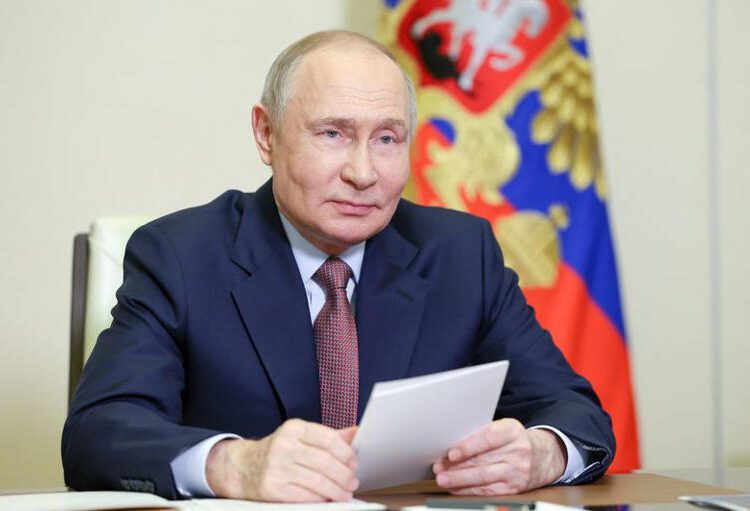
Russian President Vladimir Putin also criticised the seizure of civilian vessels. Speaking at the Eastern Economic Forum in Vladivostok, Putin described the seizure of civilian vessels and attacks on merchant shipping as “acts of state terrorism.”
He also condemned warnings by Ukrainian President Volodymyr Zelenskyy that flying in Russia could become unsafe because of Ukrainian long-range drone attacks. Putin linked those developments to the vessel seizure and argued that such actions could complicate prospects for future peace negotiations.
He further accused countries supporting Ukraine of being “complicit in international terrorism” by remaining silent over what Moscow described as attacks on civilian and commercial targets. The Norwegian case adds another layer to the increasingly complex legal and economic confrontation surrounding Russian assets abroad.
Since the start of the war, Ukraine and its allies have pursued different mechanisms for freezing or confiscating Russian-linked assets, while Moscow has challenged many such measures as unlawful. Unlike broader sanctions or asset-freezing measures, the Naftogaz case is based specifically on the enforcement of an international arbitration award. The company must therefore establish that the award can be recognised and enforced under the laws of the country where an asset is located.
Naftogaz Vows To Pursue Russian Assets
Naftogaz CEO Sergii Fedorenko welcomed the Norwegian court action, describing it as an important development in the company’s efforts to obtain compensation for assets seized in Crimea.
“This is another important step towards restoring justice for Russia’s unlawful seizure of Naftogaz assets in Crimea. Russia cannot evade responsibility simply by refusing to comply with an international arbitral award. We will continue to pursue Russian assets around the world.”
Sergii Fedorenko
Fedorenko’s comments underline Naftogaz’s broader strategy of using courts in foreign jurisdictions to enforce the arbitration award. Rather than relying on Russia’s voluntary compliance, the company has sought legal recognition of the award and court orders allowing Russian assets to be targeted where national laws permit enforcement.
The $4.22 billion award is among the largest compensation claims pursued by a Ukrainian state-owned company against Russia since the full-scale invasion of Ukraine in 2022.
According to the Svalbard Governor, the Professor Molchanov will remain in Barentsburg while the Norwegian legal proceedings continue.
READ ALSO: COCOBOD Pays GH¢2.68bn to Complete 2026 DDEP Obligations, Clears GH¢162m Cocoa Bills