The Ghana Muslim Students Association (GMSA) has thrown its weight behind concerns raised by the Chairman of its National Board of Patrons, Sheikh Dr Amin Bonsu, over the compulsory participation of Muslim students in Christian religious activities and the difficulties some face observing basic Islamic practices in certain public schools, describing the matter as a serious national issue requiring urgent attention.
Addressing the matter, GMSA said it does not view the matter as a contest between religions, but rather as an issue of religious freedom, mutual respect, equal treatment and the dignity of every Ghanaian student, regardless of faith background.
Outlining its position, the Association said it supports an educational environment where every student can pursue academic excellence while practising their faith without coercion, intimidation or discrimination.
It acknowledged the historical contributions of Christian missions to education in Ghana, but argued that this heritage should not license compelling students of another faith into worship contrary to their beliefs.
“A Muslim student enrols in a mission school to receive education, and while expected to comply with legitimate academic and disciplinary regulations, should never be compelled to perform religious acts contrary to their beliefs.”
GMSA
Pushing Back on Public Arguments
GMSA directly addressed arguments circulating in public discourse suggesting that Muslim students who choose to attend mission schools should simply accept the religious practices those institutions prescribe.
The Association respectfully disagreed with this position, noting that many of these schools now operate within Ghana’s government-assisted education system, funded by the resources of all Ghanaians regardless of religious affiliation.
It further stressed that a school’s Christian heritage should not justify compelling Muslim students into worship, just as GMSA does not support the reverse scenario of compelling Christian students into Islamic worship within Muslim-founded institutions.
The Association was also firm in dismissing suggestions that it and Sheikh Dr Amin Bonsu were raising these concerns to advance a hidden agenda or to push for wider Muslim influence within the education system.
“Our objective is not to Islamize Ghana’s schools, but to promote genuine peace and mutual respect.”
GMSA
Response To Calls for Muslims to “Build Their Own Schools”
Addressing calls for the Muslim community to simply establish more of its own schools rather than raise concerns about mission institutions, GMSA pointed to the community’s existing record of investment in education.
Citing institutions such as the Islamic Senior High School in Kumasi, Islamic Science Senior High School in Tamale, Sakafia Islamic Senior High School in Sawaba, Ghana-Lebanon Islamic School in Accra, Lady Fatimah SHS in Adenta, and Anbariyya Islamic SHS in Tamale, among others.
While affirming full support for strengthening and expanding such institutions, the Association maintained that the existence of these schools cannot serve as justification for denying Muslim students their religious rights within other educational institutions.
Matter Of Existing Policy, Not A New Demand
GMSA was emphatic that its concerns do not represent a new or contested demand, but rather reflect standing policy that some schools have simply failed to honour.
It referenced the Ghana Education Service’s 2015 Directive on Religious Tolerance, which already bars schools from compelling Muslim students into Christian worship or restricting the wearing of the hijab, alongside a 2024 Memorandum of Understanding between key stakeholders and the Conference of Managers of Education Units (COMEU), which was endorsed by GES in 2025.
The Association noted that these protections are further reinforced by Articles 17, 21 and 25 of the 1992 Constitution of Ghana, and echoed similar calls made separately by other Muslim organisations, including the Coalition of Islamic Organisations, Ghana (CIHOG), and the Federation of Muslim Women’s Associations of Ghana (FOMWAG), both of which have called for the existing framework to be enforced.
With Ramadan approaching, GMSA expressed particular concern for Muslim students who will need reasonable opportunity to observe religious obligations such as fasting and prayer, calling on school authorities nationwide to ensure students are not subjected to discrimination, punitive treatment or academic disadvantage as a result of their religious observance.
Calls On Government and Stakeholders to Act
GMSA called on Parliament, particularly its Committee on Chieftaincy, Culture and Religious Affairs, the Office of the National Chief Imam, and the Ministry of Education alongside GES, to give urgent attention to the matter and enforce the existing 2015 Directive and 2024 MoU across all government-assisted mission schools without further delay.
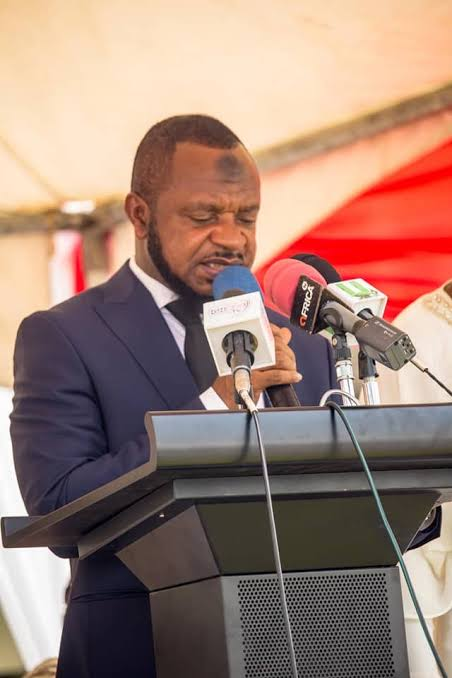
The Association further appealed to the Muslim Caucus in Parliament, led by Alhaji Yusif Sulemana, MP for Bole-Bamboi, along with Muslim leaders nationwide and the Presidency, to lend their voices toward a lasting, nationally applicable solution to the matter.
Closing its statement, GMSA reaffirmed its readiness to work with the National Chief Imam’s office, Parliament, the Ministry of Education, and both Muslim and Christian leaders in finding a sustainable resolution, stressing that no student should have to surrender their faith in order to receive an education, and that it remains committed to pursuing the matter until meaningful progress is achieved.
READ MORE: Ghana Secures $30 Million Grant for Damongo Tech University