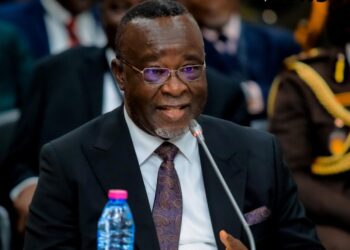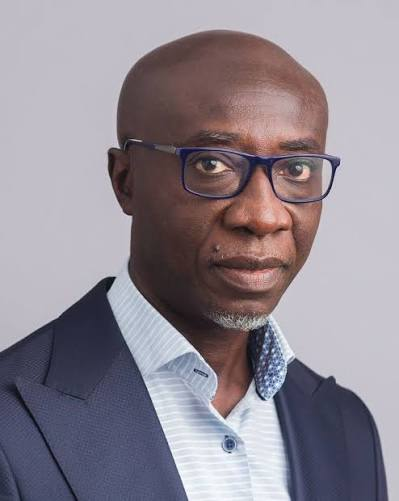
Professor Kwadwo Appiagyei-Atua of the University of Ghana School of Law has warned that state authority is increasingly encroaching within African universities through violations of institutional autonomy, a trend he says undermines academic freedom and, by extension, the broader relationship between academic freedom and democratic governance.
Speaking in an interview following his inaugural lecture delivered under the theme “Reclaiming Academic Freedom for Democratic Renewal in Africa,” Prof Appiagyei-Atua explored the conceptual foundations of academic freedom, its historical roots, and the specific ways in which it is currently being eroded across the continent.
Explaining the concept at the centre of his research, Prof Appiagyei-Atua described academic freedom as a specialised freedom carved out specifically for the academic community, comprising university management. academics and students.
He said its core purpose is to enable this community to create a congenial atmosphere for learning, the pursuit, production and dissemination of knowledge, and the application of that knowledge for the good of society.
He further explained that academic freedom serves as a mechanism through which the academic community can speak truth to power and challenge established orthodoxies, ensuring that knowledge produced within universities can be applied without undue hindrance or state-imposed constraint.
Historical And Legal Roots
Tracing the origins of the concept, Prof Appiagyei-Atua said his research locates academic freedom within the traditions of ancient African universities, where societies enjoyed specific rights, including the right to think, the right to express oneself, the right to learn, and the right to demand knowledge from those who possessed it.

He explained that these traditional rights find their modern equivalents in freedom of expression, the right to education, and the right to science, among other contemporary constitutional protections.
Global And African Trends in Decline
Assessing the current state of academic freedom, Prof Appiagyei-Atua said the concept has been on a general decline over the past decade, both globally and within Africa specifically.
He noted that this decline has been observed even within established democracies, including the United States and certain European countries, complicating the conventional assumption of a straightforward link between strong democratic governance and robust academic freedom.
“Where democracy wins, academic freedom wins, where democracy is doing well, academic freedom also does well.”
Prof Appiagyei-Atua
He argued that within the African context specifically, the situation is more precarious, with academic freedom declining at a faster and more serious pace than in other regions.
According to him, this accelerated decline is closely tied to the weakening of democratic space across the continent, which in turn narrows the civic space available for open academic discourse.
Beyond identifying external state actors as a source of pressure on academic freedom, Prof Appiagyei-Atua stressed that his research deliberately avoids treating the state as the sole responsible party.

He argued that internal violations occurring within university structures themselves must also be addressed, insisting that without resolving these internal contradictions, the broader connection between academic freedom and democracy cannot be firmly established within universities, let alone extended into wider society.
Mapping The Actors and Their Obligations
To analyse where academic freedom is upheld or violated, Prof Appiagyei-Atua outlined a framework of key actors, including university management, academics, students, the state, and the broader society within which universities operate. He explained that each of these actors holds distinct obligations and relationships that must be individually examined.
According to him, the state carries specific duties toward each group, including funding library and infrastructural development for the benefit of students, ensuring fair remuneration for academics, and allowing academics to conduct and publish research without interference.
In its relationship with university management, he said the state is obligated to respect institutional autonomy, refraining from imposing leadership choices or introducing selective admission protocols that favour unqualified individuals over qualified ones.
He further noted that university management carries its own distinct obligations toward academics, particularly around ensuring fair and unobstructed promotion processes, as well as toward students, citing as an example a previous requirement at the University of Ghana mandating that students obtain permission from the Dean of Students before organising demonstrations, a policy he noted has since changed.
State Encroachment Through Compromised Autonomy
Central to Prof Appiagyei-Atua’s assessment was his observation that institutional autonomy within universities is increasingly being compromised by government actors, a development he described as effectively allowing the state to “shrink” the space traditionally reserved for university self-governance.
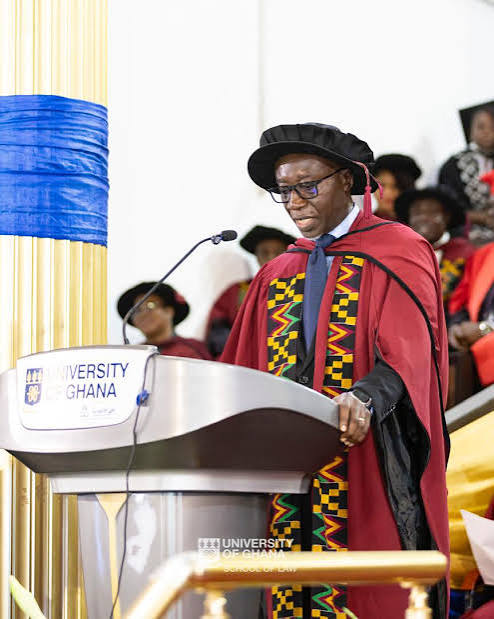
“The state is shrinking within the universities, and the state is shrinking because of attempts by governments to violate the systemic autonomy of the university,”
Prof Appiagyei-Atua
He further observed that a common strategy employed by governments across Africa involves using university management structures as intermediaries to advance state interests within university spaces, effectively embedding state influence within institutions that are constitutionally expected to operate independently of direct political control.
READ MORE: Government Set to Deploy 50,000 Teachers to Private Schools