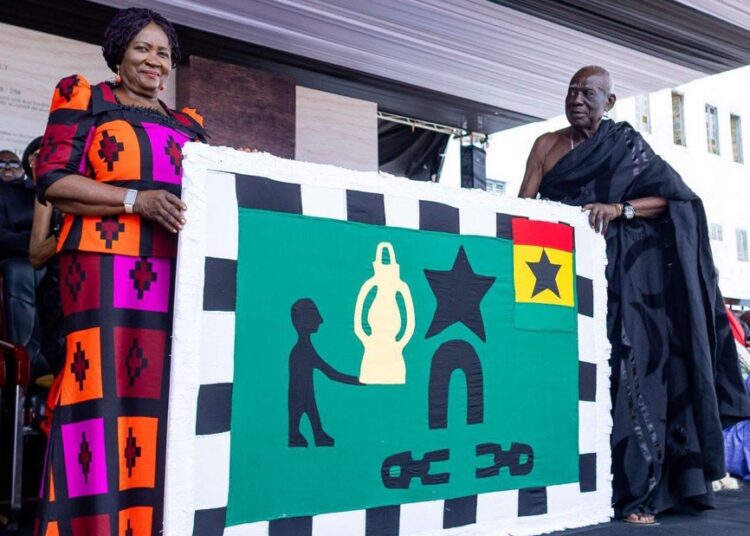
Vice President Professor Jane Naana Opoku-Agyemang stood with the people of Oguaa and traditional leaders on Thursday at Cape Coast Castle for a solemn Slavery Memorial Service.
The gathering formed part of this year’s Oguaa Fetu Afahye Festival and brought together chiefs, dignitaries and community members to remember those who suffered during the transatlantic slave trade.
The service took place at one of the most powerful symbols of that history. Cape Coast Castle once held thousands of Africans in its dungeons before they were forced onto ships bound for the Americas. On this day the site became a place of quiet reflection rather than just a tourist stop.
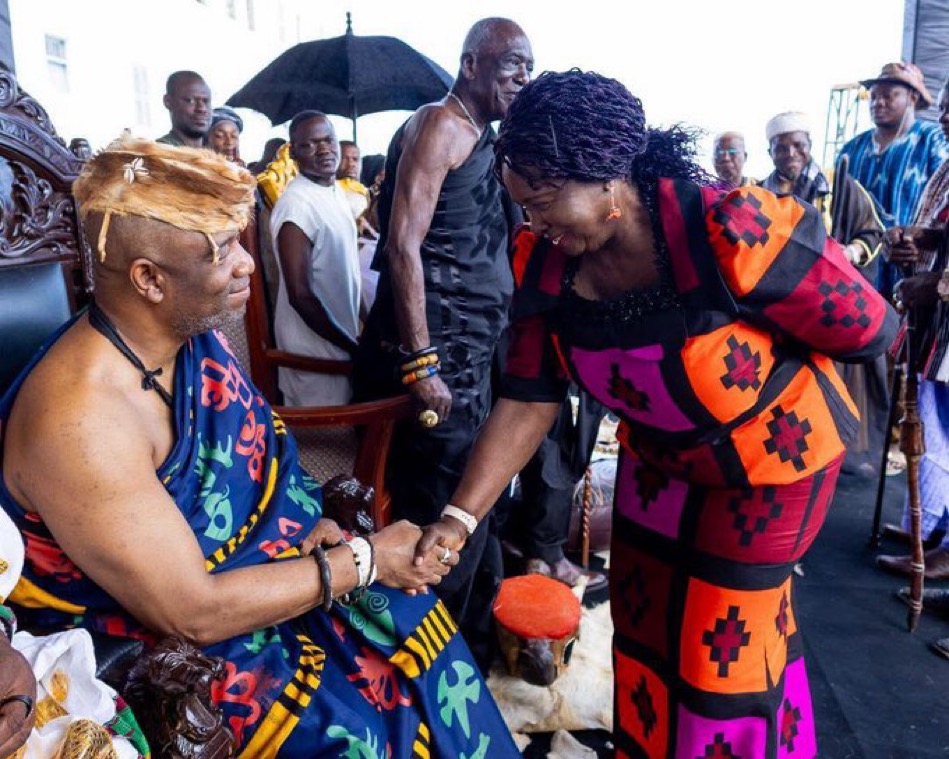
The Vice President joined Osabarima Kwesi Atta II, the Oguaamanhen, along with other traditional authorities including representatives from Gonja and Ga states.
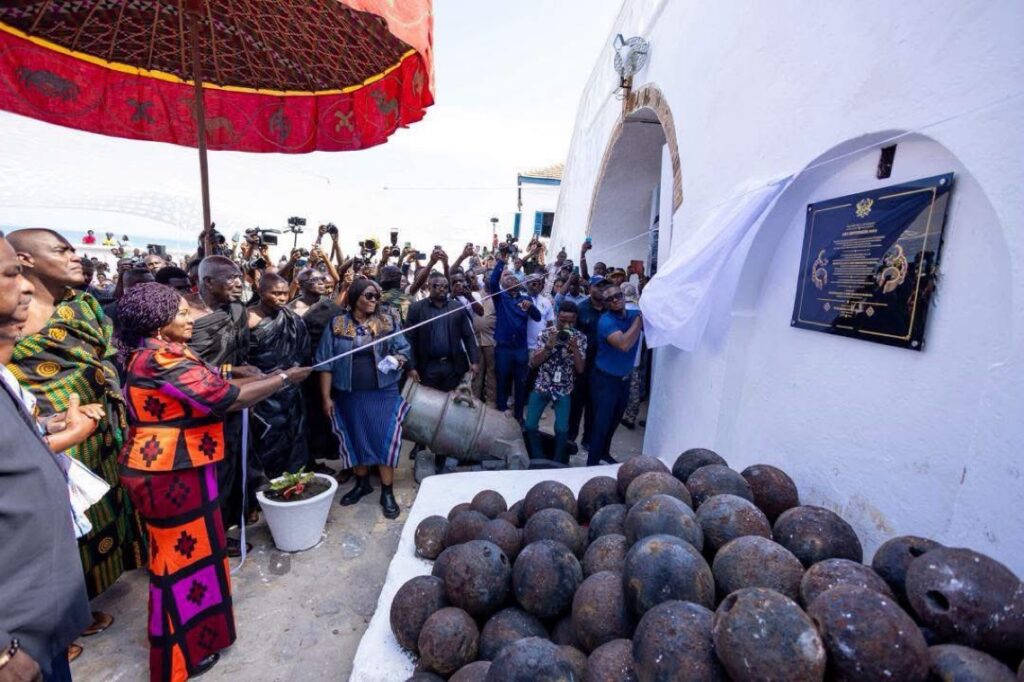
Photographs from the event show the Vice President in bright traditional attire greeting the Omanhen, speaking at a podium, and later helping to unveil a commemorative plaque on the castle grounds. Cannonballs still rest nearby as silent reminders of the fort’s past. She also appeared holding a large painted banner that carried symbols of unity and remembrance.
In her remarks Professor Opoku-Agyemang spoke about the need to keep the full story alive. She said Ghana has a duty to preserve the forts, castles and other sites linked to the trade and to interpret them honestly. “Remembering the suffering is important”, she noted, but so is recognising the resistance and resilience shown by African communities.
The conversation, she added, must also include the ongoing push for reparative justice.
The timing of the memorial carries extra weight. Earlier this year the United Nations formally recognised the trafficking of enslaved Africans and the system of racialised chattel slavery as the gravest crime against humanity. Ghana played a leading role in that diplomatic effort.
The plaque unveiled at the castle is meant to mark both the painful history and the country’s commitment to telling it truthfully for future generations.
Fetu Afahye itself is one of the oldest and most important festivals on the Ghanaian calendar. It celebrates the people of Cape Coast, their deities and their heritage. Including a slavery memorial in the programme shows how the community continues to hold space for the hard parts of its past while still marking the living culture of the present.
The festival’s main durbar is set for Saturday, but the memorial on Thursday set a reflective tone for the week.
Public Reaction
People who attended described a mix of emotion. Some stood quietly near the old walls. Others took part in the formal proceedings under large umbrellas that shielded chiefs from the sun.
The presence of traditional leaders from different parts of the country underlined that the slave trade affected communities far beyond the coast. Routes once ran inland to places like Assin Manso, where captives took their last bath before the final march to the sea.
Professor Opoku-Agyemang has spoken often about these sites. She has stressed that Ghana is the custodian of some of the most significant remaining evidence of the trade. Protecting the buildings is only part of the work.
The stories of those who were held there, those who resisted, and those who survived must also be kept alive and shared accurately.
For many in the diaspora the castles remain places of pilgrimage. Visitors from the Americas and the Caribbean walk through the same doors and stand in the same courtyards. Events like Thursday’s memorial help keep the connection between Africa and its descendants active rather than purely historical.
The Vice President’s attendance also signalled the government’s continued focus on the broader reparations conversation. Ghana has positioned itself as a leading voice on the continent on this issue.
The memorial offered a local stage for that larger discussion, linking the physical place of Cape Coast Castle to the international efforts still underway.
As the Fetu Afahye continues, the town will fill with colour, drumming, canoe races and the usual festival energy. Yet the memory of Thursday’s service is likely to stay with those who were present. Standing at the castle, listening to the speeches and watching the plaque being unveiled brought the history close again.
It is a history that still shapes identities, relationships and political questions today.
The people of Oguaa, their traditional leaders and the Vice President chose to mark that history in the middle of their biggest annual celebration. In doing so they made clear that remembering is not separate from living culture. It is part of it.
The castle remains, the stories remain, and the work of understanding both continues.
READ ALSO: UK Reaffirms ‘Unwavering’ Support for Falkland Islands