Ghana’s dependence on liquid fuels for thermal electricity generation could be costing the economy hundreds of millions of dollars that could potentially be avoided through greater use of natural gas, according to Technical Advisor to the Minister of Energy and Green Transition on Petroleum, Ing. Dr Sulemana Yussif.
Dr Sulemana estimates that moving generation from light crude oil and other liquid fuels to natural gas could save Ghana close to US$500 million annually.
The estimate places the country’s gas infrastructure strategy at the intersection of electricity affordability, foreign exchange management and energy security, rather than treating additional gas-processing capacity simply as another infrastructure project.
The estimate was disclosed during a Ghana Institution of Engineering (GhIE) Branch 4 discussion in Accra, where engineers and energy-sector stakeholders examined infrastructure bottlenecks affecting Ghana’s ability to process, transport and utilise natural gas.
“If we switch from liquid, let’s say LCO, light crude oil, to generate power and use gas, we are saving closer to half a billion on an annual basis. That is huge.”
Ing. Dr Sulemana Yussif, Technical Advisor to the Minister of Energy and Green Transition on Petroleum
The argument is particularly relevant to Ghana because thermal generation remains an important component of the electricity mix.
Whenever domestic gas is unavailable or insufficient, power producers can turn to more expensive liquid fuels, creating additional exposure to international commodity prices and foreign-exchange movements.
That exposure extends beyond the immediate fuel bill. Liquid-fuel generation can place pressure on the cost of electricity production, while payments for imported fuels also create foreign-exchange outflows at a time when Ghana continues to prioritise external-sector stability.
The economic proposition behind greater gas utilisation is therefore straightforward: if Ghana can reliably process and deliver more gas domestically, a portion of expenditure currently associated with liquid-fuel generation could potentially be redirected into the domestic economy.
GPP2 Moves Beyond A Single Processing Facility
The proposed second Gas Processing Plant (GPP2) has consequently assumed strategic importance in the government’s plans for Ghana’s gas sector.
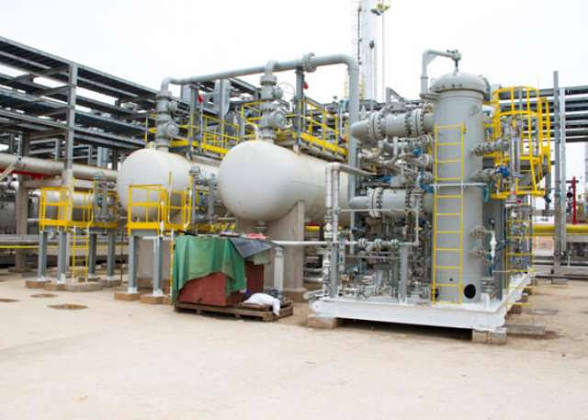
Ghana currently relies on the Atuabo Gas Processing Plant, with the Energy Ministry indicating that the facility has processing capacity of about 120 million standard cubic feet of gas per day.
GPP2 is intended to add processing capability and strengthen the infrastructure connecting Ghana’s gas resources to the electricity and industrial sectors.

The government has indicated that preparations for GPP2 are sufficiently advanced for mechanical completion to be targeted for the first quarter of 2028, with operations expected in the second quarter, subject to implementation remaining on schedule.
The significance of the second facility lies partly in the limitations created when a country’s gas infrastructure is concentrated around a single major processing asset.
More processing capacity provides greater scope to turn raw gas into usable fuel for thermal plants, but the economic benefit depends on whether the wider system can move that gas to where it is needed.
This makes GPP2 only one part of the investment equation.
An additional processing plant without adequate transportation infrastructure risks creating another bottleneck.
Similarly, a pipeline without sufficient gas volumes to transport cannot deliver its full economic value.
Pipelines Could Determine How Much Value Stays Home
That concern featured prominently in the engineering discussion, particularly around the proposed onshore natural gas pipeline.
Ing. Dr Frank K. Pinto, Chairperson of the Greater Accra Branch of the Ghana Institution of Engineering, stressed that the potential benefits of expanded gas utilisation would depend on the effectiveness of the transportation network supporting it.
The proposed pipeline is expected to complement processing expansion by creating additional capacity to move gas to power-generation facilities and industrial users.

Its strategic value goes beyond physical transportation. Infrastructure ownership and domestic participation determine where part of the economic value generated along the gas chain ultimately accrues.
For Ghana, developing domestic processing and transportation capability could therefore help retain more value within the economy rather than allowing infrastructure gaps to translate into continued dependence on imported fuels and external services.
The distinction is important. Energy security is not achieved merely by possessing gas resources. It requires the infrastructure needed to process, transport and consume those resources reliably.
“The benefit is colossal when you consider the alternative to not having the gas processing plant.”
Ing. Maxwell Kwame Kelly, General Manager, Engineering and Maintenance, Ghana Gas
Ing. Kelly also suggested that additional processing capacity could reduce the pace at which electricity costs rise, even if it would not eliminate upward pressure on energy prices altogether.
The distinction matters because infrastructure investments should not necessarily be judged on whether they make electricity prices fall immediately.
Their economic value may instead come from preventing sharper increases by reducing exposure to more expensive fuel sources.
Gas Infrastructure Also Supports Upstream Production
The case for GPP2 extends further upstream.
Emmanuel Tamaku, Gas Business Manager at the Ghana National Petroleum Corporation (GNPC), pointed to the relationship between gas-processing capacity and Ghana’s offshore petroleum production.
Associated gas is generated alongside crude oil from offshore fields. Where infrastructure is inadequate to receive and process that gas, the limitation can eventually affect how efficiently petroleum resources are developed.

Additional processing capacity could therefore provide greater flexibility in managing associated gas while supporting the development of oil and gas resources.
This creates an important link between Ghana’s upstream ambitions and its power-sector requirements.
Ghana is simultaneously attempting to attract new investment into its upstream petroleum sector, expand domestic gas utilisation and reduce the cost of electricity generation. These objectives cannot be pursued independently.
If new upstream investment increases gas production but the country lacks sufficient processing and transportation infrastructure, part of the potential value of those resources remains unrealised.
Conversely, if gas infrastructure expands without sufficient demand or upstream supply, the assets could become underutilised.
The challenge is consequently one of sequencing and coordination.
Foreign Exchange Savings Could Strengthen Energy Security
The proposed shift from liquid fuels to gas also carries a macroeconomic dimension.
The nearly US$500 million annual saving cited by Dr Sulemana represents a potential reduction in the amount of foreign exchange required for power generation if sufficient domestic gas becomes available and can reliably displace liquid fuels.
That does not mean the entire amount would automatically translate into a direct fiscal saving.
The actual benefit would depend on gas prices, availability, infrastructure costs, plant efficiency, contractual arrangements and the volume of liquid fuel that can realistically be displaced.
Nevertheless, the scale of the estimate illustrates why Ghana’s gas strategy is economically consequential.
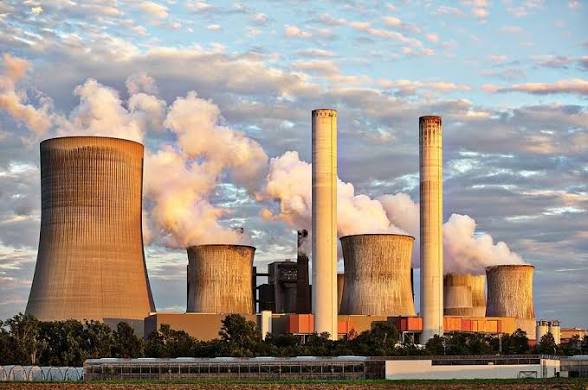
A thermal power plant may have the generating capacity required to supply electricity, but its economic competitiveness depends heavily on the fuel available to it.
A cheaper and more reliable fuel source can change the economics of generation without requiring the construction of an entirely new power fleet.
This is particularly relevant as Ghana works to strengthen energy-sector finances.
Reducing the cost of fuel required to generate electricity can improve the economics of the electricity supply chain, although infrastructure investment itself must be financed and managed efficiently.
The broader objective should therefore be to reduce the structural cost of producing power rather than repeatedly subsidising expensive generation after the cost has already been incurred.
The Real Test Will Be Delivery And Integration
Ghana’s gas-to-power strategy now faces a practical test: whether GPP2, the proposed pipeline and related infrastructure can be delivered on time and integrated into the existing energy system.
The potential savings identified by Dr Sulemana provide a compelling economic rationale, but the figure should not be treated as an automatic return on investment.
The infrastructure must work as a system.
Gas must be available. Processing capacity must be operational. Pipelines must have sufficient throughput. Thermal plants must be technically capable of utilising the gas.
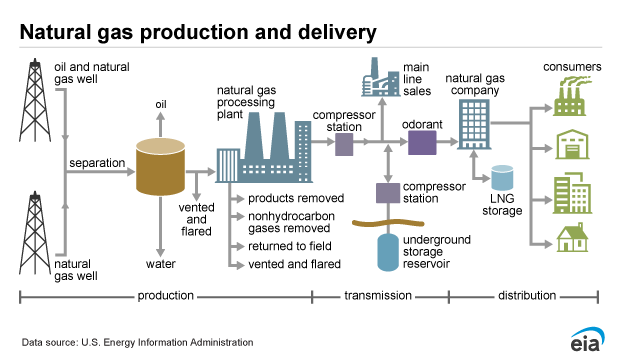
Commercial arrangements must support reliable supply, and the entire chain must be managed efficiently.
Failure at any point can reduce the value of investment elsewhere.
That is why the engineering discussions surrounding GPP2 are significant. The central question is no longer simply whether Ghana needs another gas-processing plant.
It is whether the country can build a fully integrated gas value chain capable of converting domestic resources into cheaper power, stronger industrial capacity and lower foreign-exchange exposure.
For a country seeking to strengthen energy security while reducing pressure on public finances, that distinction is critical.
Ghana’s gas resources can provide more than fuel for power plants. With the right infrastructure, they can become part of a broader strategy for stabilising electricity costs, supporting industrialisation, enabling upstream development and keeping a greater share of energy-related expenditure within the domestic economy.
The US$500 million estimate consequently represents less a guaranteed saving than a measure of the opportunity cost of failing to resolve Ghana’s gas infrastructure constraints.
If GPP2 and the supporting pipeline are delivered efficiently, the payoff could extend well beyond the processing plant itself.
READ ALSO: GSE Composite Gains 0.37% After Recent Market Losses