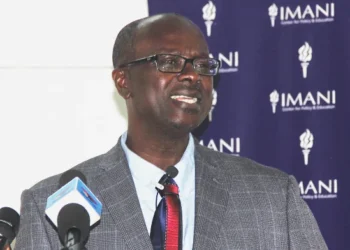

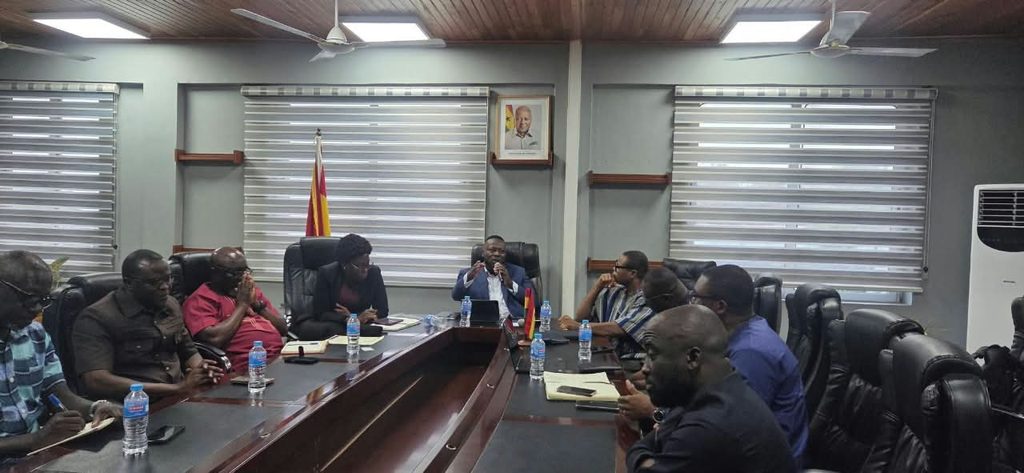
The IMANI Center for Policy and Education and the Ministry of Youth Development and Empowerment confronted a rising public health crisis among Ghana’s youth during a strategic dialogue in Accra on Wednesday, September 2, 2026, examining adolescent substance abuse alongside the institutional fragmentation that has historically hampered coordinated responses to youth policy challenges.
The IMANI delegation, led by Founding President and Chief Executive Officer Franklin Cudjoe, with Vice-President Evans Selorm Branttie, Research Assistant Ransford Brobbey, Writer and Associate Kay Codjoe, and Technology Associate John Sitsofe Mensah, stressed the urgency of the substance abuse issue, citing survey data that revealed how early exposure typically begins.
The dialogue cited survey data showing that 67 percent of young drug users initiate exposure before the age of 18, a figure that reframes substance abuse as fundamentally an adolescent and even child protection issue rather than one confined to young adults.
That timing has direct implications for where and how intervention efforts should be targeted, pointing toward schools, families and community structures reaching children well before they leave secondary education.

Targeting Synthetic Opioids Through an Unlikely Partner
To combat the proliferation of synthetic opioids and prescription syrups among young people, IMANI recommended expanding the Ministry’s existing “Red Means Stop” campaign through a partnership with the Driver and Vehicle Licensing Authority, specifically targeting commercial motorcycle operators.
The recommendation reflects an understanding that commercial motorcycle riders, commonly known as okada operators, often serve as informal distribution points within their communities, making them a strategic intervention point that also lets the campaign promote road safety alongside its anti-substance-abuse messaging.
That dual-purpose framing gives the expanded campaign two distinct public benefits from a single coordinated effort, potentially making it easier to secure institutional buy-in and funding than a narrower campaign focused on substance abuse alone.
Enlisting Traditional and Faith Leadership
The Ministry highlighted its strategic alliances with traditional Queen Mothers and the Christian Council of Ghana as complementary channels for reaching young people, describing these partnerships as efforts to leverage community and faith-based influence for moral regeneration.
That approach recognises that formal government messaging often carries less weight within communities than trusted local and religious figures, particularly on matters touching family life, discipline and moral formation.
By working through Queen Mothers, who hold significant traditional authority in many Ghanaian communities, and the Christian Council, representing one of the country’s largest religious constituencies, the Ministry is positioning its substance abuse response within existing trusted social structures rather than relying solely on state institutions to carry the message.
Breaking Down the Silos Between Youth Agencies
The dialogue’s final major theme addressed a structural obstacle underlying nearly every other issue discussed: institutional fragmentation across the agencies responsible for youth policy.
Both IMANI and the Ministry agreed that the success of the various interventions discussed, from Adwumawura to TVET reform to substance abuse prevention, ultimately depends on dismantling the silos that have historically separated these agencies’ operations.
Over the past 18 months, the Ministry disclosed, it has prioritised harmonising the operations of the National Youth Authority, the National Entrepreneurship and Innovation Programme, the Youth Employment Agency and the National Service Authority, working toward a seamless “Apprenticeship to Entrepreneurship” pipeline.
That harmonisation effort aims to ensure a young Ghanaian moving through vocational training, national service, entrepreneurship support and eventual formal employment encounters a coordinated system rather than four separate agencies operating with limited coordination or shared data.
Why Harmonisation Matters for Every Other Reform
The institutional coordination question connects directly back to concerns raised elsewhere in the dialogue, including IMANI’s push for better conversion-rate tracking through the Ministry’s planned Youth Tracker system.
A centralised tracking system can only function effectively if the underlying agencies it monitors, the NYA, NEIP, YEA and NSA, actually share data and coordinate programming rather than operating as isolated units with their own separate beneficiary lists and reporting structures.

In that sense, the harmonisation effort represents less a standalone initiative and more a necessary foundation for the other reforms discussed throughout the dialogue, from cooperative enterprise hubs to TVET reorientation to substance abuse prevention campaigns.
Without coordinated institutional architecture, each of those individual interventions risks operating in isolation, limiting the kind of compounding impact that a genuinely integrated youth policy system could achieve.
READ ALSO: IMANI, Youth Ministry Push TVET Reform to Fix Skills Gap