Ghana’s Constitutional Review Implementation Committee will not be tied to any amendment language prepared for it in advance by government, according to its Secretary, Osagyefo Oliver Barker-Vormawor. He set out the position in an exclusive interview with The Vaultz News at his office at Merton and Everett LLP on Swaniker Street in Accra.
The clarification lands against accounts, traced to Attorney-General Dr Dominic Ayine, that officials completed a zero draft before the committee was sworn in and ahead of the November package.
Mr Barker-Vormawor said the committee reads its mandate as an instruction to produce text that carries the greatest fidelity to the political settlement already reached, whatever documents arrive on its desk.
He was direct about the standing of any such document. “Anybody can submit draft language. The government is free to submit draft language to us,” he said, adding that the committee would still write what it judges to reflect what the political process has settled.

He also questioned the logic of treating an unfinished text as a closed matter. “In fact, the name draft itself suggests that it’s not finalized. If that was the case, you don’t need a committee.”
A Technician’s Work Rather Than A Policy Body
Barker-Vormawor drew a firm line around what the committee can and cannot decide, describing its remit in narrow terms. “The work of the committee, as I understand it so far, is more a technician’s work rather than a policymaker’s work,” he said, noting that the recommendations placed before it leave little policy margin.
That framing invites an obvious question about why an advocate long associated with the call for an entirely new constitution would accept such a brief. He answered it without hedging. “I say it proudly that I don’t renounce that as a political objective, a long-term goal and that, in fact, if this work becomes wrapped up, I’ll go back to that advocacy.“
His stated reason for sitting inside the process is practical. Ghana has not run a national vote of this kind since 1992, and he sees the exercise as the country’s first working laboratory for how constitutional change is actually put to citizens.
Ghana’s First National Referendum Under The Fourth Republic
“We have never gone to a referendum before under the Fourth Republic,” he said, pointing out that the only votes Ghanaians have experienced were the limited exercises that created new regions. Most citizens therefore have no reference point for what mobilisation, civic education and question framing look like at national scale.
The gap he flags most sharply concerns what voters will actually be handed. The constitution requires a draft amendment bill to pass through Parliament before it goes to a referendum, which implies that citizens will be asked to approve drafted law rather than plain propositions.
He contrasted this with 1964, when government put the questions first and turned the answers into technical language afterwards. That inversion carries a comprehension risk he did not downplay.
“I assure you there are so many Ghanaians who are lawyers who themselves do not sufficiently understand the constitution. How much more asking ordinary Ghanaians to understand it?”
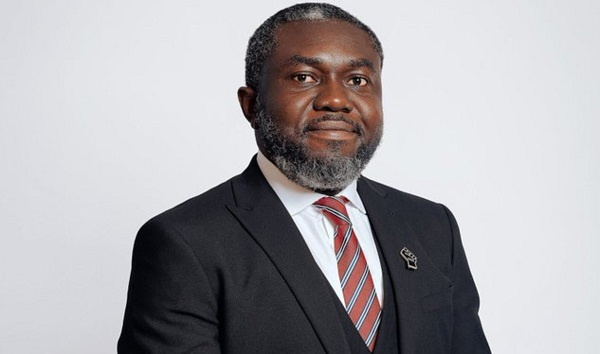
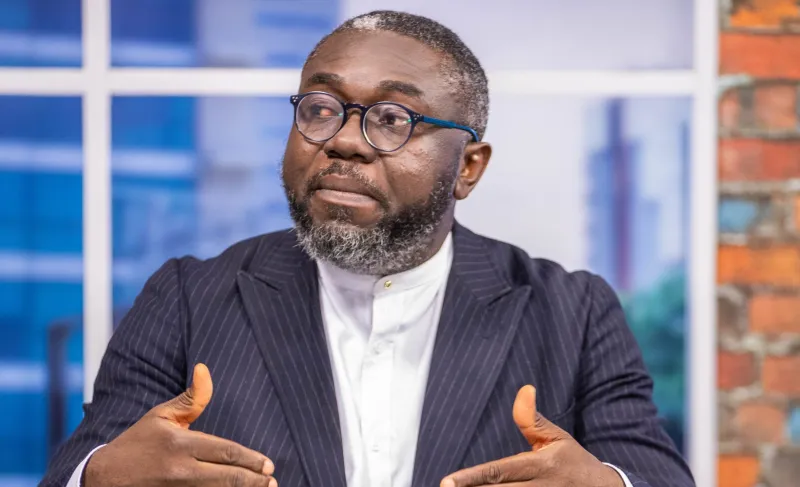
Secretary to the Constitutional Review and Implementation Committee, Mr Osagyefo Oliver Barker-Vormawor
Around that sit questions nobody has settled. How many days should a referendum run, and how will ballot material be translated into braille and made accessible to voters with disabilities? These, he said, are learning experiences the country is confronting for the first time in practice.
Campaign Financing Laws And Reserved Seats In Parliament
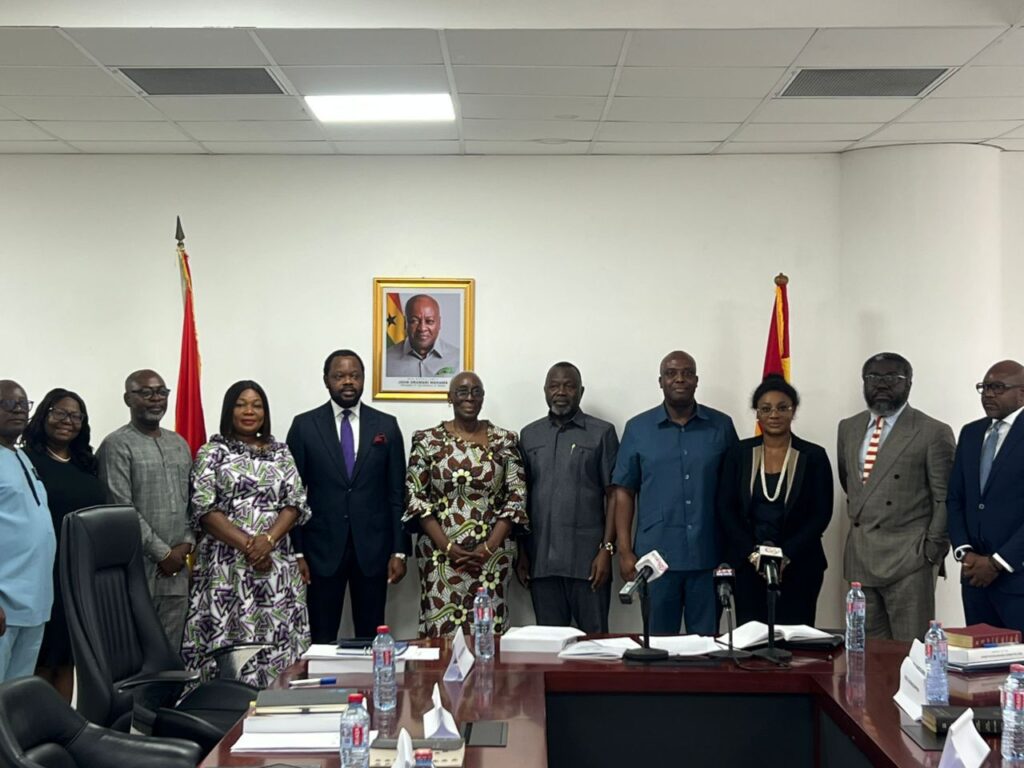
The committee’s brief also stretches well beyond the amendment bills. Government has asked it to develop a suite of legislation covering campaign financing, a Human Rights Act, the Presidential Transitions Act, the Local Government Act and the Public Financial Management Act.
Building those frameworks, Barker-Vormawor conceded, forces the committee into substantive policy territory even though it is not constituted as a policy body. The same tension runs through the proposal on representation.
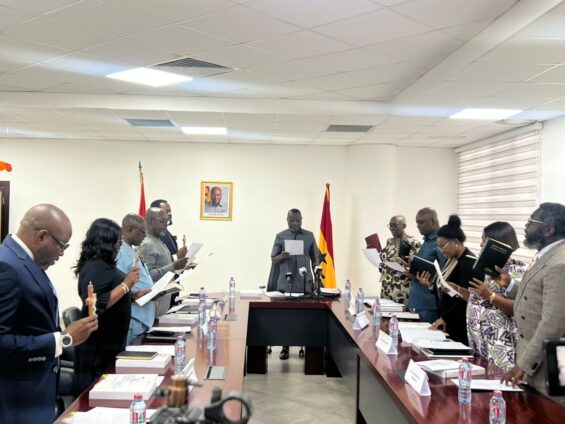
Government has accepted proportional representation to a limited extent, with additional members added to the current Parliament and shared among women, young people and persons with disabilities. How those members are chosen, what quota each group receives, and whether they enjoy the full status of elected members remain open.
He puts the risk plainly, comparing the possible outcome to the distinction between ministers of state and ministers with portfolios. “Are they going to be some second-class MPs?”
Neutrality And The Limits Of The Committee
Barker-Vormawor likened the committee’s role to that of an electoral commission, which does not choose the candidates it presents to voters.
On that logic, the committee has accepted that it will remain neutral throughout the campaign, explaining how the vote works and what each question means without urging a particular answer on matters such as the proposed five-year term.
He rejected any suggestion that his public engagements should serve the government’s case. His job, he said, “does not require me to become a ventriloquist for the government,” and he noted that the government has its own people for that work.
Where the political argument belongs, in his view, is with civil society and the parties. He expects organisations to mobilise around what they accept and reject in the package, and he acknowledged that Democracy Hub will take positions of its own that have nothing to do with him.
Pressure to change the drafting instructions, he stressed, has to come from that ecosystem rather than from inside the committee. His own measure of success is narrower and procedural.
He wants the conditions surrounding the vote to make it a fair exercise of the franchise, which places the burden of persuasion squarely on the political actors who drafted the settlement in the first place.
That division of labour will be tested once the amendment bills reach Parliament and the questions reach the ballot. If the technical language proves impenetrable to ordinary voters, the committee’s insistence on neutrality may leave the most consequential reform effort since 1992 with nobody clearly responsible for explaining what is at stake.
READ ALSO: Oil Shock Tests Ghana’s Disinflation and External Buffers