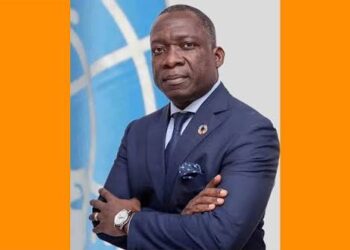
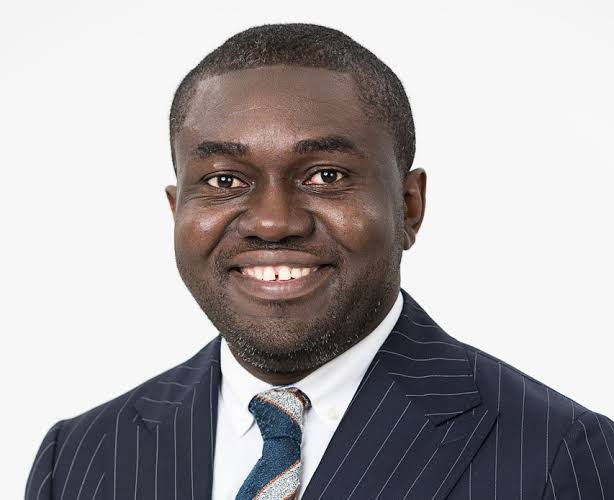
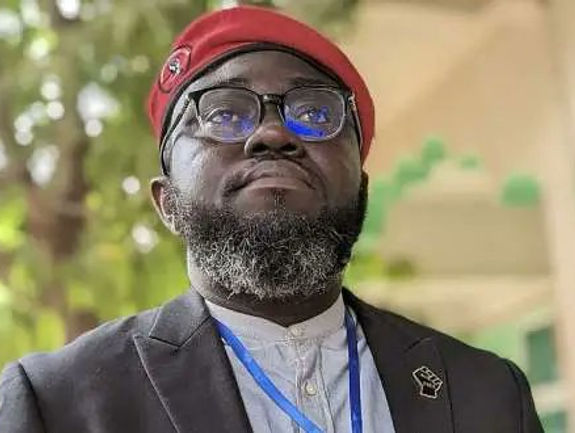
The Secretary to the Constitutional Review Implementation Committee, Osagyefo Oliver Barker-Vormawor, will resist any attempt to place Ghana’s entire package of constitutional changes before voters as a single question.
He told The Vaultz News in an exclusive interview at his Accra office that he intends to push back on that approach as the committee works through its drafting instructions. His objection is aimed at the government brief guiding the committee, which he says points toward one omnibus question at the referendum.
Bundling distinct reforms into a single vote, he argues, strips citizens of the ability to accept some changes while rejecting others, and it turns a constitutional decision into a take it or leave it proposition.
Barker-Vormawor framed the problem in terms of what a citizen is actually being allowed to decide. “When you present to them one question, do you accept all these changes at once? I believe that that is not a real franchise,” he said.
He was equally clear about where the proposal originates. “The government’s brief to us seems to suggest that’s the approach,” he said, adding that his role includes challenging that view as the way forward.
The distinction matters because the reform package spans matters as varied as presidential terms, parliamentary composition and local government. A voter who supports one and opposes another would, under a single question, have no way to register both positions.
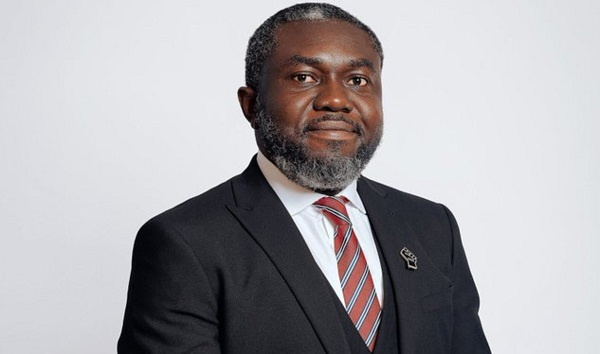
Defining Success At The Forty Percent Threshold
Asked how he would measure whether the committee has done its job, Barker-Vormawor set a benchmark that has nothing to do with the outcome of the vote. “A failure point will be if we go to a referendum and we don’t meet the threshold, which is the 40% threshold for people to participate,” he said.
A defeat at the polls, by contrast, would not trouble him. “But if people vote against it, we have met the success indicators,” he said, because participation rather than approval is the standard he holds the committee to.
He returned to the point with unusual bluntness for an official inside a government reform process. “Because the choice is for Ghanaians to make, right? And not for us to bulldoze our way through that.”
The threshold he cites comes from Article 290 of the 1992 Constitution, which governs amendments to entrenched provisions. A proposed change survives only if at least 40 percent of registered voters turn out and at least 75 percent of the votes cast support it, a double barrier that has never been tested at national scale since the constitution took effect.
That arithmetic explains why turnout dominates his thinking. A package could command broad support among those who bother to vote and still fail outright if enough Ghanaians stay home, which places the burden of civic mobilisation on the committee long before the substance of any provision comes up for argument.

Beyond turnout, he listed the complaints that would signal failure of a different kind. These include a process citizens judge to be closed or insufficiently transparent, questions placed before the public in language too convoluted to follow, and arrangements that leave voters unable to exercise a genuine choice.
What Went Wrong With Ghana’s First CRIC
Barker-Vormawor separated the reform effort into two distinct exercises. The policy process generates recommendations, while the technical process converts them into law, and Ghana has arrived at the technical stage only twice.
The first attempt followed the 2011 review under the late President Mills, when a committee led by Professor Albert Fiadjoe and Justice Samuel Date-Bah was tasked with turning the review report and the government white paper into draft amendment bills. That process collapsed without explanation.
He described its disappearance as almost total. “In fact, many people did not even know of that CRIC. It did not have any public outlook,” he said, contrasting it with a committee that has been unveiled publicly and has committed itself in the open.
That visibility, in his reading, is itself a signal. He treats the public framing of the current committee as a translation of political interest in seeing the process reach a conclusion rather than stall quietly as its predecessor did.
A Broader Mandate Beyond The Amendment Bills
The second difference lies in scope. “This committee has a mandate that extends beyond the constitutional amendment bills into legislation,” he said, which places statutory drafting alongside constitutional drafting on the same desk.
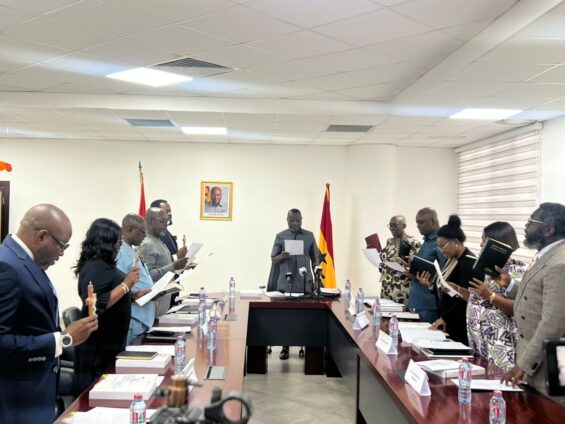
The earlier committee had no such reach. Government has additionally asked the current body to work with the Council of State on operating procedures, and to engage Parliament on standing orders reform covering how citizens participate in the legislative process.
Those additions push the committee into institutional territory that a purely technical drafting body would ordinarily avoid. They also lengthen the list of actors whose cooperation the process now depends on, from the Council of State to parliamentary leadership.
Presidential Legacy And A Two-Thirds Majority
The political environment marks the third difference, and Barker-Vormawor named it plainly. “You have a president who considers this project as his legacy,” he said, describing that commitment as momentum the committee can ride on.
The parliamentary arithmetic cuts both ways in his assessment. The governing side holds close to a two-thirds majority, which means reforms can be moved or blocked depending on where the numbers fall on any given provision.
He does not treat that majority as the preferred route. His consistent recommendation is that constitutional amendment should proceed by consensus rather than by the weight of numbers, since a text carried through on partisan strength invites the same contestation it was meant to settle.
Whether that preference survives contact with the timetable is the question the coming months will answer.
A committee that insists on consensus, multiple ballot questions and a turnout threshold it cannot control has set itself standards that a governing majority in a hurry may find inconvenient, and the first real test will come when the drafting instructions are finalised, and the ballot takes shape.
READ ALSO: Boris Johnson Condemns Russian Drone Strike Near Ukraine-Poland Border