Ghana’s economy expanded by 6.2% in real terms in the first half of 2026, yet government revenue and grants reached GH¢99.4 billion, 10.0% below the programmed target.
The contrast is becoming an important test of the recovery: output is growing strongly, but the state is still collecting less than planned to finance public services, investment and debt obligations.
Bank of Ghana data show total revenue and grants rose 16.1% from a year earlier, while tax revenue increased 25.9%. The problem is performance against budget: import-related taxes were 10.5% below target, income and property taxes missed by 9.9%, and domestic VAT and excise duty fell 20.1% short.
Government has protected the fiscal balance partly by spending less than planned. Total expenditure was GH¢109.4 billion in the first half, 24.9% below programme, helping narrow the overall deficit to GH¢9.9 billion, or 0.6% of GDP, while producing a cash-basis primary surplus of GH¢11.5 billion, or 0.7% of GDP.
The near-term outturn is favourable, but it raises a harder question: how durable is the fiscal repair if expenditure restraint continues to do more of the adjustment than stronger revenue mobilisation?
Growth Is Outpacing the Revenue Programme
Second-quarter growth reached 6.0%, taking first-half real GDP growth to 6.2%. The economy is therefore expanding faster than the government’s full-year baseline even as revenue remains behind programme.

Strong real GDP growth does not translate mechanically into tax receipts. Revenue depends on the sectors driving growth, the taxable incomes and transactions they generate, exemptions, payment timing and compliance. An expansion concentrated in a few activities may produce a different revenue yield from growth spread across formal firms, wages, consumption and imports.
The shortfall should therefore not be read as evidence that the recovery is failing. It is a warning that faster output alone will not solve Ghana’s fiscal constraints. The tax base and tax administration must convert more economic activity into predictable revenue without repeatedly increasing rates on already compliant households and businesses.
Spending Compression Is Doing Heavy Work
The expenditure numbers make that challenge more urgent. Earlier evidence that capital spending had fallen sharply below budget already raised questions about whether Ghana could preserve fiscal gains while meeting infrastructure needs. The latest first-half outturn reinforces that concern because total expenditure remained substantially below programme.
The International Monetary Fund has also cautioned that recent fiscal adjustment has relied heavily on spending compression despite large development needs. Under the new fiscal path that creates more room from 2027, the primary-surplus target is expected to ease after 2026 so that development spending can recover without abandoning debt sustainability.
That future target is measured on a commitment basis and should not be compared directly with the Bank of Ghana’s 0.7% cash-basis primary surplus for the first half. The broader point is that fiscal policy will eventually have to shift from emergency restraint towards better-quality spending, which makes stronger domestic revenue mobilisation more important rather than less.
The World Bank has framed the trade-off similarly, arguing that stronger revenue mobilisation and protection of priority social and infrastructure spending are essential if macroeconomic gains are to translate into jobs and improved welfare.
For households, fiscal improvement ultimately matters through whether government can finance schools, health services, roads and social protection without rebuilding large deficits.
Tax Administration Becomes the Next Test
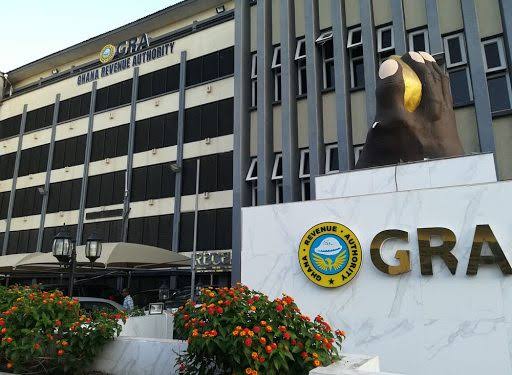
The immediate policy test is administrative as much as fiscal. The Ghana Revenue Authority is moving ahead with a nationwide ITAS rollout designed to integrate registration, filing, payments, audits and compliance management into one digital system.
If implementation is effective, the reform could improve collections by reducing leakage, widening effective coverage and making inconsistencies across taxpayer records easier to detect.
The distinction is between raising more revenue and simply raising tax rates. Better compliance, fewer exemptions, stronger customs administration and a broader effective tax base can lift receipts without placing the entire burden on firms and workers already inside the system.
That matters when businesses are being asked to invest and expand as the economy moves from stabilisation towards production.
Execution will determine the payoff. The useful indicators are not merely how many taxpayers move onto ITAS, but whether filing becomes easier, arrears decline, audit yields improve, refunds are processed faster and the gap between actual collections and programme targets begins to narrow.
2027 Budget Must Show the Shift
The 2027 Budget will show whether that transition is taking hold. Government will have to demonstrate how it intends to strengthen revenue while allowing more room for productive capital and social spending under the new fiscal framework.
For now, Ghana’s first-half numbers present both progress and a warning. The economy is growing, revenue is rising, and the deficit is contained. But revenue is still behind plan, while expenditure has been held substantially below budget.
The stronger recovery will be one in which fiscal stability depends less on postponing expenditure and more on collecting revenue efficiently from a broader, expanding economy. Second-half revenue performance, capital-expenditure execution and the early results from ITAS will show whether Ghana is beginning to make that shift.
READ ALSO: Gov’t Positions Economic Zones as Drivers of Jobs and Exports