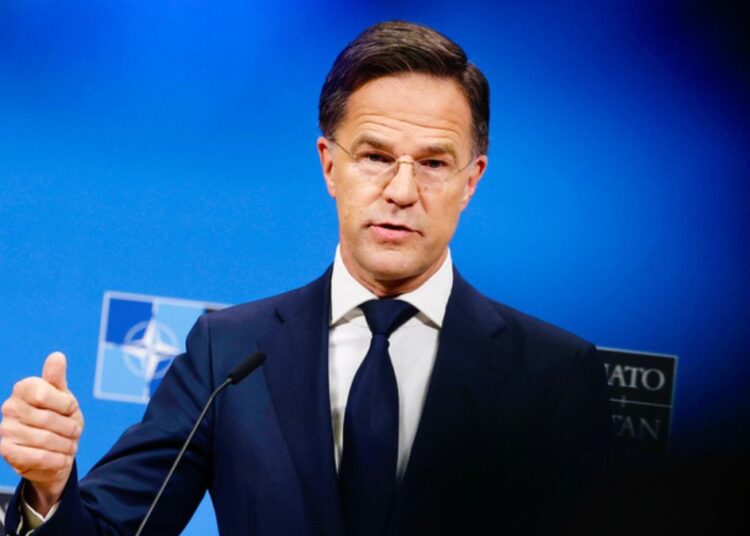
NATO Secretary-General, Mark Rutte has described Russia’s latest drone strikes near the Ukraine-Poland border as a sign of Moscow’s growing desperation and an attempt to spread fear beyond Ukraine, warning that the alliance will respond by strengthening support for Kyiv and its own eastern defences.
Rutte said that Sunday’s attacks, including a drone strike on a passenger train near the Polish border, demonstrated what he called Russia’s increasing willingness to take reckless actions as its war against Ukraine continues.
The attacks occurred close to NATO territory and included a strike on a passenger train shortly after a convoy carrying senior diplomats and former European leaders had passed through the same station.
Speaking at NATO’s political headquarters in Brussels on Monday, Rutte said that the strikes showed Russian President Vladimir Putin’s “desperation and also his desire to sow fear and terror.” “Russia is growing increasingly reckless as it continues its terrible war against Ukraine,” Rutte said.
The NATO Secretary-General pledged that the alliance would increase its support for Ukraine while reinforcing the defences of its 32 member states along its eastern flank. “He thinks that he can stop us from supporting Ukraine and that he can undermine our unity. He is wrong,” Rutte said, referring to Putin.
Rutte’s comments came as European governments responded with growing concern to the attacks, which occurred close to Poland’s border with Ukraine and prompted air raid warnings in Poland.
European officials said the incidents appeared to represent more than another wave of attacks against Ukrainian targets, arguing that Moscow could be attempting to intimidate Western governments and weaken their willingness to continue supporting Kyiv.
EU Foreign Policy Chief Kaja Kallas said that the drone attacks near Poland were “clearly meant to scare Western countries from supporting Ukraine.”
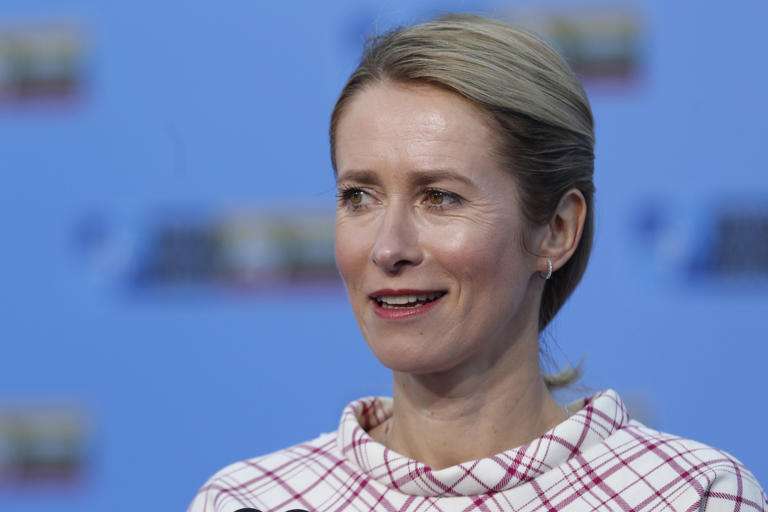
Speaking on the sidelines of an Arctic conference in Finland, Kallas described the train strike as “clearly a message to the western world” and said that Europe should respond by demonstrating that it would not be intimidated.
“I think the question for us is what do we take from that message? I think we should act the opposite.
“We should show that we are there for Ukraine and we are not scared off, because otherwise, you know, Russia will just achieve what they want, which is the submission of Ukraine.”
Kaja Kallas
Kallas’ Spokesperson separately condemned the Russian strikes near the Ukraine-Poland border, including the attack on the passenger train, while reiterating the European Union’s commitment to helping Ukraine defend itself.
The Spokesperson referenced the EU’s recent approval of a €6.1 billion tranche of its broader €90 billion loan for Ukraine, saying the bloc was continuing to provide Kyiv with the resources needed to strengthen its defences. “We are acting on the front to equip Ukraine better to defend itself, and we will continue to stand firmly with Ukraine and its right to defend itself against Russian aggression,” the Spokesperson said.
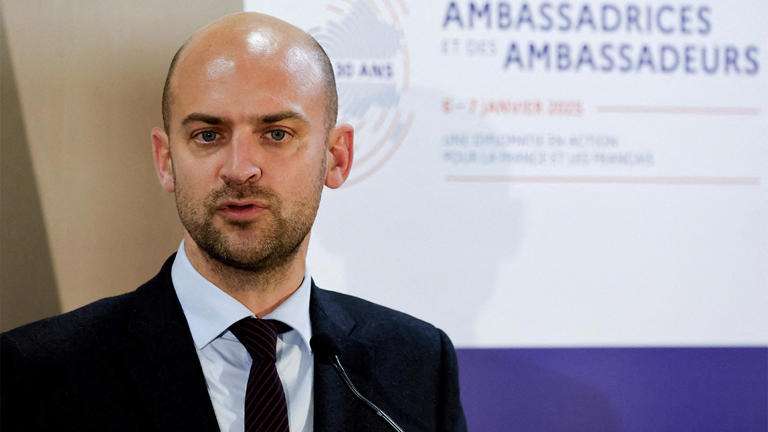
French Foreign Minister, Jean-Noël Barrot also accused Russia of attempting to intimidate European countries and undermine their unity. He said that the purpose of the attacks was “to intimidate Europeans, discourage and above all divide them.”
The latest incidents followed an intense overnight Russian assault across Ukraine involving more than 450 drones and missiles. At least six people were killed and more than 40 injured, while Ukraine’s air force said it intercepted 405 drones and four missiles.
Western Ukraine, which is generally less affected by Russian attacks than Kyiv and areas closer to the frontline, was particularly badly hit.
The geographical spread of the attacks has added to concerns that Russia’s military campaign could increasingly create risks for neighbouring European countries, particularly those on NATO’s eastern flank.
Rutte’s warning therefore places the latest attacks within a broader security challenge for the alliance. Rather than viewing the incidents near Poland as isolated events, NATO officials are increasingly treating them as part of a pattern that could test the alliance’s response and resolve.
EU Faces Dispute Over Russia Sanctions
The latest escalation came as EU diplomats met in Brussels for last-ditch discussions over the renewal of sanctions against more than 2,600 Russian individuals and entities linked to support for Putin’s war against Ukraine.
The sanctions are due to expire on Tuesday, but their extension has been delayed by a dispute over whether one individual should be removed from the list.
The timing of the disagreement is significant, as European governments seek to demonstrate unity in their response to Russia while simultaneously facing concerns over the growing proximity of Russian attacks to NATO territory.
The EU sanctions regime remains one of the bloc’s principal tools for applying economic and political pressure on Moscow. Any difficulty in renewing the measures could therefore be viewed against the backdrop of Russia’s continued military escalation.
Ukraine’s President Volodymyr Zelenskyy has also warned that Russia’s attacks could eventually extend beyond Ukraine if Moscow is not stopped.
Writing on Telegram following Sunday’s strikes, Zelenskyy said Ukrainians were fighting to prevent the conflict from spreading further into Europe. “Ukrainians are fighting every day to prevent these strikes from spreading further into Europe, giving their lives and preventing the aggression from expanding,” he said.
READ ALSO: Minority Calls For A Comprehensive Review Of 24-Hour Market Programme