The International Organization for Migration (IOM) has warned that Sudan’s emergency relief supply system could run out of critical shelter and household supplies within weeks, putting hundreds of thousands of displaced people at greater risk as conflict, heavy rains and flooding continue to worsen humanitarian conditions across the country.
According to IOM’s Displacement Tracking Matrix, 8.6 million people remain internally displaced across Sudan, while 4.9 million returnees have been recorded. Nearly 70 per cent of internally displaced people are living with host families or in informal settlements, leaving many without adequate protection from violence, disease and increasingly severe weather conditions.
The combination of armed conflict and heavy seasonal rains has placed additional pressure on already fragile living conditions. Flooding and rain have damaged shelters and forced some displaced families to move again, creating a cycle of displacement in which people who have already fled violence are once more searching for somewhere safe to live.
Against this backdrop, IOM has issued an urgent warning over the future of the Common Humanitarian Pipeline, a shared emergency logistics system that supplies shelter materials, sanitation equipment and household relief items to communities affected by the crisis.
According to the organisation, the Pipeline is approaching a critical funding point, with existing stocks of shelter, sanitation and emergency household items expected to be depleted by the end of September 2026 unless additional donor funding is secured.
The operational and warehousing infrastructure supporting the system can be sustained only until December 2026, meaning the humanitarian response faces not only an immediate shortage of relief items but also the prospect of losing the logistical capacity needed to deliver assistance at scale.
IOM Director General Amy Pope warned that the consequences could extend across Sudan’s wider humanitarian response.
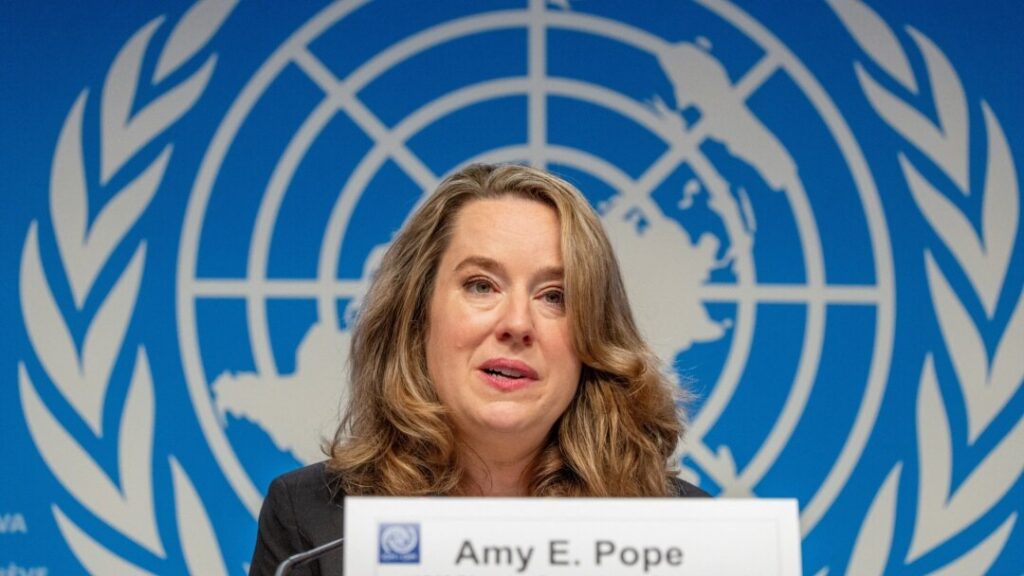
“We simply can’t turn our back on the people of Sudan when they need us most amid raging conflict, increased displacement and the impact of heavy rain. The entire humanitarian system could collapse within weeks if we don’t act now. Without new funding, we won’t be able to get help where it’s needed most.”
Amy Pope
The warning is particularly significant because the Common Humanitarian Pipeline is not an isolated IOM programme. It operates as a shared logistics mechanism for the United Nations and humanitarian partners, allowing emergency relief items to be stored, coordinated, and dispatched to affected populations through a network of more than 100 registered partners.
Since July 2023, the Pipeline has reached 2.84 million people, providing a critical link between humanitarian supplies and communities facing displacement and crisis.
Yet its capacity has been declining even as humanitarian needs remain extremely high.
More than one million people received assistance through the Pipeline in 2024. That number fell to 804,000 in 2025, while IOM has so far provided shelter and emergency support kits to about 330,000 people in 2026.
The declining reach highlights a widening gap between the scale of humanitarian needs and the resources available to meet them.
Funding Gap Threatens Lifeline for Millions of Displaced Sudanese

The immediate challenge facing the humanitarian response is therefore not only how to distribute existing supplies but how to keep the system itself functioning.
The International Organization for Migration revealed that it requires US$15 million to maintain the Common Humanitarian Pipeline at its minimum 2026 capacity for the next 12 months, allowing it to support approximately 305,000 people.
A larger contribution of US$27 million would restore assistance to approximately 2025 levels and enable the Pipeline to reach about 570,000 people.
To scale up emergency assistance and provide lifesaving support to as many as one million people, however, IOM estimates that US$42 million would be required.
The Common Humanitarian Pipeline provides a coordinated system through which emergency items can be mobilised and dispatched rapidly.
If that mechanism is disrupted, humanitarian organisations could lose an established supply chain and the operational coordination needed to respond quickly to new displacement and emergencies.
IOM has warned that rebuilding the system after an interruption would be complex, costly and time-consuming. It would require substantial resources to restore supply chains, warehousing arrangements, operational systems and coordination networks among humanitarian partners.
Meanwhile, Sudan’s millions of internally displaced people are not facing a single, short-term shock. Many have been displaced for extended periods and are living in conditions where access to adequate shelter, sanitation and other necessities remains uncertain.
With nearly 70% of internally displaced people living with host families or in informal settlements, communities receiving displaced populations are themselves absorbing much of the burden of the crisis.
READ ALSO: Iraola Hints at Squad Rotation Ahead of Spurs Visit in EFL Cup