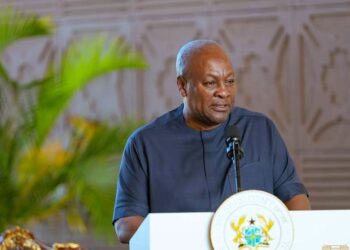
Government has officially launched the Presidential Initiative on Maternal Health Emergency Response, known as PRIMER, marking a formal national commitment to addressing Ghana’s persistently high maternal mortality rate through coordinated, accountable, cross-sectoral action.
Speaking at the launch, Special Advisor to the President on the Sustainable Development Goals (SDGs), Dr Nimoi Thompson, described the event as more than the launch of a campaign, framing it instead as a national affirmation that pregnancy and childbirth must not place a woman’s life at unacceptable risk.
Dr Thompson opened her remarks by reflecting on the shared human origin binding everyone presents, noting that every individual in the room was born of a woman, and that this fact underpins a moral duty to protect women’s lives, safety and dignity, both during childbirth and throughout their lives.
“Maternal survival measures the quality, equity and responsiveness of a country’s health system, it also measures the value society places on women, families and future generations,”
Dr Nimoi Thompson
Origins Traced to President’s 2025 VNR Remarks
According to Dr Thompson, the origins of PRIMER are closely tied to the personal attention President John Dramani Mahama has given to Ghana’s stagnating maternal mortality rate.
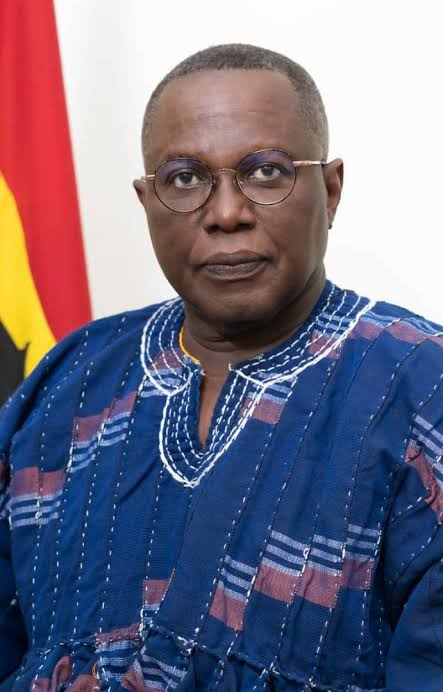
She recalled that at the launch of Ghana’s 2025 Voluntary National Review (VNR) Report on the implementation of the SDGs at Jubilee House, the President specifically drew attention to the country’s insufficient progress in reducing maternal deaths.
She noted that the President had compared the current maternal mortality ratio to figures recorded during his previous term in office a decade earlier, observing that the rate remained stuck at 300 deaths per 100,000 live births, a situation he described as unacceptable.
Dr Thompson further recalled that the President had referenced an earlier initiative at a clinic in Dodowa, where maternal mortality had been reduced to zero under his direction during his first term.
Following the President’s remarks at the VNR launch, Dr Thompson explained that the SDG Advisory Unit and the United Nations Population Fund (UNFPA) began a series of discussions aimed at translating presidential concern into a focused, coordinated national response.
These discussions culminated in the development of the initial concept for PRIMARRY, alongside a work plan intended to guide the initiative from design through to implementation.
She disclosed that a high-level stakeholder roundtable convened in December 2025 helped identify key financing, service delivery and accountability issues requiring urgent attention if Ghana is to accelerate progress in reducing maternal deaths.

Cross-Sectoral, Not Purely Health, Challenge
Dr Thompson stressed that the roundtable reinforced an important lesson underpinning PRIMER design, that maternal mortality cannot be addressed by the health sector alone.
She explained that its causes and consequences extend across public finance, transport, local governance, social protection, education, infrastructure, community leadership and household decision-making.
She further credited the involvement of Deputy Minister for Health, Dr Grace Ayensu-Danquah, with ensuring that PRIMER strengthens, rather than duplicates, existing national programmes such as the Maternal Mortality Reduction Acceleration and Response Programme.
He described the initiative’s development as a genuine partnership among the Presidency, the health sector, the National Development Planning Commission (NDPC), UNFPA and a wider group of stakeholders.
Positioned Within Ghana’s Broader Development Plan
Dr Thompson situated PRIMER within a broader national development effort currently being led by the NDPC, which is working to consolidate the country’s development priorities into a coherent framework capable of transcending individual electoral cycles.
“This plan will transcend electoral cycles and narrow sectional interests to serve the larger interest of Ghanaians, because national development is ultimately about expanding people’s ability to live healthy, productive and dignified lives,”
Dr Nimoi Thompson
Dr Thompson explained that PRIMER is designed to complement, rather than duplicate, government’s wider efforts to strengthen the health system, including the Free Primary Healthcare programme.
The Ghana Medical Trust Fund supporting patients with chronic non-communicable diseases, and the continued construction and operationalisation of Community-Based Health Planning and Services (CHPS) compounds nationwide.
She described these combined initiatives as reflecting a shared national direction toward bringing essential services closer to communities, reducing financial and geographic barriers to care, and building a health system more responsive to the needs of every Ghanaian.
Beyond Meeting an International Target
In outlining PRIMARRY’s core purpose, Dr Thompson stressed that the initiative is designed to secure sustained political attention, coordination and accountability commensurate with the scale of Ghana’s maternal health challenge.

While acknowledging the importance of achieving Sustainable Development Goal target 3.1, she argued that the underlying obligation extends beyond meeting an international benchmark.
She closed by describing the ultimate goal of PRIMARRY as building a health system in which every pregnant woman can expect timely, respectful and high-quality care, and in which preventable maternal deaths are treated not as unfortunate statistics, but as failures demanding learning, correction and immediate national response.
READ MORE: Yamoransa Model Marks 10 Years of Expanding STEM Education