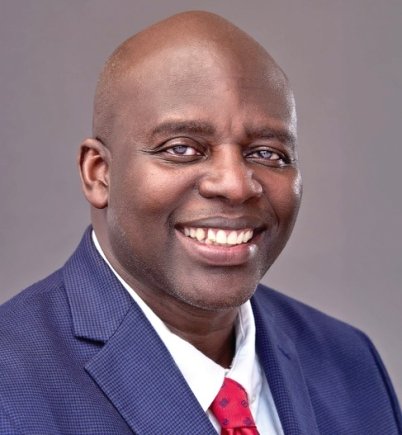
Author: Dr. John Osae-Kwapong, Democracy and Development Fellow, CDD-Ghana, and Project Director, the Democracy Project
September 15th is designated as International Democracy Day — a day set aside by the United Nations General Assembly to “review the global state of democracy.” Recent conversations about democracy, marked by descriptors such as “retrogression,” “backsliding,” “recession,” and “resilience,” are, in my opinion, telling evidence of the difficult conversations being had about democracy these days.
I have often argued that for a long time, democracy enjoyed an inherent moral superiority over other forms of government — one it did not need to make a case for. Over the last decade, however, the work of international bodies, regional organisations, and various civil society organisations tells a simple story: a case now has to be made for democracy, and the signs of erosion of its claim to being the more morally superior form of government must be identified and addressed.
What does democracy look like in Africa today? I describe the current state of democracy on the continent as exhibiting uneasy tensions and further draw attention to specific ones. To illustrate this, I turn to the Afrobarometer survey and draw on what citizens across the continent have expressed in response to the many questions the survey has posed since its maiden edition in 1999.
I explore changes in citizens’ sentiment over time by comparing data from the most recent survey (Round 10 2024–2025) to the survey period when a question selected for this piece was first asked over the course of ten rounds. The aggregate picture is presented here, recognising that there are cross-country variations in how citizens feel about the current state of democracy.
Africa’s Democracy Tensions
The first democratic tension concerns electoral integrity. Elections serve as the key mechanism for political contestation in a democracy — the process by which citizens choose those who will serve in positions such as president, member of parliament, mayor, and assembly member. Overall, support for elections remained strong over time, standing at 80% in 2002/2003 and 74% in 2024/2025.
Yet this strong support for elections coexists with two contrasting sentiments. First, trust in the electoral commission has generally remained low: only about a quarter (26%) expressed “a lot” of trust in the institution responsible for overseeing elections in 1999/2001, falling to roughly two in ten (19%) by 2024/2025.
Second, the share of citizens rating elections as “completely free and fair” fell from 41% in 2005/2006 to 36% in 2024/2025. Third, in Round 8(2019/2021), five out of ten (48%) Africans answered “not at all well/not very well” when asked “how well do elections enable voters to remove from office leaders who do not do what the people want?
The second democratic tension concerns support for democracy, rejection of non-democratic alternatives, and satisfaction with how democracy works. In 1999/2001, seven in ten Africans (71%) expressed support for democracy, and an even larger share (83%) disapproved of military rule.
By 2024/2025, support for democracy remained comparatively strong at 65%, but disapproval of military rule had declined sharply to 66% – a drop of seventeen percentage points. Moreover, in Round 9 (2021/2023) and Round 10 (2024/2025), an average of 54% agreed that “it is legitimate for the armed forces to take control of government when elected leaders abuse power for their own ends.”
Finally, between 1999/2001 and 2024/2025, satisfaction with democracy declined by twenty-two percentage points, from 60% to 42%. Comparing satisfaction to support reveals a widening gap: in 1999/2001, support for democracy exceeded satisfaction with it by just seven percentage points; by 2024/2025, that gap had grown to twenty-five percentage points.
Potential Consequences for Africa’s Democracy
These tensions carry serious implications for how long Africa’s democracies can remain resilient without potentially breaking down. First, the gap between strong support for elections and low trust in electoral commissions is unsustainable.
Elections are legitimate not only because they are held, but also because citizens believe they are free and fair. If doubts about elections and electoral commissions continue, it should come as no surprise if support for elections declines. This risk is real given the growing scepticism about how well elections check power.
Second, softening disapproval of military rule, coupled with majority acceptance of intervention when leaders “abuse power,” is a warning sign. Who decides when abuse has occurred, and by what standard?
Ceding that judgment to the military rather than courts, legislatures, or the ballot box substitutes an unaccountable arbiter for constitutional ones, and risks normalising coups instead of elections as the corrective mechanisms for dealing with abuse of power.
Finally, the widening gap between support for and satisfaction with democracy raises questions about the patience of Africans. If dissatisfaction deepens without improved governance outcomes, that erosion may eventually pull down support for democracy itself, and further soften the rejection of non-democratic alternatives.
READ ALSO: Constitutional Review Committee To Refer Public Disagreements On Recommendations Back To Government