Ghana’s easing staple-food prices are providing an important buffer against inflation, but AGRA’s August 2026 Food Security Monitor also shows why that relief cannot be taken for granted as fuel costs rise again. Rice and sorghum prices were broadly stable in August, while white maize remained far below its year-earlier level despite a monthly increase. The new pressure is increasingly coming from energy, transport and other non-food costs.
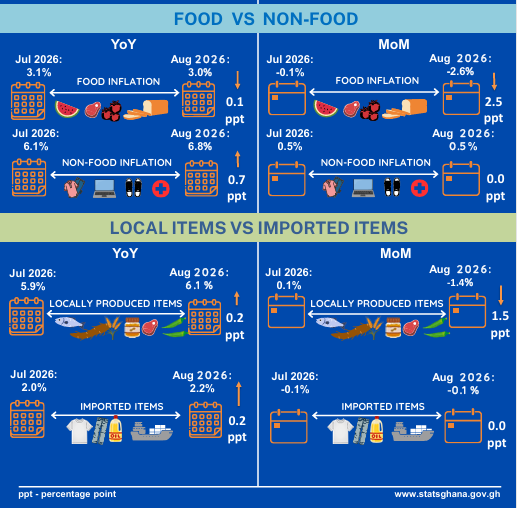
National average rice prices were unchanged at GH¢11,100 per metric tonne and stood 16.4% below August 2025. Sorghum was unchanged at GH¢5,833 per tonne. White maize rose 8.9% month-on-month to GH¢3,141 per tonne, but was still 36.3% cheaper than a year earlier. That softer annual food-price base helps explain why food inflation eased to 3.0% in August from 3.1% in July even as headline inflation rose to 5.0%.
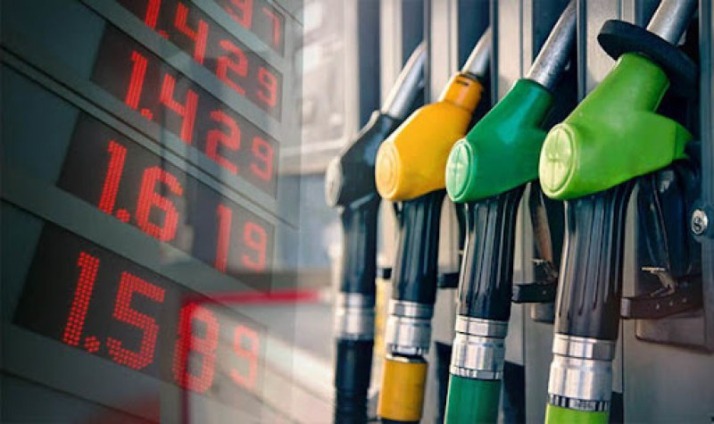
The balance is now being tested by fresh increases in pump prices. Petrol and diesel are expected to rise from September 16, raising the risk that higher transport, freight and production costs feed into the prices households and firms face. The immediate macroeconomic question is therefore whether cheaper staples can continue offsetting renewed energy pressure.
Staple Markets Still Provide Inflation Relief
The latest food data show a much more favourable staple-price environment than a year ago. Rice was also 10.1% cheaper than six months earlier, while maize remained below both its six-month and year-earlier levels. For households, that matters because cereals occupy a large place in food budgets and also feed into the cost of poultry, livestock and processed foods.
The picture is not uniform. Individual food items can still record sharp increases even when the aggregate food index is subdued, and local market conditions differ across regions. Food inflation at 3.0% should therefore be read as an economy-wide average, not evidence that every household is paying less for every food item.
Still, the annual declines in major staples give Ghana a useful inflation cushion. If food prices had remained at last year’s levels while fuel costs were rising, the current inflation outlook would be materially less comfortable.
Non-Food Costs Are Carrying More Inflation
August’s inflation composition shows why the 5.0% headline rate needs to be read carefully. Non-food inflation stood at 6.8%, well above food inflation, while services inflation reached 8.6%. Housing, utilities, transport and other services are therefore doing more of the work in keeping overall inflation above the very low rates recorded earlier in the year.
This changes the nature of the inflation challenge. Food supply and agricultural conditions remain important, but the next phase may depend more heavily on energy costs, transport fares, rents, utilities and the pricing behaviour of service providers.
For households, that distinction matters because falling food inflation does not necessarily translate into a lower overall cost of living when rent, transport and utilities are rising faster. For firms, the same non-food pressures enter operating costs and can eventually affect wages, margins and selling prices.
Fuel Costs Can Move Through Several Channels
Diesel is especially important because it is used heavily in haulage, agriculture, construction and industry. A sustained increase raises the cost of moving food from producing areas to urban markets and increases distribution costs for manufacturers and retailers.
The transmission is the same channel highlighted in the recent oil shock facing Ghana’s inflation and external buffers: higher global energy costs can reach domestic prices through fuel, transport, imported inputs and foreign-exchange demand. But the pass-through is neither automatic nor immediate. Competition, margins, government intervention and the duration of the shock will determine how much reaches consumers.
That uncertainty is important. A short-lived pump-price increase may have a limited effect on the broader inflation trend. Repeated increases, however, can become embedded in freight charges and service prices, particularly if transport operators and businesses begin adjusting expectations.
The MPC Must Look Beyond the Latest CPI
The timing matters because the Bank of Ghana’s Monetary Policy Committee meets later in September with headline inflation at 5.0% and the policy rate at 14%. The Committee must judge the likely inflation path over coming months rather than respond mechanically to the latest CPI number.
Food inflation at 3.0% supports the view that price pressure remains contained in a major part of the consumer basket. But renewed fuel costs argue for caution, especially because non-food and service inflation are already running faster than food inflation.
The next inflation release will therefore be unusually informative. Policymakers, businesses and households should watch whether transport fares rise, whether maize and other staples continue to hold their annual declines, and whether higher fuel costs spread into services and distribution. Ghana’s disinflation remains intact, but the centre of risk is shifting from staple food markets towards energy, transport and other non-food costs.
READ ALSO: Gov’t Positions Economic Zones as Drivers of Jobs and Exports