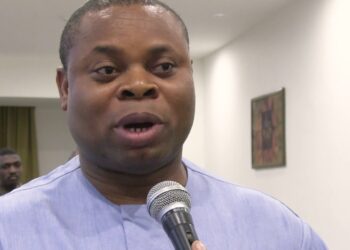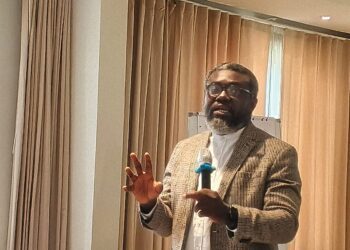

Ghanaians will be able to submit memoranda directly to the Constitutional Review Implementation Committee on how the amendment process is run, according to its Secretary, Osagyefo Oliver Barker-Vormawor.
He told The Vaultz News in an exclusive interview at his Accra office that the committee sees value in opening a channel for views on both the substance of the recommendations and the machinery around them.
He grounds that opening in the instruction the committee was given rather than in goodwill alone. “I think that there’s a lot I read into the directive to build consensus,” he said, explaining that carrying people along requires listening to them and correcting misunderstandings about what the process actually entails.
Memoranda On Process, Not Only Content
Barker-Vormawor expects the submissions to range wider than the reform proposals themselves. Citizens, in his account, will have views on process guarantees as much as on substantive content, and those questions rarely get a hearing in exercises dominated by drafting.

He gave concrete examples drawn from voters who stand to be shut out. Persons with disabilities are entitled to ask whether the ballot question will be real for them or whether they must bring somebody into the booth to read it aloud.
Others will want to know whether they can vote wherever they are or must return to their constituencies to do so. Those are the questions he says he cares about. “Those are things which I am interested in ultimately.”
The framing matters because the committee’s own brief is technical. Accessibility, ballot language and voting logistics sit precisely where a drafting body’s choices decide whether a vote is genuinely open.
The November Package And The Gazette Window
The work due in November covers the non-entrenched amendments, the category that goes to Parliament rather than to a referendum.
Those bills carry their own publicity requirement written into the Constitution, which mandates publication in the Gazette twice, with the second notice following the first after three months, and a further wait of at least ten days before introduction.
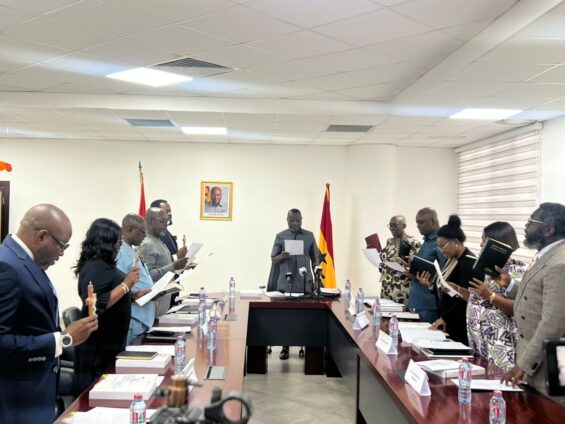
Barker-Vormawor treats that waiting period as a deliberate feature rather than an administrative delay. “I’ve always read that block as an invitation for more debates and discussion around it,” he said.
That reading turns several months of statutory publicity into the main window in which organised opinion can form and move.
The Three Places Where Objections Land
Where he draws a firmer line is on who can actually change a bill. The committee drafts to instruction, so citizens who dislike a particular provision need to direct their energy at the institutions with power over it.
He identifies three. The Council of State can express its view on a bill referred to it. Parliament, as the elected representation of the people, is the second. The government is the third, because it retains the option to withdraw a bill or press ahead with it.
He sees part of his own role as telling people which of those quarters fits their concern, so that advocacy lands where it can produce a result instead of where it is merely heard.

A gap sits in the middle of that architecture. Barker-Vormawor noted that Ghana lacks sufficient guidelines on whether Parliament must hold town hall meetings to gather public views on a constitutional amendment bill, how the debate should proceed, or what form the vote should take.
The advocacy target he points citizens toward is therefore the one least bound by rules on how it must listen.
Transparency On The Drafting
On his own side of the work, he offered an unqualified commitment. “But I can assure everybody of full transparency in how we draft what is before us,” he said, while acknowledging that the bill will ultimately reflect whatever instructions the committee is given.
That distinction runs through his entire answer. The committee can show its working and explain why a provision reads as it does, but it cannot reverse a political decision embedded in the brief.
The interviewer noted that consultations under the review chaired by Professor Henry Kwasi Prempeh reached ten of Ghana’s sixteen regions, leaving six outside the conversation at the policy stage.
That history raises the stakes for the implementation phase. If the committee’s memoranda channel becomes the main route for Ghanaians who were never consulted, the volume arriving at a body with no policy margin could expose how narrow the space for public influence has become.
The decisive question is whether Parliament and the Council of State choose to use the Gazette window as an occasion for genuine debate.
READ ALSO: Ghana Could Attract Billions Through Non-Interest Finance