Ghana’s attempt to shield households and businesses from the latest global fuel shock is becoming a significant fiscal intervention, with National Petroleum Authority (NPA) Chief Executive Godwin Kudzo Tameklo estimating that government measures to restrain petroleum prices have reached close to GH¢1 billion. He said diesel could otherwise be selling at around GH¢28 per litre, showing how much of the international price shock is currently being prevented from reaching consumers directly.
Speaking in a media interview on Wednesday, 16 September 2026, as petroleum prices came under renewed pressure, Tameklo said the international cost of diesel had risen from about US$794 per tonne in February to US$1,519, an increase of roughly 91%. The government is maintaining a GH¢2-per-litre intervention on diesel, meaning part of the shock is being absorbed away from the pump. He said a buyer of 10 litres of diesel is effectively receiving about GH¢20 in support.
The disclosure changes the economic question surrounding Ghana’s latest fuel increases. Headline inflation stood at 5.0% in August, but transport inflation was already 10.5% and non-food inflation 6.8%. Cushioning diesel can limit the transmission of higher energy costs into fares, freight, food distribution and business expenses. But the underlying cost has not disappeared; part of it has shifted from consumers at the pump to the public purse.
Fuel Support Shielding the Price Level
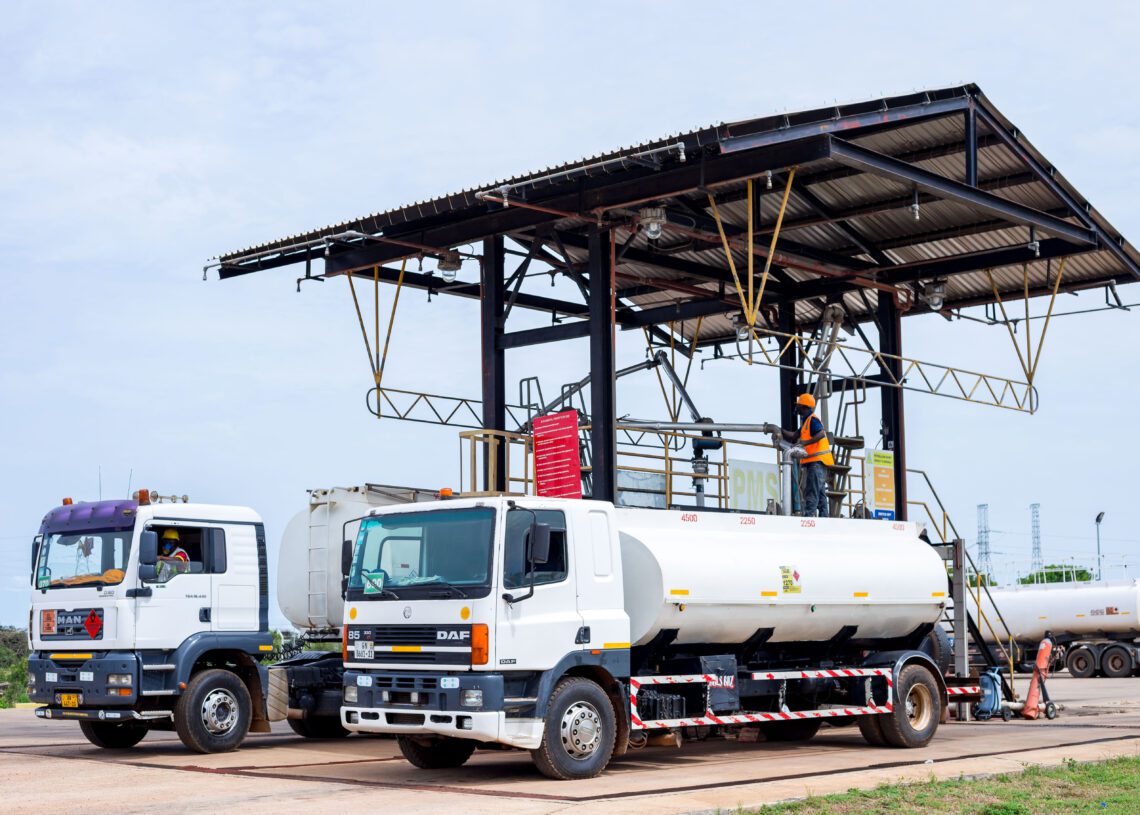
The intervention matters because diesel sits deep inside Ghana’s production and distribution system. Commercial transport, haulage, construction, mining, agriculture and firms that rely on backup generators all use diesel directly or pay suppliers whose costs depend on it. A sustained increase can therefore move beyond filling stations and enter the prices of goods and services.
Tameklo put the counterfactual starkly: “I need to point out that for the intervention from government, a litre of diesel should be selling within the region of GH¢28 per litre.”
That figure is the NPA chief’s estimate of a price outcome without government intervention, not the current price floor or a quoted pump price across every oil marketing company. The NPA’s price-floor framework also excludes some premiums and operating margins determined under deregulation. The GH¢28 estimate should therefore not be converted into a simple per-litre subsidy by subtracting the published floor.
Cost Shifts From Pumps to the Budget
Economic cushioning can smooth an external shock, but it cannot eliminate its cost. When government absorbs part of the increase, households and firms pay less immediately while the fiscal system assumes a larger share of the burden. Tameklo’s estimate of close to GH¢1 billion gives that trade-off a scale.
In the short run, the measure can protect purchasing power and business margins while reducing pressure for larger transport-fare adjustments. That matters because August inflation data already showed non-food and service prices rising faster than food prices, making energy and transport increasingly important to Ghana’s inflation outlook.
The fiscal implications depend on duration. A temporary cushion against a sharp international price spike differs materially from maintaining support for months while global prices remain elevated. The longer it persists, the more important its funding source, budget treatment and opportunity cost become.
Diesel Shock Reaches the Productive Economy
The economic case for focusing on diesel rather than only petrol is especially strong. Diesel moves food from farms to urban markets, hauls materials to construction sites and powers equipment across mining and industry. Firms may initially absorb some of the higher cost through lower margins, but persistent increases eventually create pressure to raise prices, cut expenses or delay investment.
That is why the intervention is directly connected to Ghana’s broader inflation story. The country has made substantial progress in bringing headline inflation down, yet the oil shock is testing whether that improvement can survive a sharp rise in imported energy costs. Recent News analysis has already shown pressure shifting towards fuel, transport and other non-food components even while staple-food prices remain relatively subdued.
The Bank of Ghana has also identified higher global energy prices as an upside risk to inflation. With the policy rate at 14%, policymakers must judge whether the petroleum shock is temporary or persistent enough to alter the inflation outlook. Fuel support can moderate immediate pass-through, but it does not remove the external shock from the economy.
Duration Becomes the Main Policy Test
The central policy question is therefore how long the intervention can be sustained, how transparently its cost is recorded and what conditions would allow it to be withdrawn without producing a sudden price adjustment.
If international diesel prices retreat, the measure can act as a bridge through a temporary shock and unwind as market conditions normalise. If prices remain elevated, the trade-off becomes harder: either more of the cost reaches consumers and businesses, or more remains with the budget.
Ghana now faces an unusual inflation test. Headline inflation is only 5.0%, but imported energy costs are moving sharply in the opposite direction. The near-GH¢1 billion intervention may help defend recent inflation gains in the short term. How durable that protection proves will depend on the persistence of global petroleum prices and how much fiscal space government is prepared to use to keep the shock away from the pump.
READ ALSO: Ghana’s Fuel Market Exposes The Cost Of Import Dependence