Ghana’s push to expand manufacturing and capture a larger share of African trade could face a major constraint if industrial electricity remains unreliable or too expensive, the Association of Ghana Industries (AGI) has warned.
The warning places the energy sector at the centre of Ghana’s industrial competitiveness debate, as businesses seek to increase production, add value to local raw materials and take advantage of the larger market created by the African Continental Free Trade Area (AfCFTA).
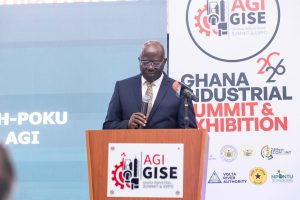
AGI President, Pharm. Dr Kofi Nsiah-Poku, made the case at the 2026 Ghana Industrial Summit and Exhibition in Accra, where energy reliability and digital innovation featured prominently in discussions on export-led growth.
The summit opened on September 15 under the theme “Driving Sustainable Export-Led Growth through Energy Reliability and Digital Innovation.”
Power Costs Could Determine Export Competitiveness
For Ghanaian manufacturers, the question is no longer simply whether electricity is available.
The cost at which that electricity reaches factories can determine whether locally produced goods can compete with imported products or enter other African markets at commercially viable prices.
Electricity is a direct production input for industries such as cement, steel, chemicals, agro-processing and mining-related manufacturing.
Higher power costs can therefore be reflected in production expenses, product prices and ultimately the ability of firms to secure contracts in competitive regional markets.
“Reliable and affordable energy is fundamental to the competitiveness and sustainability of Ghanaian industry.”
Pharm. Dr Kofi Nsiah-Poku, President, AGI
This becomes particularly significant under AfCFTA. Removing trade barriers can create access to a much larger market, but it does not equalise the underlying cost of producing goods.
A Ghanaian factory still has to compete against manufacturers benefiting from different electricity prices, financing conditions, infrastructure and economies of scale.
That means market access without production competitiveness could leave Ghana with a larger market to sell into but insufficiently competitive products to export.
24-Hour Production Requires More Than Extra Shifts
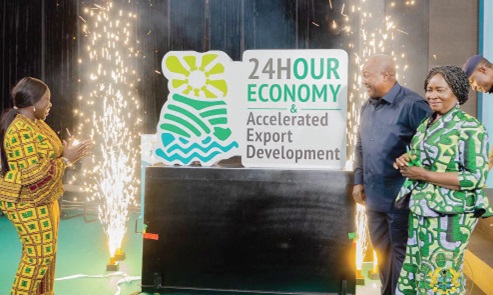
The same issue extends to the government’s 24-hour economy agenda.
Increasing factory operating hours could raise industrial output and improve the utilisation of machinery, but the economic benefit depends on whether additional production remains profitable.
If electricity costs rise disproportionately with extended operations, or interruptions leave machinery idle, the additional shift becomes less valuable.
This makes grid reliability and industrial electricity pricing important complements to the 24-hour economy.
The AGI has consequently called for greater access to financing for renewable-energy investments and incentives that allow businesses to develop alternative power sources.
Its BisaConnect initiative, which connects businesses with solar consultants and service providers, reflects the growing interest among companies in reducing exposure to conventional electricity costs through distributed renewable energy.
Digital Technology Adds Another Layer
Energy and technology are also becoming increasingly interconnected within industrial production.
Digital monitoring systems can help factories identify inefficient machinery, track electricity consumption and schedule maintenance before equipment failures interrupt production.
For manufacturers operating under tight margins, such efficiencies can reduce the amount of energy and capital required to produce each unit of output.
However, the transition requires investment.
Small and medium-sized manufacturers may struggle to finance automation, software, modern equipment and employee training, particularly where access to affordable credit remains limited.
The policy challenge is therefore broader than encouraging businesses to “go digital.” Ghana must create conditions in which firms can afford to acquire and effectively deploy technologies that improve productivity.
The Industrial Question Behind Ghana’s Energy Policy
The AGI’s position highlights a wider issue in Ghana’s energy planning: the value of electricity ultimately depends on what the economy can produce with it.
Additional generation capacity is important, but its economic impact is greater when power reaches productive sectors reliably and at prices that allow businesses to expand.

That places industrial demand alongside household consumption when considering future investments in generation, transmission and distribution.
For Ghana, the opportunity presented by AfCFTA is substantial, but continental market access will not automatically translate into export growth.
Manufacturers must be able to produce at scale, maintain quality, control input costs and deliver consistently across borders.
This makes energy policy inseparable from industrial policy.
If Ghana can combine dependable electricity, competitive energy costs, digitalisation and access to investment capital, the country’s existing industrial base could become better positioned to serve regional markets.
If those conditions remain unresolved, the expansion of market access risks benefiting producers elsewhere more than Ghanaian manufacturers.
The central test, therefore, is not simply whether Ghana can generate more electricity. It is whether the country’s energy system can supply productive industry with power at a cost that allows Ghanaian-made goods to compete across Africa.
READ ALSO: GH¢1bn Fuel Cushion Shields Ghana’s Inflation Gains