
The Ghana National Association of Teachers (GNAT), the National Association of Graduate Teachers (NAGRAT) and the Professional Teachers Association of Ghana (PRETAG) have declared a nationwide strike, effective today, Friday, 25 September 2026.
The unions announced the industrial action in a joint press release signed by their leaders and distributed to all media houses in Accra. The unions accuse the Fair Wages and Salaries Commission (FWSC), the Controller and Accountant General’s Department (CAGD) and the government of failing to act on three long-standing demands.
They cite the stalled renegotiation of their expired Collective Agreement, the failure to place newly promoted teachers on their new salary scales, and the non-payment of the Deprived Area Allowance promised by President John Dramani Mahama.
Teacher Unions Blame FWSC and CAGD for Rising Anger
The strike follows months of growing frustration among teachers across the country. In the release, the unions said they had observed with grave concern the tension and agitation in their ranks.
They blamed the “lukewarm attitude of the Fair Wages and Salaries Commission (FWSC) and the Controller and Accountant General’s Department (CAGD) and the foot-dragging by government on the concerns of Teachers.”

According to the unions, that inaction has now boiled over into serious anger among their members. The statement was signed by Thomas T. Musah, General Secretary of GNAT, Jacob Anaaba, President of NAGRAT, and King Ali Awudu, President of PRETAG.
Expired Collective Agreement Remains Unnegotiated
At the centre of the dispute sits the Collective Agreement that governs teachers’ conditions of service. The existing agreement has expired, and the unions say negotiations on a new one should have ended on or before June 2026.
Three months past that deadline, talks have yet to be concluded. The unions say they raised the matter with the FWSC on several occasions without any resolution. “This is a bother to the Teacher Unions,” the statement noted.
Promoted Teachers Still Waiting for New Salaries
The second grievance concerns teachers who earned promotions but have not seen the benefit in their pay.
Two cohorts of teachers sat and passed aptitude tests in December 2025 and February 2026, and an agreement between the Ministry of Education, the Ghana Education Service (GES) and the CAGD provided for their automatic placement on new salary scales with arrears effective January 2026.
The unions say that agreement has not been implemented. Nine months into the year, affected teachers remain on their old salary levels, a delay the unions say has ignited tension and anger among the rank and file.
Deprived Area Allowance Becomes a Flashpoint
The third demand carries the sharpest political edge. Under Section 17(2) of the 2024 Collective Agreement, “The MoE and the GES shall review the Deprived Area Report for implementation. The Teacher Unions shall then negotiate the figures with the FWSC.”
The unions say this process has not taken place, in disregard of the agreement. They describe the FWSC’s conduct as “a blatant disregard for the NLC ruling in 2024, which must not be allowed to continue,” referring to a decision by the National Labour Commission.
The unions also tied the dispute directly to the Presidency. They argue the delay ignores President Mahama’s directive that teachers in deprived and hard-to-reach areas receive an allowance equal to 20% of their basic salary to motivate them to stay at post.
By invoking the President’s own commitment, the unions have placed the pressure for a resolution squarely on the government rather than on the agencies alone.
Unions Cite Pressure From Their Own Members
The release makes clear that union leaders face pressure from below as well as above. In their call to action, the unions said the issues had created widespread “disaffection, anger, and disillusionment” among their members and that teachers now see the delays as provocation.
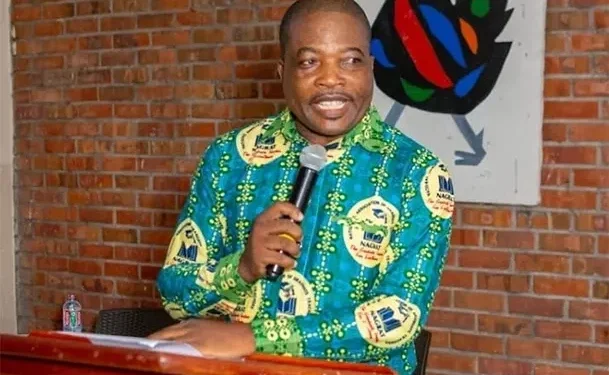
The leaders pointed to unfulfilled promises by duty bearers and the FWSC, as well as threats by their own members, as the reasons for declaring the strike. The unions said they stand with their members in pressing home their demands.
What the Teacher Unions Strike Means for Government
The strike lands at a difficult moment for the Mahama administration. It comes days after a Global InfoAnalytics poll showed declining public sentiment on living standards and the direction of the country, and it involves the largest organised group of public sector workers in Ghana.
A nationwide withdrawal of teachers threatens to disrupt teaching and learning in public schools across the country, and each day of absence will add pressure on parents, school authorities and the Ministry of Education.
The government’s response will likely rest on how quickly the FWSC and the CAGD can move on the promotion arrears and commit to a timetable for the Collective Agreement and the Deprived Area Allowance, the one demand the President has already publicly endorsed.
READ ALSO: Ato Forson Sees Ghana’s Golden Era on the Horizon