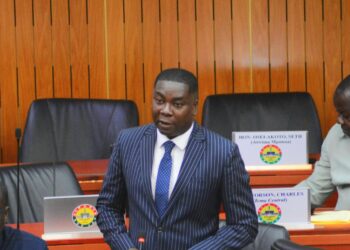
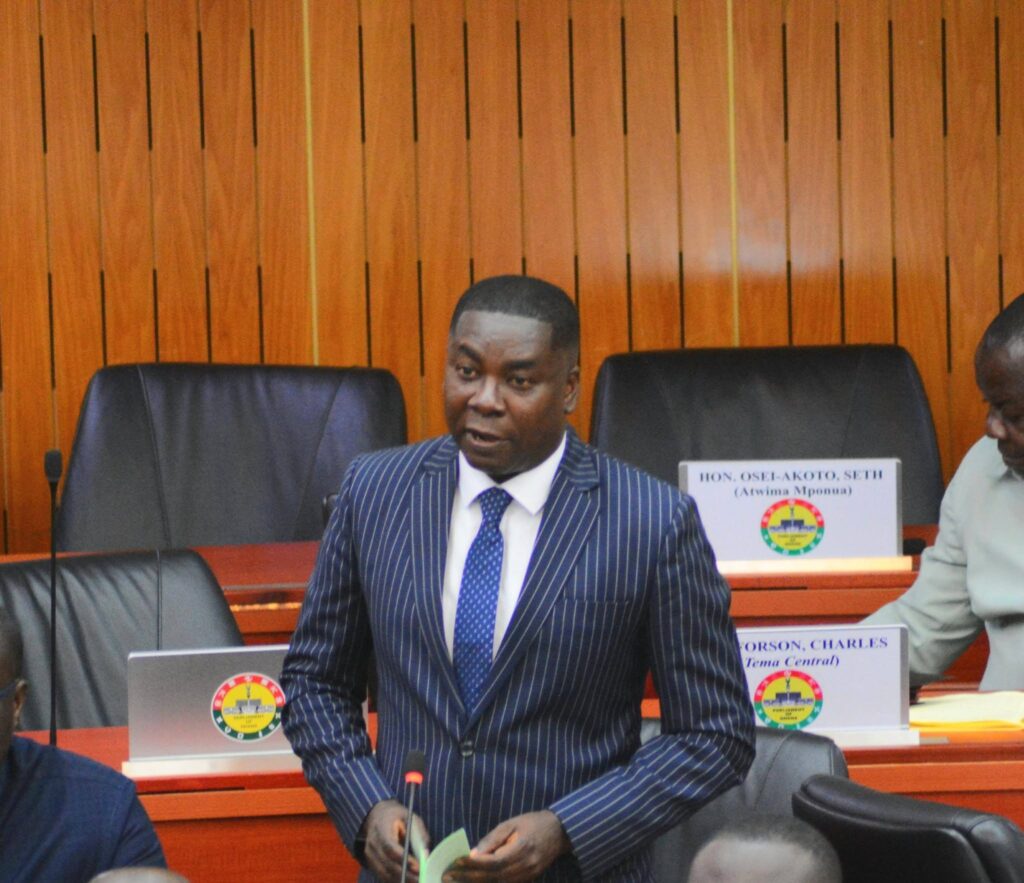
Hon. Dr. Gideon Boako, Member of Parliament for Tano North and financial expert, has called for a comprehensive national strategy to broaden Ghana’s foreign exchange sources beyond reliance on gold.
He emphasized that while the newly introduced GoldBod purchasing mechanism has successfully generated liquidity, long-term balance of sheet stability requires structural economic diversification.
“The deeper lesson goes beyond GoldBod. Ghana needs an external-sector strategy that combines gold with broader sources of foreign exchange: manufacturing, agriculture and agro-processing, tourism, digital services, traditional exports, remittances and other internationally competitive services. Gold can strengthen the balance sheet. It cannot by itself diversify the productive structure of the economy.”
Hon. Dr. Gideon Boako,
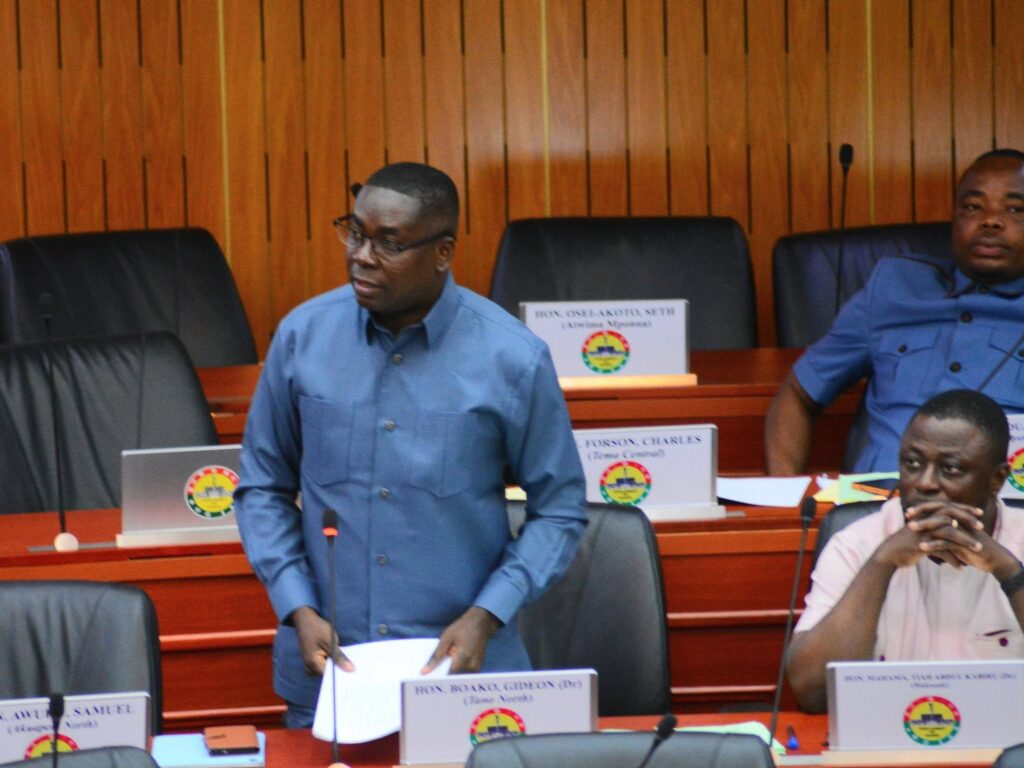
Expanding on his position, the lawmaker noted that the domestic gold acquisition framework has established an essential transmission channel linking local mineral purchases, export activity, commercial bank dollar distribution, and central bank reserve accumulation.
Although initial figures from August 2026 indicate strong performance with US$1.315 billion mobilized allocating US$668 million to commercial banks and US$647 million to Bank of Ghana reserves Dr. Boako maintained that one successful month does not guarantee long-term resilience.
He argued that total dependence on a single commodity leaves the entire macroeconomic framework vulnerable to external price swings, production disruptions, and shifting global financing conditions.
Structural Interdependence and Institutional Risk
The central argument for expanding FX channels stems from the deep operational linkage created by the new GoldBod structure.
Because GoldBod now acts as a primary liquidity feeder for commercial banks while concurrently building national reserves, any operational bottleneck within the gold extraction or export chain threatens wider financial stability.
Irregularities in export flows or spikes in financing costs immediately transmit stress directly into the broader foreign exchange market, highlighting the systemic exposure created when a single institution holds such substantial market power.

Furthermore, shifting gold purchasing operations away from the Bank of Ghana balance sheet alters where economic burdens reside rather than eliminating them entirely.
While transferring fiscal management to the central government and GoldBod enhances transparency and allows for direct parliamentary oversight, it simultaneously creates new public liabilities.
Evaluating the resilience of this framework requires assessing purchase margins, operational expenditures, borrowing costs, and determining which entity ultimately absorbs losses if global commodity market conditions worsen.
Beyond Short-Term Reserve Accumulation
Differentiating between basic reserve growth and true external resilience remains essential for national economic planning.
While reserve accumulation answers how many dollars are held in central bank vaults at a given moment, external resilience measures how effectively the nation generates foreign currency during severe economic downturns.
Heavy reliance on gold leaves national balance sheets continuously exposed to global market dynamics, private off-taker financing shifts, and local production fluctuations.
Building true economic endurance requires establishing alternative revenue pillars that insulate the domestic currency from cyclical downturns in the mining sector.
Expanding value-added agriculture, boosting local agro-processing capabilities, and scaling up digital service exports offer sustainable pathways toward continuous dollar inflows.
Bolstering traditional exports alongside non-traditional service sectors creates an economic cushion capable of absorbing global trade shocks without exerting severe pressure on sovereign reserves.
Testing Systemic Resilience Under Adverse Market Conditions
The ultimate test of Ghana’s macroeconomic architecture lies in its ability to navigate adverse market conditions rather than favorable cycles.
A downturn in global gold prices, combined with tightening commercial bank liquidity or reduced private off-taker credit, would severely test the GoldBod purchase model.

Under such stress, maintaining consistent foreign exchange supplies to commercial banks while simultaneously protecting central bank reserves becomes significantly more complex.
Achieving lasting foreign exchange stability requires anchoring national trade policy in multi-sector growth rather than singular extractive mechanisms.
By diversifying the foreign exchange engine across manufacturing, tourism, agriculture, and service industries, Ghana can protect the cedi, insulate the Bank of Ghana from quasi-fiscal risks, and build a truly resilient external sector capable of weathering global economic volatility.
READ ALSO: Trust Bank Delists From GSE After GH¢4.2m Settlement