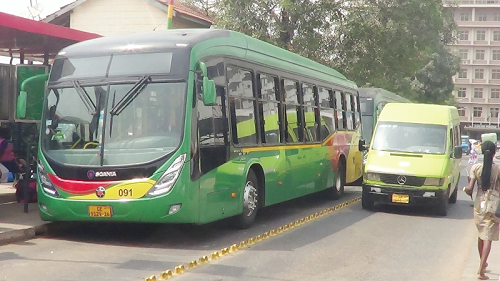
Ayalolo Bus Rapid Transit (BRT) buses will begin running against the normal flow of traffic on three major corridors into Accra’s Central Business District from Tuesday, 29 September 2026.
The Ministry of Local Government, Chieftaincy and Religious Affairs announced the contraflow arrangement in a press release dated 27 September, covering the morning peak from 6 am to 9 am and the evening peak from 4 pm to 8 pm.
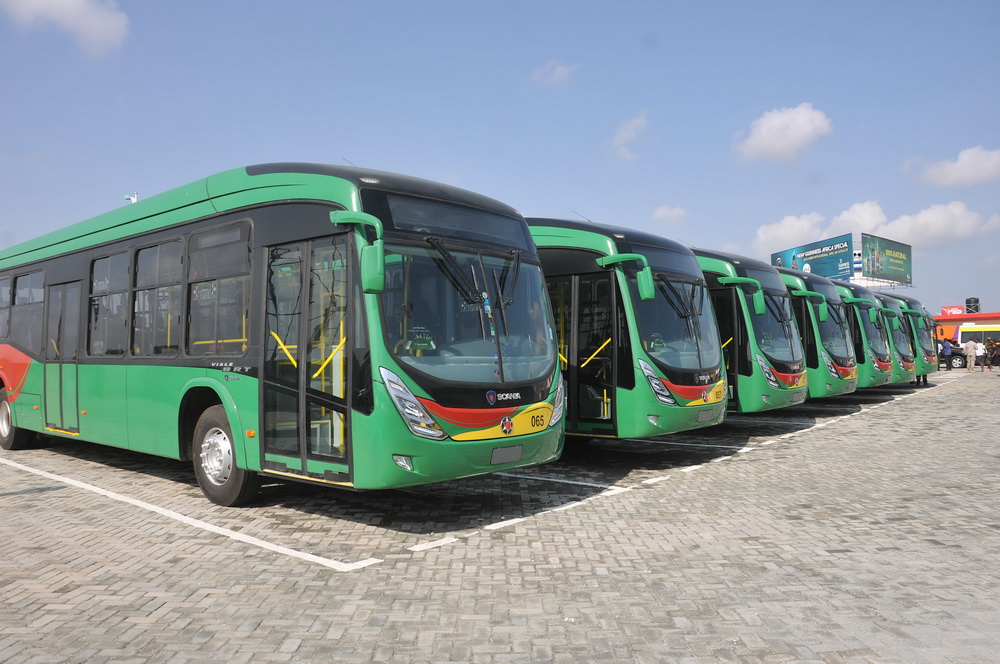
The Ministry is implementing the measure together with the Motor Traffic and Transport Department (MTTD) of the Ghana Police Service, the Greater Accra Passenger Transport Executive (GAPTE) and the Department of Urban Roads (DUR).
Government says the intervention forms part of broader efforts to improve public transportation, cut congestion and give commuters more reliable and efficient movement into and out of the capital’s commercial heart.

Three Accra Corridors Selected for the Ayalolo BRT Rollout
The contra flow arrangement will initially cover the Amasaman to Accra, Adenta to Accra and Kasoa to Accra corridors. According to the Ministry, these routes were chosen for priority intervention because they carry significant volumes of commuters travelling to and from the Central Business District during peak periods.
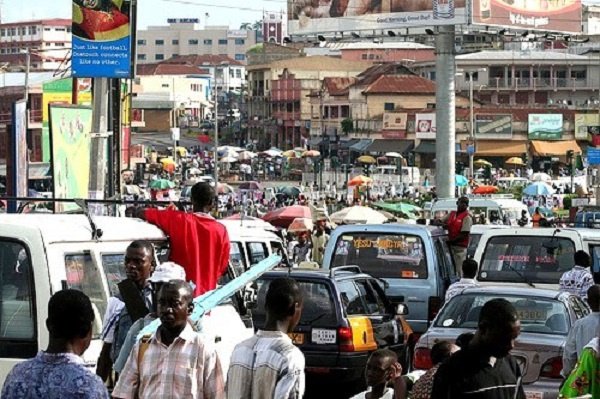
Anyone who has sat in morning traffic at Ofankor, Madina or the Kasoa tollbooth will recognise the logic. These are among the busiest entry points into the city, and each feeds tens of thousands of workers, traders and students into central Accra every weekday.
The Ministry noted that the arrangement will apply only on designated sections of the three corridors, subject to approved traffic management and road safety requirements. During peak periods, selected stretches will be temporarily reconfigured to let authorised Ayalolo buses travel in the priority direction against oncoming general traffic.
How the Contra Flow Lanes Will Work
The release leaves no room for ambiguity on who may use the new lanes. “The designated contra flow lanes will be strictly reserved for Ayalolo BRT operations,” the Ministry stated.
That restriction extends to every other category of road user. Private vehicles, taxis, trotros, commercial vehicles and all other unauthorised motorists will be kept out of the designated lanes, a rule likely to test the patience of drivers accustomed to squeezing into any available space during rush hour.
Enforcement falls to the MTTD, which will provide operational traffic control and enforcement support at strategic locations and major intersections along the affected corridors. “Road users are urged to cooperate fully with MTTD personnel throughout the implementation,” the release added.
What Government Expects From the Ayalolo BRT Intervention
The Ministry set out six goals for the contraflow arrangement. It expects the measure to make Ayalolo BRT services more reliable and punctual, shorten journey times for commuters, and ease congestion on the major approaches to the Central Business District.
Beyond immediate travel times, government hopes the arrangement will nudge more commuters toward mass public transportation and reduce the pressure created by large numbers of private vehicles on Accra’s roads. The ultimate aim, the Ministry said, is to improve overall urban mobility across the Greater Accra Metropolitan Area.
The success of that ambition depends heavily on whether commuters see a visible difference. A bus that glides past a queue of stationary cars makes a stronger case for public transport than any policy statement, and the contraflow design appears built to deliver exactly that contrast during the hours when congestion peaks.
Appeal to Motorists, Operators and Residents
Government has appealed to motorists, commercial transport operators, pedestrians, businesses and residents along the affected corridors to support the intervention.
The Ministry said it will continue engaging transport operators, road users, local authorities and other stakeholders to ensure the arrangement delivers its intended benefits while keeping road safety intact.
That engagement will matter most with commercial operators. Trotro and taxi drivers, whose livelihoods depend on speed and the number of trips they complete, will now share congested roads while watching BRT buses use lanes they cannot enter. How the MTTD manages that tension at busy intersections could shape public reception of the policy in its first weeks.
Pedestrians also face an adjustment. Buses approaching from the opposite direction to regular traffic on sections of these corridors will require people crossing the road to look both ways with fresh attention, particularly at unofficial crossing points common along the Kasoa and Amasaman routes.
Ayalolo BRT Management to Brief the Public
The management of Ayalolo BRT held a press briefing on Monday, 28 September 2026, at 10 am to give the public more details on the intervention. The session was expected to clarify the exact sections of each corridor that will carry contraflow lanes, signage arrangements and how commuters can access the service.
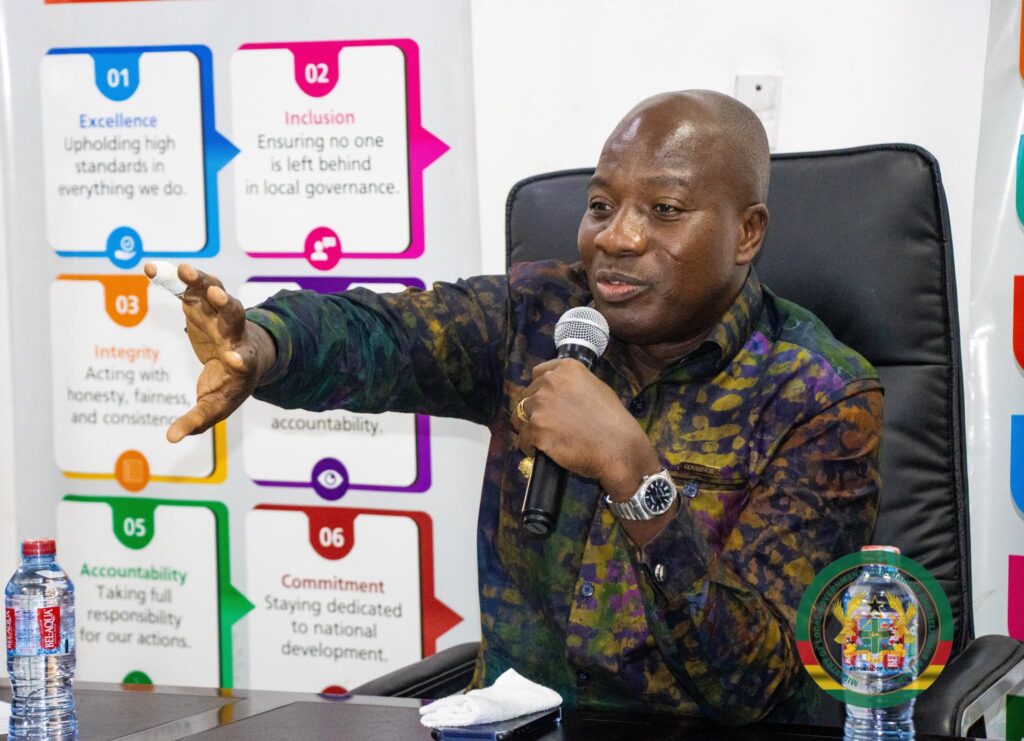
The Ministry closed its release by urging the public to cooperate with traffic officers and to give priority to the safe and efficient movement of mass public transport.
With implementation set for Tuesday morning, the first rush hour under the new arrangement will offer the earliest test of whether Accra’s commuters, drivers and enforcement officers can make the system work as the government intends.
READ ALSO: Ghana’s Debt Climbs to GH¢733.9bn as Ratio Hits 45.9%