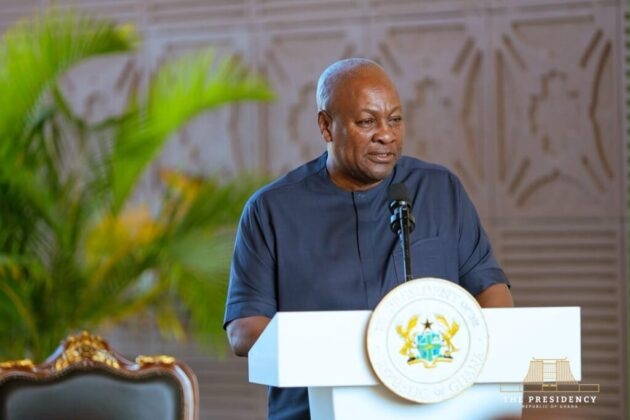
President John Mahama said the government plans to list 10 state-owned enterprises on the Ghana Stock Exchange as part of a broader effort to change the way these companies operate.
According to him, bringing more SOEs onto the capital market would introduce stronger governance structures and make it harder for successive governments to make abrupt management changes.
“One, because we want to improve their governance. And two, because we want to reduce political interference in those state-owned enterprises. If we list more of these companies, it makes it difficult for the government to interfere and sack the management and dissolve the boards and all that.”
President John Mahama
The proposed listings could therefore place greater emphasis on corporate accountability, shareholder interests and transparent reporting.
Rather than remaining entirely dependent on government ownership and decisions, listed enterprises would have to operate within the regulatory and disclosure framework of the Ghana Stock Exchange.
SOE Profits Add Momentum to Listing Push
The announcement comes against the backdrop of a significant improvement in the financial performance of Ghana’s state-owned enterprise sector.
President Mahama said measures implemented through the State Interests and Governance Authority had helped improve the financial position of SOEs.
He noted that companies which had collectively recorded losses in previous years had now moved into profitability, recording almost GH¢19 billion in net profit during the latest reporting period.
SIGA’s 2025 State Ownership Report separately puts the sector’s net profit after tax at GH¢19.8 billion.
That performance provides an important backdrop to the planned listings, particularly as the government seeks to demonstrate that state-owned enterprises can generate value while operating under stronger governance structures.
The improved results also raise the prospect of greater investor interest if selected SOEs eventually come to the market.
Political Interference Comes Under Fresh Scrutiny
At the heart of the planned listings is the government’s concern about political influence over state-owned companies.
SOEs have historically been closely connected to government decisions, with changes in political administration sometimes accompanied by changes in boards and management.
President Mahama argued that listing companies on the stock exchange could create additional barriers to such interventions.
His comments suggest that the proposed listings are not simply about raising capital. They are also intended to alter the institutional relationship between government and state-owned enterprises.
Once listed, companies would have shareholders beyond the state and would operate under the requirements of the capital market. That could increase scrutiny over corporate decisions, financial performance and management.
The approach could also give investors a greater opportunity to assess the performance of companies in which they acquire shares.
Ghanaians Could Gain New Investment Opportunities
The planned listings could open another avenue for Ghanaian investors to participate directly in the ownership of state-owned enterprises.
President Mahama said the initiative would create opportunities for Ghanaians, including those living in the diaspora, to invest in the companies through the Ghana Stock Exchange.
That could broaden participation in the ownership of selected state assets and give individual investors access to companies that have traditionally remained under government control.
The move could also deepen activity on the local capital market if the proposed listings attract substantial investor participation.
With the GSE already serving as a platform for trading shares in listed companies, the arrival of major SOEs could introduce new issuers and potentially increase the range of investment opportunities available to local investors.
Mahama Challenges Culture of SOE Benefits
President Mahama also highlighted what he described as a longstanding culture in which some state-owned enterprises continued to demand salary increases and bonuses despite recording financial losses.
“Even when they’re making losses, they’re asking for salary increments and asking for bonuses when you’ve made a loss,” he said.
His comments place the planned listings within a wider conversation about financial discipline and accountability in state-owned companies.
The argument is that stronger exposure to shareholders and capital-market scrutiny could encourage management teams to pay closer attention to profitability, efficiency and sustainable growth.
The government’s approach therefore combines improved financial performance with structural changes aimed at strengthening how SOEs are governed.

GSE Could Become a Bigger Home for State Assets
The proposed listing of 10 SOEs could become one of the more significant developments for Ghana’s capital market if the plans are implemented.
It would bring more state-linked companies under the scrutiny of investors while potentially giving Ghanaians a direct stake in selected enterprises.
The initiative also reflects a broader attempt to move SOEs away from dependence on political decisions and toward stronger corporate governance.
With the sector already reporting GH¢19.8 billion in net profit after tax, attention will now turn to which 10 enterprises are selected, when their listings will take place and how the government will structure the offerings.
The planned transactions could ultimately test whether stronger market participation can help Ghana combine public ownership with greater accountability, investment opportunities and commercial discipline.