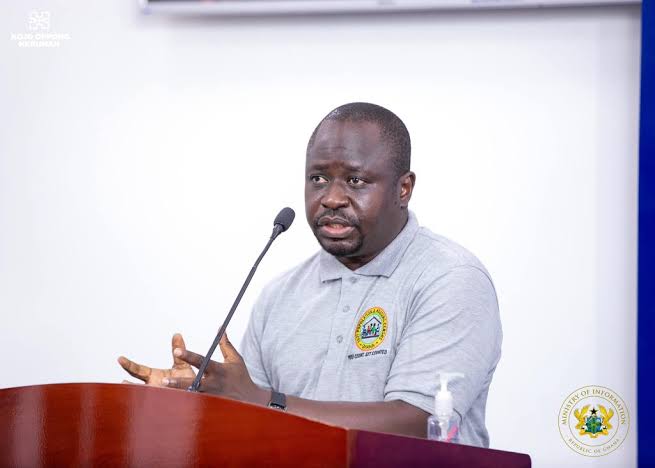
Director of the African Centre for Statistics at the United Nations Economic Commission for Africa (UNECA), Prof. Samuel Kobina Annim has warned that a lack of trust among Ghana’s universities, statistics office and government is compromising development interventions.
He gave the warning at the inaugural edition of the Academic Policy Dialogue Series organised by the Department of Data Science and Economic Policy at the University of Cape Coast (UCC).
Delivering the lecture on the theme “Building Pan-African Statistical System: The Stakes for the Academic and Policy Community,” the former Government Statistician said trust and integrity are the hardest parts of the relationship to build. He argued that these intangibles, rather than tangible investments, decide whether evidence ever reaches policy.
Trust Deficit Among Academics, Statisticians and Policymakers
Prof. Annim asked participants to test the current working relationships honestly. He said the question was whether trust truly exists between the academic and policy communities, between statisticians and policymakers, and between statisticians and academics.
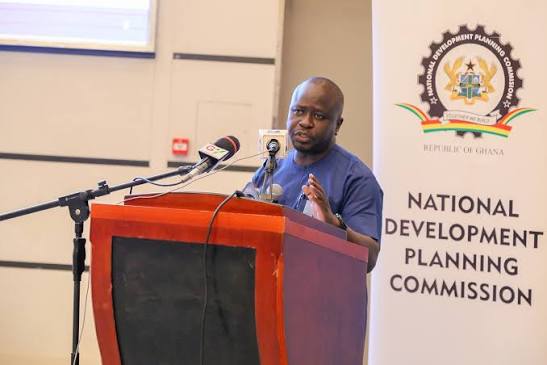
“Once this trust doesn’t exist, no matter the tangibles that we do, we’re going to find ways of compromising the outcomes and the impact associated with our interventions,” he said.
He placed trust alongside integrity as the two issues he deliberately set apart from the more routine areas of cooperation, describing them as the hard part of any partnership. Integrity, in his framing, must hold across all three domains, covering statistical integrity, policy integrity and research integrity.
Integrity and Politics: The Hidden Disconnects in Ghana’s Data and Policy Systems
Prof. Annim, who spent about two decades in the classroom before heading the Ghana Statistical Service (GSS), said the familiar gap between research and policy uptake masks deeper fractures that the sector seldom discusses.
“Beyond this disconnect that we all know, there are other subtle disconnects that we hardly talk about them, but in this presentation I’ll try to bring them to the fore, one of which is the disconnect between integrity and the political environment of the work that we do.
“Another is the disconnect between the technical and operational part of the work that we do”.
Prof. Samuel Kobina Annim, Director of the African Centre for Statistics at the United Nations Economic Commission for Africa (UNECA)
Superficial Ties Between Universities and the Statistical Service
Drawing on his years at the GSS, Prof. Annim said the relationship between universities and the national statistics office rested on narrow, transactional needs. The office, he said, looked to universities mainly for staff and faculty expertise.
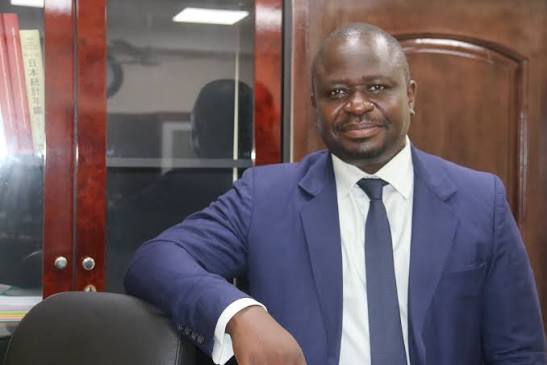
“And on the other side, all that I got from academia when I was with the National Statistical Office is, can you give me micro data to do my research? Can you give me this statistic to go and make a submission? Really, these are superficial needs across these two agencies”.
Prof. Samuel Kobina Annim, Director of the African Centre for Statistics at the United Nations Economic Commission for Africa (UNECA)
A partnership built on trust, he explained, would see academics independently validating official statistics, offering continuous professional development, producing policy-relevant research and supporting data for financing development.
Mutual Responsibility to Taxpayers
Prof. Annim anchored his call for trust in a shared obligation to the public that funds all three communities.
“We are where we are because it’s assumed we are the frontiers of knowledge. We are where we are because government is subsidizing to a very large extent to ensure that we keep our jobs. We are where we are because the taxpayer is sweating day in and day out to ensure that we are going to lead the process of transformation within an economy”.
Prof. Samuel Kobina Annim, Director of the African Centre for Statistics at the United Nations Economic Commission for Africa (UNECA)
That duty, he added, requires academics to move beyond shaping policy design and monitoring results to independently assessing policy outcomes. Without such assessment, he warned, each new policy would inherit the failures of the one before it.

Rebuilding Trust Through Reconnection
Discussant Dr. Joshua Sebu praised the lecture for treating the statistical system as more than a technical tool for producing data. When Dr. Sebu asked him to name the weakest link among the three communities, Prof. Annim declined, urging participants instead to identify the gaps the academic community itself could fill.
In his closing remarks, he called for recalibration across the sector and insisted that universities, statisticians and policymakers must answer to the public rather than to government alone.
“This requires repositioning ourselves, restructuring our systems, and once we’ve been able to do that, we have to now reconnect to address the disconnect that I talked about,” he said. The Department of Data Science and Economic Policy says it will distil the dialogue into a policy brief for policymakers in Ghana and across Africa.
READ ALSO: BoG Governor Signals Sharp Drop in Ghana’s Borrowing Costs