Ghana and Saint Kitts and Nevis have signed an additional bilateral labour agreement guaranteeing enhanced conditions of service for Ghanaian nurses deployed to the Caribbean nation, securing legally protected salaries, health insurance, rent allowance and end-of-service benefits for the affected workers.
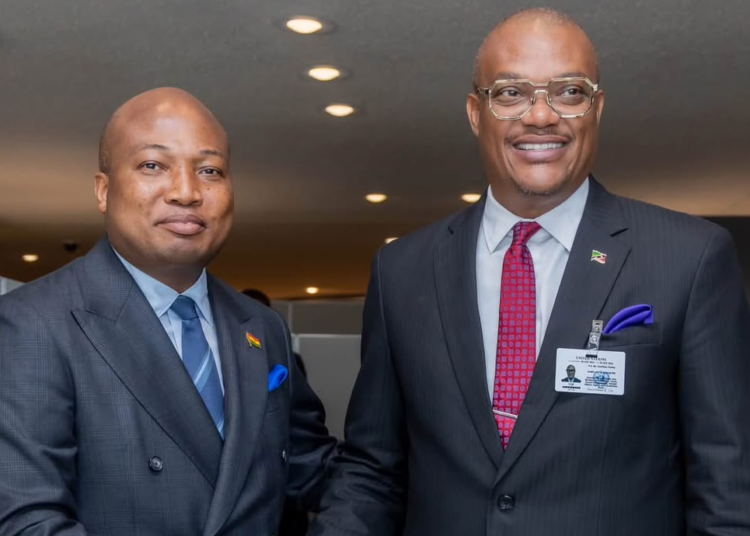
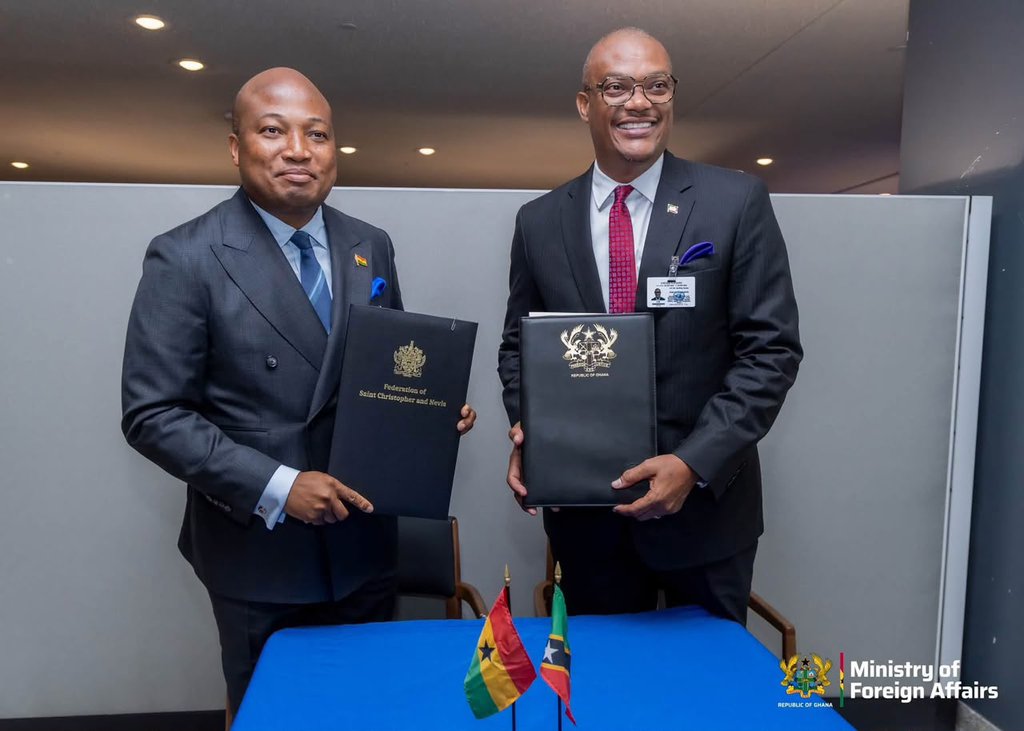
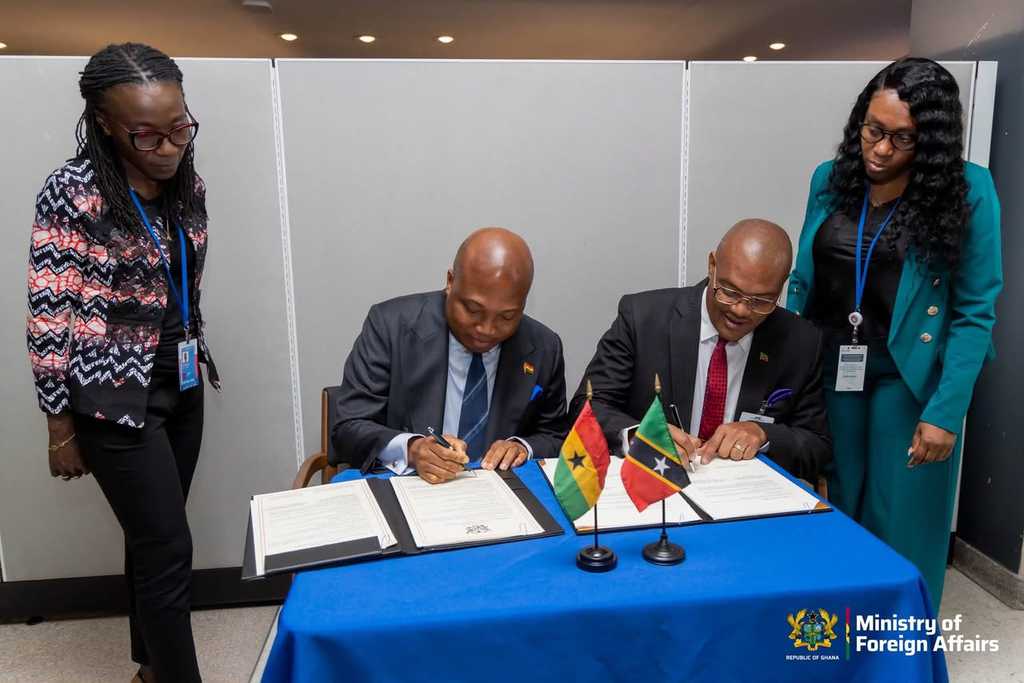
The agreement was signed by Ghana’s Foreign Minister, Okudzeto Ablakwa, and the Deputy Prime Minister of Saint Kitts and Nevis, Dr Geoffrey Hanley, on the margins of the United Nations General Assembly in New York.
Announcing the agreement, Ablakwa said Ghana and Saint Kitts and Nevis were delighted to sign the additional bilateral labour agreement, describing it as a guarantee of enhanced conditions of service for Ghanaian nurses working in the Caribbean nation.
The new agreement builds on an existing labour arrangement between the two countries, strengthening the protections available to Ghanaian healthcare workers already serving or set to be deployed there.
Under the agreement, Ghanaian nurses sent to Saint Kitts and Nevis will benefit from a comprehensive package of legally protected entitlements. These include enhanced salaries, health insurance coverage, rent allowance, end-of-service benefits, and other labour rights designed to safeguard their welfare while working abroad.
“Ghanaian nurses will be sent to Saint Kitts and Nevis will enjoy legally protected enhanced salaries, health insurance, rent allowance, end of service benefits, among other labour rights.”
Foreign Minister, Okudzeto Ablakwa
The legal protection attached to these benefits is significant, as it moves the entitlements beyond informal assurances into enforceable terms of employment, offering Ghanaian nurses greater security and predictability while serving in the Caribbean nation.
Recognition For Ghanaian Professionals
Ablakwa used the occasion to commend Ghanaian professionals for their contributions abroad, noting that many countries continue to seek out their expertise and outstanding service.
He framed the agreement as part of a broader pattern of international recognition for Ghana’s skilled workforce, particularly within the healthcare sector, where Ghanaian nurses have built a strong reputation in various countries around the world.

The Foreign Minister linked the agreement to Ghana’s broader diplomatic approach, stating that the country will continue to pursue impactful diplomacy which benefits the people it serves.
This framing positions the labour agreement not merely as a technical arrangement between two governments, but as a direct example of how international diplomacy can translate into concrete welfare improvements for Ghanaian citizens working overseas.
“Ghana will continue to pursue impactful diplomacy which benefits the people we serve.”
Foreign Minister, Okudzeto Ablakwa
Ablakwa closed his remarks by expressing continued goodwill toward Saint Kitts and Nevis, wishing for the longevity of the relationship between the two nations.
The signing of this additional labour agreement reflects an ongoing deepening of ties between Ghana and the Caribbean nation, building on whatever prior labour arrangements have existed between the two countries regarding the deployment of Ghanaian healthcare professionals.
Context: Ghana’s Healthcare Labour Exports
Ghana has in recent years positioned itself as a source of skilled healthcare professionals for countries facing shortages in their own nursing and medical workforces.
Bilateral labour agreements such as this one are typically designed to formalise the terms under which Ghanaian workers are deployed abroad, ensuring that their rights and welfare are protected under legally binding frameworks rather than informal or unregulated arrangements.
By securing enhanced salaries, health insurance, rent allowance and end-of-service benefits specifically for nurses heading to Saint Kitts and Nevis, the agreement reflects a broader effort by Ghana’s government to ensure that its healthcare professionals working overseas are not only sought after for their skills, but are also protected by fair and enforceable labour conditions.
Implications Going Forward
The agreement is likely to be viewed as a positive development both for Ghanaian nurses seeking opportunities abroad and for Ghana’s broader diplomatic engagement strategy, which continues to emphasise labour mobility as a component of its international relations.
As implementation begins, attention may turn to how many Ghanaian nurses are expected to be deployed under the enhanced terms, and whether similar agreements might be pursued with other countries seeking to recruit Ghanaian healthcare professionals.
The signing in New York, taking place on the margins of the UN General Assembly, also underscores how high-level diplomatic gatherings continue to serve as platforms for finalising bilateral agreements that carry direct, practical benefits for citizens working in specialised sectors such as healthcare.
READ MORE: GES Tasked to Submit Validation Documents to CAGD to Resolve Teacher Promotion Dispute