Ghana is advancing efforts to establish a stronger institutional framework for the management and development of its blue economy as stakeholders review and validate the draft Ghana Blue Economy Commission Bill.
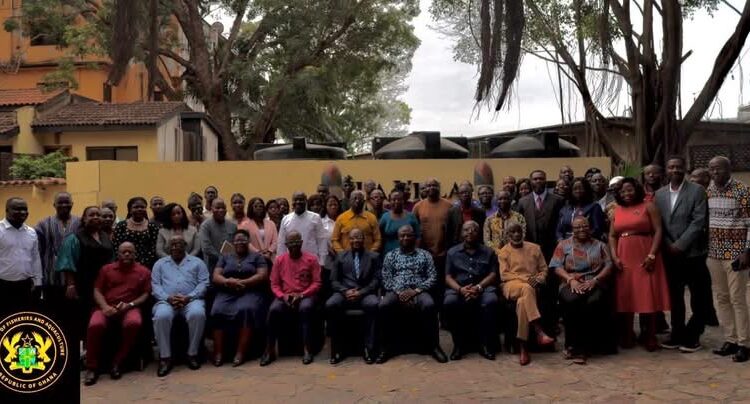
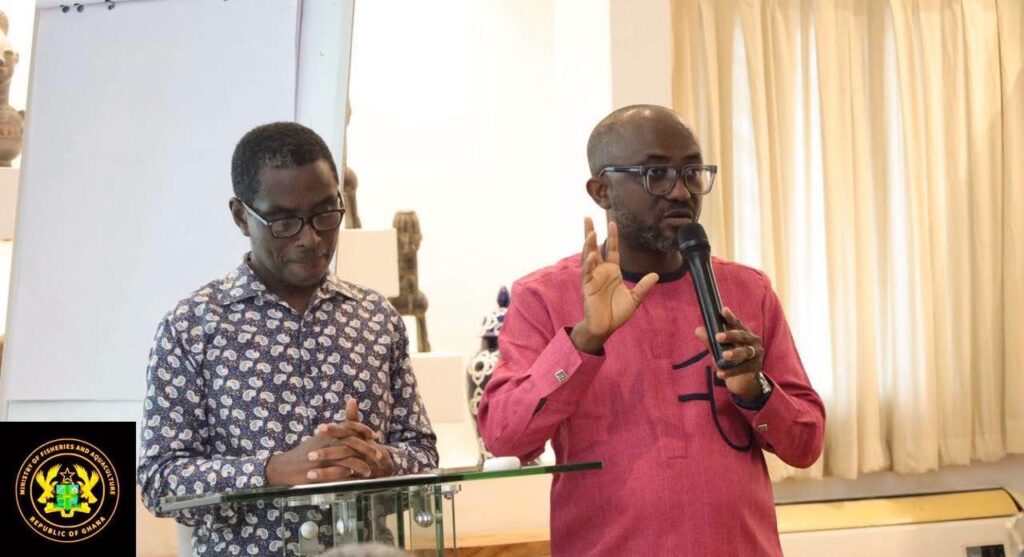
Representatives from various Ministries, Departments and Agencies (MDAs), together with members of the Intersectoral Technical Committee, are meeting at the La Villa Boutique Hotel in Accra to scrutinise the revised draft legislation and provide final inputs before it moves to the next stage of consideration.
The engagement brings together stakeholders from key sectors whose activities are linked to Ghana’s blue economy, including fisheries, aquaculture, maritime activities, coastal development, environmental management and other areas with economic potential.
“The Intersectoral Technical Committee has carefully considered submissions received from public institutions, academia and individuals, leading to adjustments to the draft Bill.”
Coordinator of Blue Economy, Fred Antwi Boadu
He explains that the current meeting provides stakeholders with another opportunity to examine the revised document and make recommendations that can improve the proposed legislation.
“The current engagement provides an opportunity for participants to scrutinise the revised document and make further recommendations before the committee submits its final position.”
Coordinator for Blue Economy, Fred Antwi Boadu
A Significant Step for the Fisheries and Aquaculture
The review is significant for Ghana’s agricultural sector, particularly fisheries and aquaculture, which depend heavily on the sustainable management of the country’s aquatic resources.
The blue economy provides opportunities for food production, employment, investment and value addition, while also supporting communities whose livelihoods depend on fisheries and related activities.
A stronger institutional framework can therefore support efforts to improve fisheries management, promote responsible aquaculture and encourage investment in businesses linked to aquatic resources.
The development of the Bill also comes at a time when Ghana is seeking to expand economic opportunities beyond traditional sectors and promote sustainable approaches to resource utilisation. For agriculture, this includes strengthening the connection between fisheries production, processing, storage, marketing and export.
The fisheries industry supports thousands of livelihoods across Ghana, particularly in coastal communities. Small-scale fishing, fish processing, fish trading and related activities provide income for households and contribute to food security.
However, the sector continues to face challenges including pressure on fish stocks, environmental degradation, illegal fishing and inadequate coordination among institutions responsible for managing aquatic resources.
A Framework to Address Aquaculture Challenges
A comprehensive blue economy framework could provide a basis for addressing some of these challenges through stronger institutional collaboration and sustainable resource management.
Mr Antwi Boadu further indicates that the outcome of the stakeholder validation will guide the next stages of the legislative process.
He explains that the final position of the committee will inform consideration by Cabinet, review by the Attorney General and eventual parliamentary consideration.
The process therefore places importance on ensuring that the proposed legislation reflects the interests and responsibilities of institutions and communities involved in the blue economy.
In a solidarity message, the North East Regional Minister, Ibrahim Tia, calls on stakeholders to contribute their best ideas to the process.
He stresses that stakeholders have a responsibility to help safeguard Ghana’s constitutional order while responding to challenges affecting citizens across the country.
His message underscores the need for legislation that does not only establish an institution but also creates practical mechanisms for coordination, accountability and sustainable development.
The stakeholder meeting allows participants to contribute directly to the proposed framework. Their recommendations are expected to help clarify institutional responsibilities, reduce duplication and strengthen cooperation between government agencies and other stakeholders.
For the agricultural sector, effective coordination is particularly important because fisheries and aquaculture intersect with environmental protection, food security, trade, industry, local government and employment.
Aquaculture also presents opportunities for Ghana to increase domestic fish production and reduce pressure on wild fish stocks. Greater investment in fish farming, feed production, processing, cold storage and marketing can contribute to agricultural industrialisation and create opportunities for young people and entrepreneurs.
Blue Economy Offers Opportunities
The blue economy also offers opportunities for women and youth who participate in fish processing, trading, logistics and other value chain activities. A coordinated policy framework could help create an enabling environment for investment, innovation and skills development across these areas.
Participants at the validation meeting therefore provide candid views on the revised Bill, with their contributions expected to shape a framework that brings different sectors together.
The engagement forms part of ongoing efforts by the Ministry and relevant institutions to strengthen coordination and establish a more coherent approach to Ghana’s blue economy.
As the Bill progresses through the legislative process, attention remains on creating a framework that balances economic development with environmental sustainability.
The objective is to ensure that Ghana’s marine and aquatic resources contribute to economic growth, food security, employment and improved livelihoods without undermining the resources on which future generations depend.
The validation exercise consequently represents another stage in Ghana’s efforts to build a coordinated blue economy framework capable of supporting sustainable agriculture, fisheries, aquaculture and wider economic development.
READ ALSO:Debt Treatment Palliative, Mahama Pushes For Fairer Financial Architecture