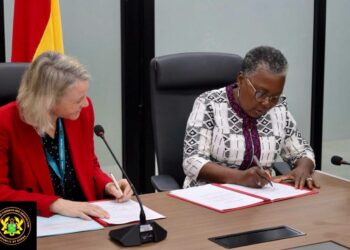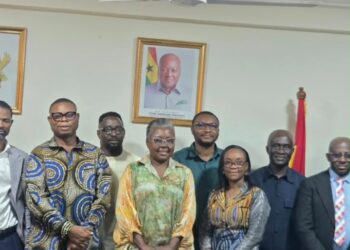
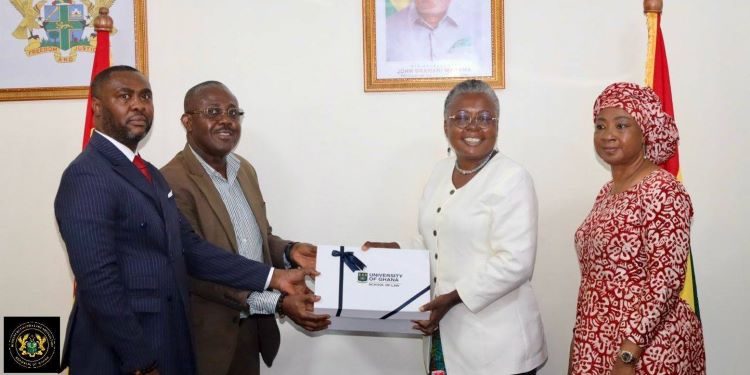
The University of Ghana School of Law (UGLS) has, in a recent display of the growing synergy between academic research and national policy, provided a comprehensive progress update to the Minister for Fisheries and Aquaculture Development, Hon. Emelia Arthur on the Oceans Governance, Research and Development Project.
As the nation navigates the complexities of the 2026 fiscal year and the evolving legalities of the Atlantic, this multi-institutional collaboration – backed by the Norway Centre for the Law of the Sea – arrives at a critical juncture for Ghana’s maritime sector and is proving to be the intellectual engine behind the country’s new maritime order.
“The initiative, funded by the Norwegian Agency for Development Cooperation, is a four-year programme that began in 2022 and concluded in 2025. It is currently under a six-month extension to complete its final phase of implementation.
“The project aims to strengthen Ghana’s capacity in the law of the sea and improve ocean governance through research, training, and policy development”
Ministry of Fisheries and Aquaculture Development
While the original project cycle concluded in 2025, the Ministry of Fisheries and Aquaculture Development (MoFAD) noted that the team is currently operating under a vital six-month extension to finalize implementation and ensure that the research conducted over the last four years is fully integrated into Ghana’s governance DNA.
For the Ministry, the project is both an academic exercise and the foundation upon which the sustainable management of marine resources is being built. At the heart of the briefing, led by project lead Francis Nunoo, was the initiative’s direct contribution to the Fisheries and Aquaculture Act, 2025 (Act 1146).

This landmark legislation, passed only last year, serves as a modernized shield against the threats of Illegal, Unreported, and Unregulated (IUU) fishing that have plagued Ghana’s coastal waters. It was noted how the UGLS team provided the technical and legal frameworks necessary to ensure that the Act aligned with international standards while addressing the unique socio-economic needs of Ghana’s artisanal fishing communities.
Furthermore, the project’s influence has extended into the high-stakes arena of global trade, as the team was instrumental in shaping Ghana’s stance on the World Trade Organization (WTO) Agreement on Fisheries Subsidies.
For many developing nations, navigating the WTO’s restrictions on subsidies while protecting the livelihoods of local fishers is a delicate balancing act, yet the research and policy engagement facilitated by this project empowered Ghana to participate in these international dialogues from a position of data-backed strength, ensuring that the nation’s interests are not sidelined in the pursuit of global trade harmonization.
New Generation of Maritime Experts
The UGLS and the Department of Marine and Fisheries Sciences highlighted their recognition of policy being only as effective as the people who interpret and enforce it – as a huge part of the project’s success was attributed to its commitment to human capital.
According to MoFAD, the project is curating a “new generation,” of experts capable of managing the Blue Economy with technical precision, by fostering an interdisciplinary approach that bridges the gap between marine biology and maritime law. This focus on interdisciplinary collaboration is particularly relevant as maritime disputes and climate-related ocean shifts become more frequent.
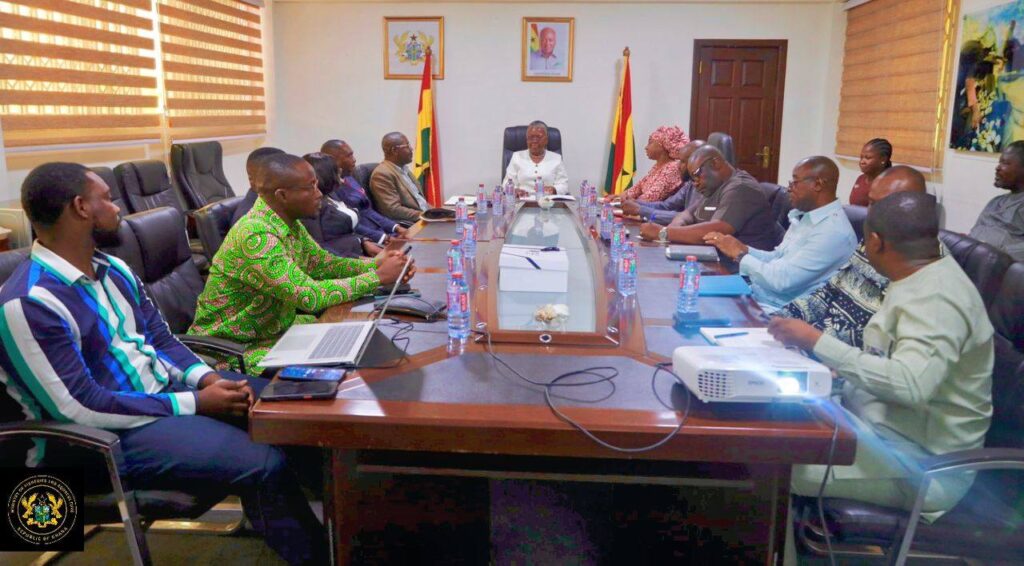
The project has supported rigorous academic research and practical training, ensuring that the next wave of Ghanaian maritime lawyers and scientists can speak a common language. This alignment is essential for the sustainable management of marine resources, which requires a deep understanding of both the ecological limitations of the sea and the legal frameworks that govern its usage.
Minister Emelia Arthur, in her remarks following the briefing, emphasized that while the research phase has been a resounding success, the focus must now shift toward “effective implementation.”
The Minister’s satisfaction with the project’s progress was rooted in its alignment with the government’s broader agenda to build a resilient blue economy. However, she was clear that the academic findings must reach the field, influencing how the Ministry regulates, monitors, and supports the sector.
To facilitate this transition, Hon. Arthur urged the project team to deepen their collaboration with the Ministry’s Blue Economy Unit – which serves as the tactical arm for sustainable ocean industrialization, and is seen as the primary vehicle for stakeholder engagement.
Through this integration, the government hopes to create a feedback loop where policy outcomes are continuously refined based on real-world maritime developments.
As the project enters its final six-month extension, the stakes for Ghana’s maritime governance have never been higher. The Ministry’s reaffirmation of its commitment to sound ocean governance underscores the reality that the sea is no longer just a source of food; it is a critical component of national development and environmental sustainability.
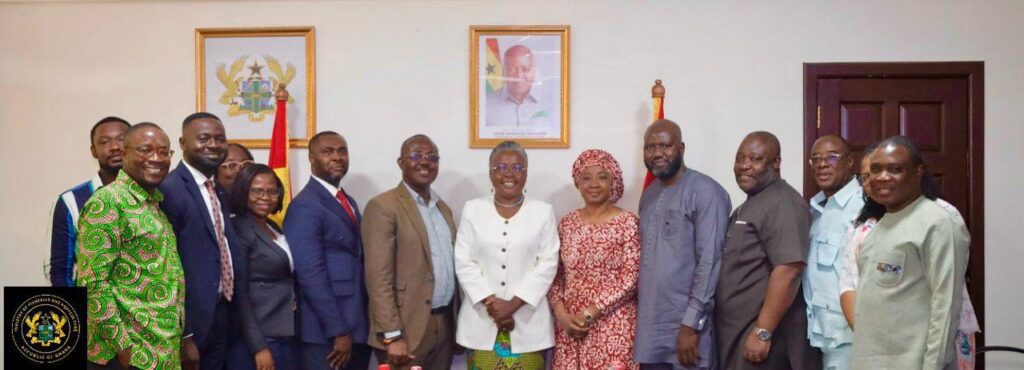
From ensuring food security for the millions who depend on fish protein to upholding the rule of law in Ghana’s Exclusive Economic Zone (EEZ), the outcomes of this project are woven into the fabric of the nation’s future.
The collaboration with the Norway Centre for the Law of the Sea has also provided Ghana with a unique diplomatic advantage, allowing the nation to adopt best practices from a global leader in maritime management.
As the final phase of implementation concludes, the legacy of the Oceans Governance, Research and Development Project will likely be measured by the strength of the institutions it has helped build and the resilience of the blue economy it has helped define.
READ ALSO: 37 Military Hospital Marks World Autism Awareness Month with Float in Accra