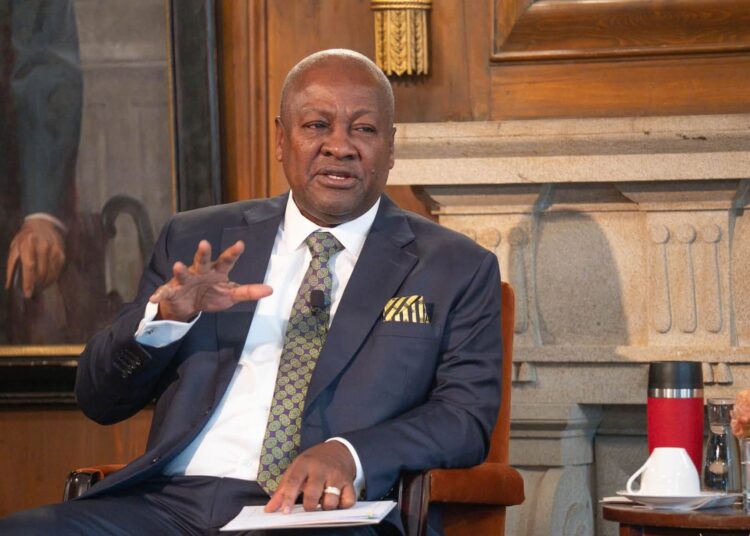
President John Dramani Mahama says debt restructuring treats the symptoms of Africa’s borrowing crisis rather than its causes, since the continent pays eight times what the rest of the world pays to borrow.
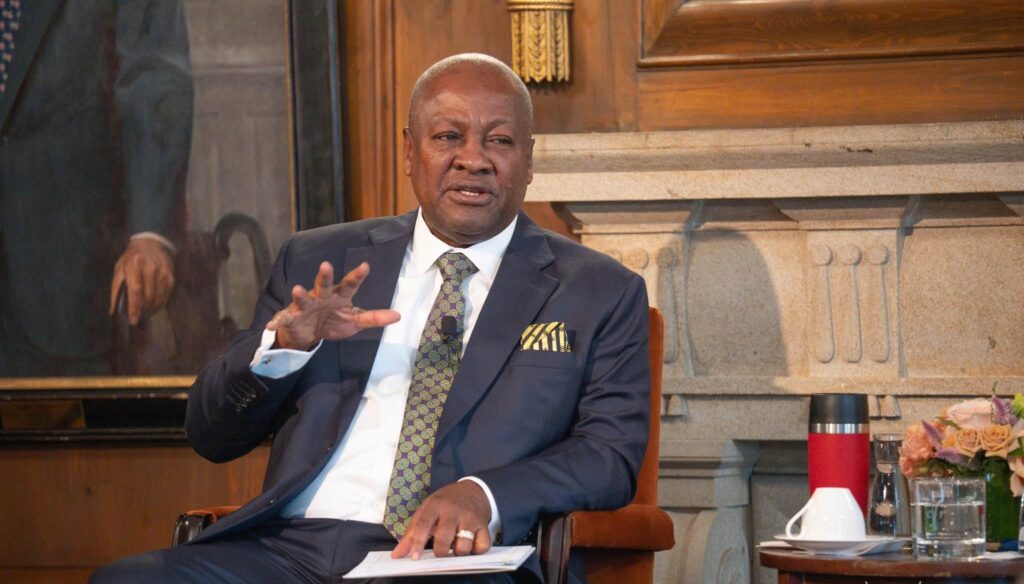
He made the argument at the Council on Foreign Relations in New York on Friday, 25 September 2026, during his engagements around the 81st United Nations General Assembly.
He set out a balance sheet in which far more money leaves Africa each year than enters it, through illicit financial flows, debt servicing and risk premiums, at a time when development assistance has collapsed. His demands, he said, are simple: a permanent seat at the United Nations, a larger share in the multilateral institutions and the ability to borrow at fairer rates.
Where The Debt Trap Begins
President Mahama rejected the framing that puts restructuring at the centre of the conversation. Debt treatment is the end rather than the beginning, he said, and the beginning is the price Africa pays for capital.
He used climate finance to illustrate it. The continent contributes about four per cent of greenhouse gases, yet bears the consequences of a warming planet, and when a climate-driven humanitarian crisis strikes, African governments must borrow at eight times the cost others pay to recover from it.
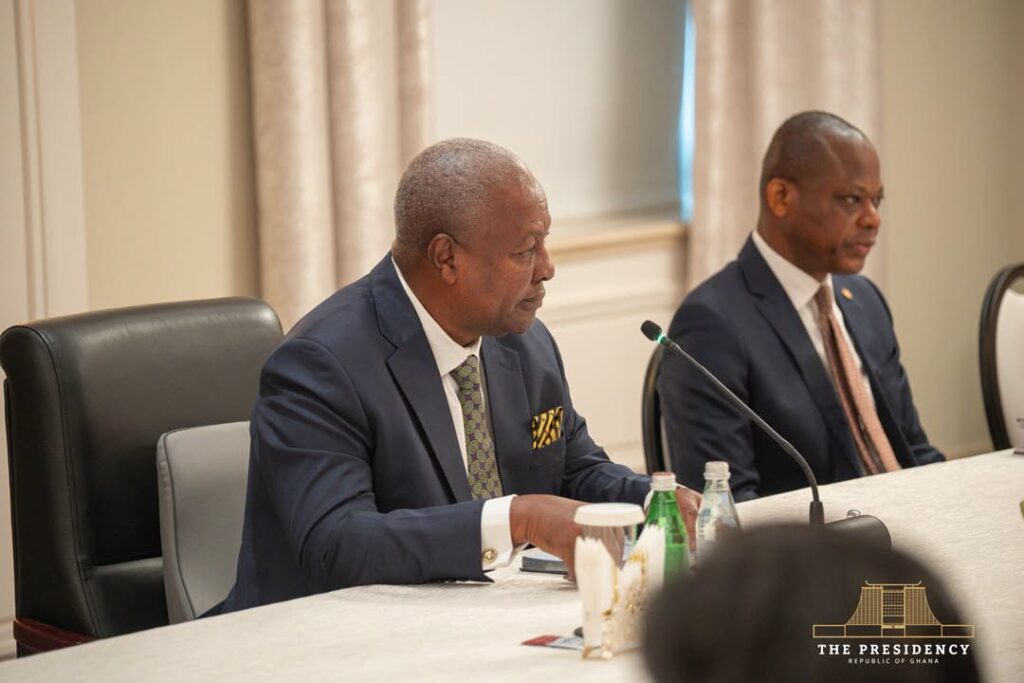
That sequence, in his account, is how the trap closes. Countries borrow expensively to repair damage they did not cause, then find themselves in restructuring negotiations over the resulting debt.
More Goes Out Than Comes In
The figures he offered were the sharpest part of the presentation. He put illicit financial flows out of Africa at an estimated 90 billion dollars a year, attributing them to mis-invoicing and transfer pricing by large Western corporations.
He explained the mechanism plainly. A company buys an African commodity cheaply from its own operation on the continent, sells it through an affiliate in Europe, books the profit there and pays no tax in Africa.
To that he added roughly 80 billion dollars leaving annually in interest and debt servicing, and a further 40 billion attributable to risk premiums. He put the total outflow at more than 240 billion dollars a year, though the components he named come to about 210 billion.
Against that, he set the money coming in. Total official development assistance to Africa stood at 70 billion dollars in 2023 and fell to 30 billion in 2025, following aid cuts by major donors.
Independent estimates support the scale of his central claim. The United Nations Conference on Trade and Development has put illicit financial flows from Africa at about 88.6 billion dollars annually, close to the figure he cited.
President Mahama applied the argument to his own government. Ghana has come through its debt treatment, he said, but at a cost measured in what the country can no longer do.
He is paying billions of dollars to retire debt, money that could have gone into education, healthcare or infrastructure. The restructuring resolved the immediate crisis without changing the conditions that produced it. “Debt treatment is actually palliative,” he said.
The Demands
From that diagnosis he drew a list. Africa wants a permanent seat on the United Nations Security Council and a bigger share in the multilateral financial institutions, where he put the continent’s current weight at the International Monetary Fund at 4.5 per cent and said Africa is advocating for ten.
It also wants cheaper borrowing and an end to the risk premiums attached to African debt, which he argued reflect perception rather than performance. He characterised the assumption behind them in blunt terms, saying it amounts to a belief that anyone coming to Africa will be eaten by savages.
None of these demands can be met by goodwill alone. Quota reform at the IMF requires an eighty-five per cent majority of voting power, which effectively gives the United States a veto over any redistribution, and the last general review produced no change in relative shares.
The risk premium argument has more immediate traction. African governments and the African Union have long contended that agency ratings overstate default risk relative to the continent’s repayment record, and work on an African credit rating agency has advanced on precisely that basis.
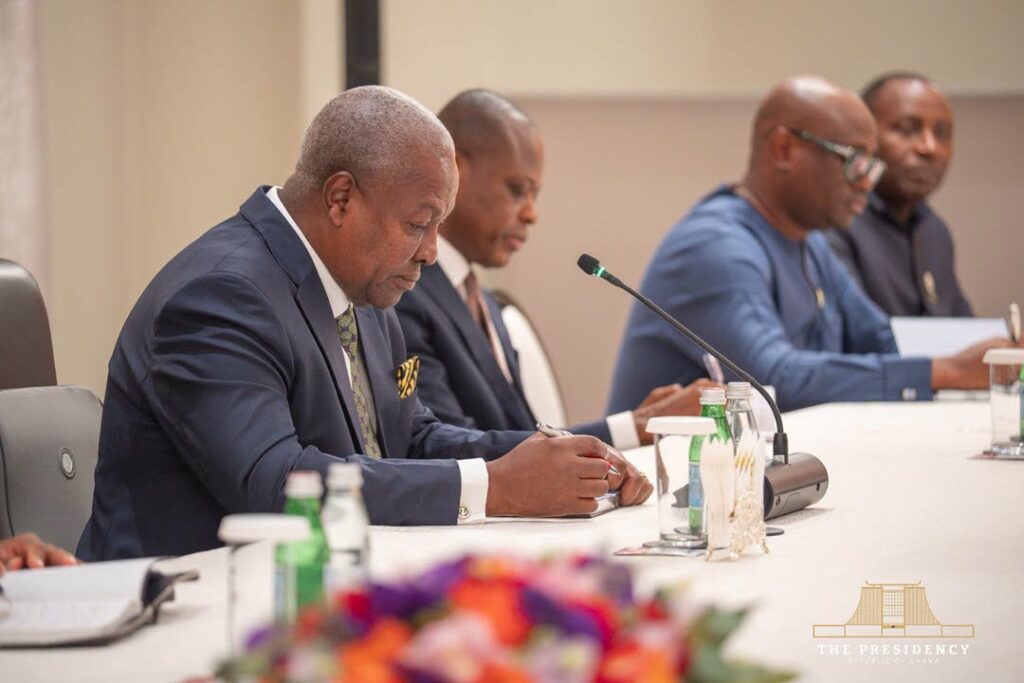
President Mahama takes these arguments into the African Union chairmanship in January, where he will be able to press them on behalf of 54 countries rather than one. Whether the institutions he is addressing treat the outflow figures as a description of their own system will determine how far the argument travels.