The United Nations Children’s Fund (UNICEF) has warned that hunger is affecting children in at least one in five households in Lebanon, as prolonged conflict, rising financial pressures and disruptions to essential services continue to deepen the crisis facing children and young people.
The warning, contained in UNICEF’s latest assessment of the situation, highlights the growing toll of violence and economic hardship on families nearly six months after a ceasefire agreement between Lebanon and Israel sought to end hostilities involving Lebanon-based Hezbollah fighters and the Israeli military.
UNICEF revealed that the pressures facing children extend far beyond food insecurity, with families struggling to afford healthcare and education while many children experience psychological distress linked to continued violence and uncertainty.
According to UNICEF Lebanon Representative Marcoluigi Corsi, “children and young people in Lebanon are being asked to bear a burden no child should have to carry.”
“Without urgent and sustained action, these pressures are shaping their lives for years to come,” he stressed.
The latest findings point to a crisis that is affecting multiple aspects of children’s lives at the same time.
According to UNICEF’s latest report, An Enduring Nightmare, around one in three families surveyed stated their children had missed necessary healthcare, with affordability identified as the main reason.
The economic strain is also pushing more children into work. Fourteen percent of households surveyed stated at least one child was working, more than twice the proportion recorded in January 2025.
The consequences are particularly severe because children are being affected simultaneously across health, education, protection and mental wellbeing.
Since 2 March 2026, at least 261 children have been killed and 1,056 injured, according to UNICEF, meaning an average of seven children have been killed or injured every day over the six months.
Around 12% of injured children are now estimated to be living with a disability.
The continuing violence has also damaged the infrastructure needed to maintain basic services.
UNICEF reported that 436 schools have been damaged or destroyed, putting around 100,000 children at risk of losing access to classrooms. A further 86 teachers have been killed or injured.
The situation is compounded by continuing military activity across parts of south Lebanon.
In its latest update on 23 September, the UN Office for the Coordination of Humanitarian Affairs (OCHA) reported continuing “air strikes, shelling, demolitions and military activity” across southern areas, alongside restricted humanitarian access and conditions that remain unsuitable for safe and sustainable returns.
These developments have complicated efforts to rebuild communities and restore normal life for children who have already experienced repeated disruption.
Conflict and Hardship Cut Children Off from Care
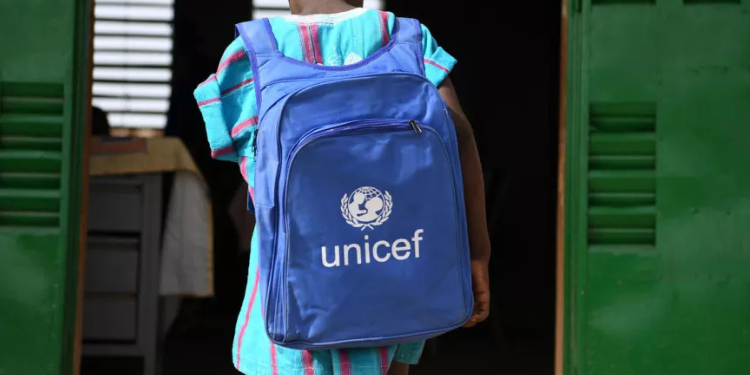
Moreover, UNICEF found that 46% of households had reduced spending on education, while 17% reported that their children had stopped attending school altogether.
Even among children who remain in education, the effects of the crisis are affecting their ability to learn. Some 29 per cent were unable to learn as expected, with difficulties concentrating and emotional distress identified among the contributing factors.
The disruption threatens to deepen inequalities among children, particularly those from families with fewer financial resources and those living in communities affected by displacement or continuing insecurity.
Earlier this year, a UNICEF assessment found that only 22% of people aged between 18 and 25 were attending school or university, largely because of financial barriers. At the time of the survey, 67% were unemployed.
Also, UNICEF estimates that 770,000 children have experienced psychological distress during the past six months. More than half of households surveyed reported a deterioration in their children’s emotional wellbeing, while 63% stated their children were anxious or nervous.
The figures underline the extent to which the conflict is affecting children even when they are not directly exposed to physical injury.
Fear, displacement, interrupted schooling, financial insecurity and uncertainty about the future can all affect children’s emotional development and ability to concentrate, learn and maintain social relationships.
UNICEF Lebanon Representative warned that the consequences could extend well into adulthood if the situation is not addressed.
“Without urgent and sustained action, an entire generation of children and young people risks carrying the scars of this crisis into adulthood. Lebanon’s recovery depends on protecting children now and upholding their right to health care, education, protection and the opportunities they need to build their futures.”
UNICEF has expanded its humanitarian response since January 2026, including treating injured children, delivering supplies to shelters and medical facilities, and supporting displaced families.
The agency is also working to sustain the national systems and services on which children depend, including those related to healthcare, education and child protection.
Yet the scale of the needs continues to place pressure on humanitarian operations, particularly in areas where insecurity restricts access.
The latest assessment therefore presents Lebanon’s crisis not only as a question of immediate humanitarian assistance but also as a longer-term challenge involving an entire generation of children and young people.
READ ALSO: Gideon Mensah Calls for Greater Responsibility in Ghana Shirt