The United Nations General Assembly has marked the 25th anniversary of the Durban Declaration and Programme of Action with renewed calls for stronger measures to confront racism, racial discrimination, xenophobia and the inequalities rooted in centuries of slavery, colonialism and other forms of oppression.
Adopted in Durban, South Africa, in 2001, the Durban Declaration remains one of the international community’s most comprehensive frameworks for addressing racism and related forms of intolerance.
Its anniversary has provided an opportunity for the United Nations to assess progress made since the landmark conference while drawing attention to persistent gaps between international commitments and action on the ground.
The commemoration has come amid continued concerns about racial discrimination and structural inequalities across societies.
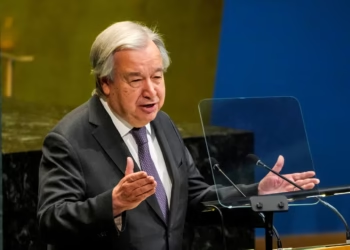
Khalilur Rahman, President of the General Assembly, recalled the significance of the 2001 gathering, when countries came together in Durban around the recognition that racism constitutes an assault on human dignity and that racial discrimination can entrench injustice and threaten peace.
The Declaration was adopted in South Africa, a country whose history of institutionalised racial discrimination and subsequent transition offered a powerful backdrop to the international gathering.
Rahman described South Africa as a “heroic nation” whose people demonstrated that institutionalised racism could be overcome.
The Durban process drew heavily on the historical experiences of communities affected by slavery, the transatlantic slave trade, colonialism and genocide. It sought to place those historical injustices within a broader international framework for addressing their continuing consequences.
Twenty-five years later, however, UN officials have warned that many of the structural problems identified in Durban remain unresolved.
The anniversary therefore carries significance beyond the commemoration of a historic international agreement. It has become an opportunity to examine whether governments have translated the commitments contained in the Declaration and its accompanying Programme of Action into laws, institutions and policies capable of reducing racial inequalities.
Rahman noted that the Durban framework calls for stronger legal protections, national action plans, education, disaggregated data, equal participation, access to justice and remedies, as well as international cooperation.
Yet implementation remains uneven.
He cited concerns from the Committee on the Elimination of Racial Discrimination, which reports that 78 of the 182 States parties to the relevant international convention are significantly behind with their reporting obligations, with some countries having fallen behind by decades.
“This is more than a reporting gap; it’s an accountability. We cannot remedy inequalities we refuse to examine; we cannot dismantle discrimination we fail to measure.”
Khalilur Rahman
Rahman called on States to develop national action plans, strengthen comprehensive legal frameworks, establish independent human rights institutions, provide effective remedies for victims and ensure meaningful participation by communities affected by discrimination.
The emphasis on implementation reflects the wider concern that international declarations can have limited impact when governments fail to establish mechanisms for monitoring progress or holding institutions accountable.
The Durban anniversary has also renewed attention to the historical roots of contemporary inequalities, particularly those affecting Africans and people of African descent.
UN Calls for Concrete Action Against Systemic Racism
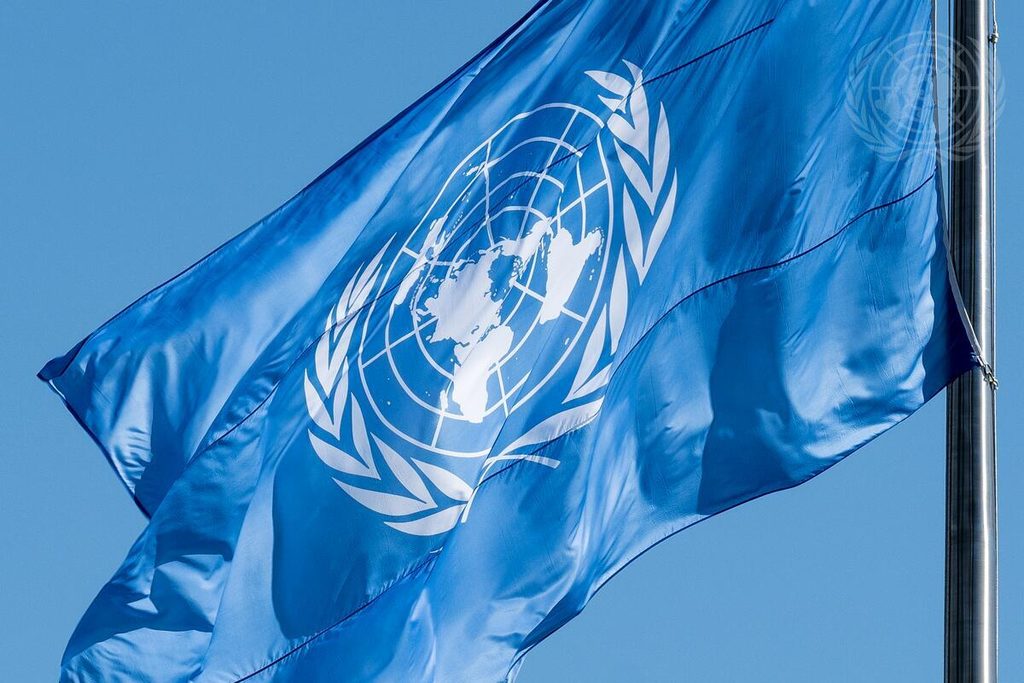
UN Secretary-General António Guterres used the anniversary to warn that racism remains deeply embedded in societies and continues to undermine fundamental rights and freedoms.
“As we see around the world, racism continues to poison societies, deepen inequalities, and deny people their fundamental rights and freedoms.”
António Guterres
The Secretary-General linked contemporary discrimination to the historical legacies of colonialism, enslavement and oppression, while noting that racism manifests through multiple social, economic and political structures.
He warned that discrimination is not confined to individual acts or explicit racial hostility but can also be reflected in laws, policies and institutions that produce unequal outcomes for people based on race, religion and colour.
“The antidote to these poisons is unity and tangible action,” Guterres stressed.
Moreover, he called on Governments to strengthen and effectively implement anti-discrimination and equality laws while dismantling systemic discrimination and investing in societies built around inclusion and equal opportunity.
Guterres also urged businesses to prevent both direct and indirect discrimination and called on technology companies to address bias within artificial intelligence systems.
The rapid expansion of AI and digital technologies has introduced a new dimension to the global debate over racial equality, particularly as algorithmic systems increasingly influence decisions affecting employment, access to services and other areas of daily life.
Guterres called for digital technologies to “advance equality, inclusion and digital justice, rather than undermine them.”
The anniversary has also placed reparatory justice at the centre of discussions about the legacy of slavery and colonialism.
Guterres called for the international community to confront the consequences of slavery, colonialism and racial discrimination through “concrete measures to deliver reparatory justice grounded in international human rights law.”
For Africans and people of African descent, the question of reparatory justice is closely linked to the broader effort to address inequalities created or reinforced by historical systems of exploitation.
Claudia Fuentes Julio, Assistant Secretary-General for Human Rights, speaking on behalf of the UN High Commissioner for Human Rights, warned that discrimination remains widespread globally.
She noted that nearly one in five people reported experiencing discrimination during the previous 12 months.
Fuentes Julio further stressed that the international community must move beyond reaffirming the principles contained in the Durban Declaration and translate them into action capable of producing tangible improvements in people’s lives.
READ ALSO: Macron, Pope Leo Urge Europe To Defend Unity And Democracy