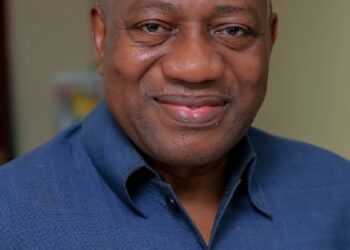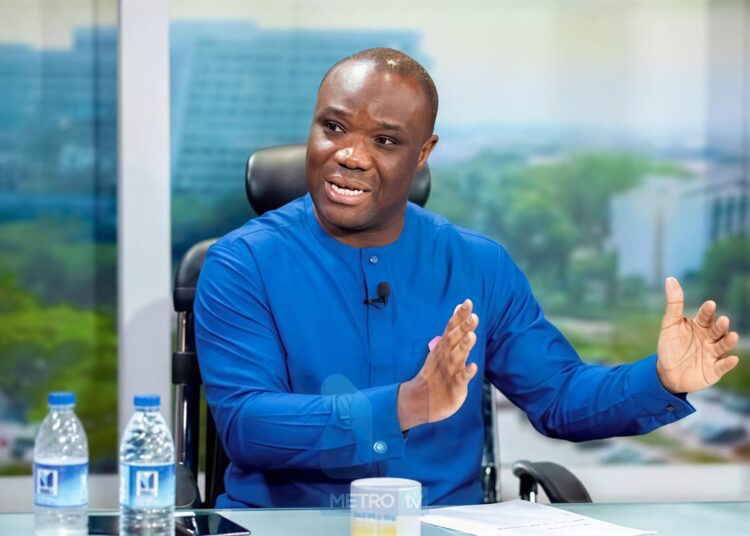
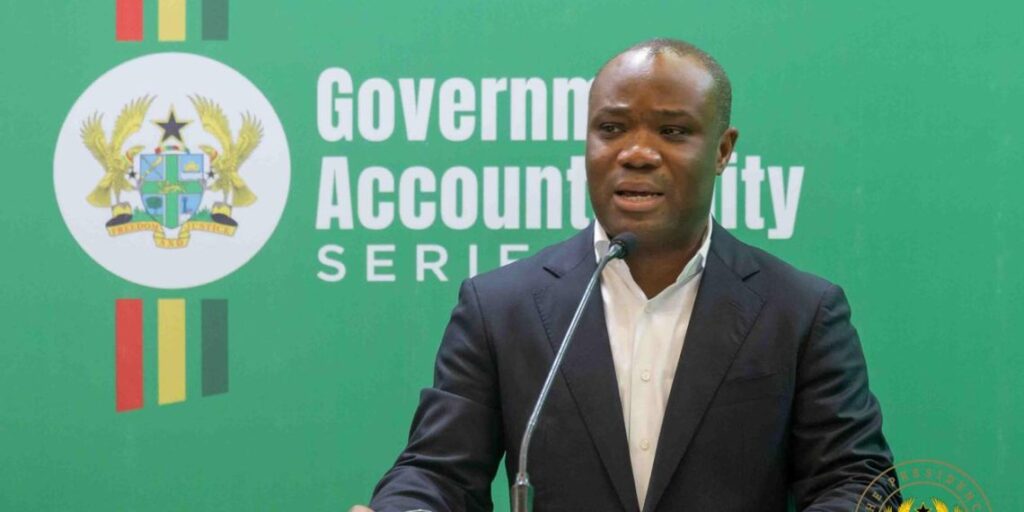
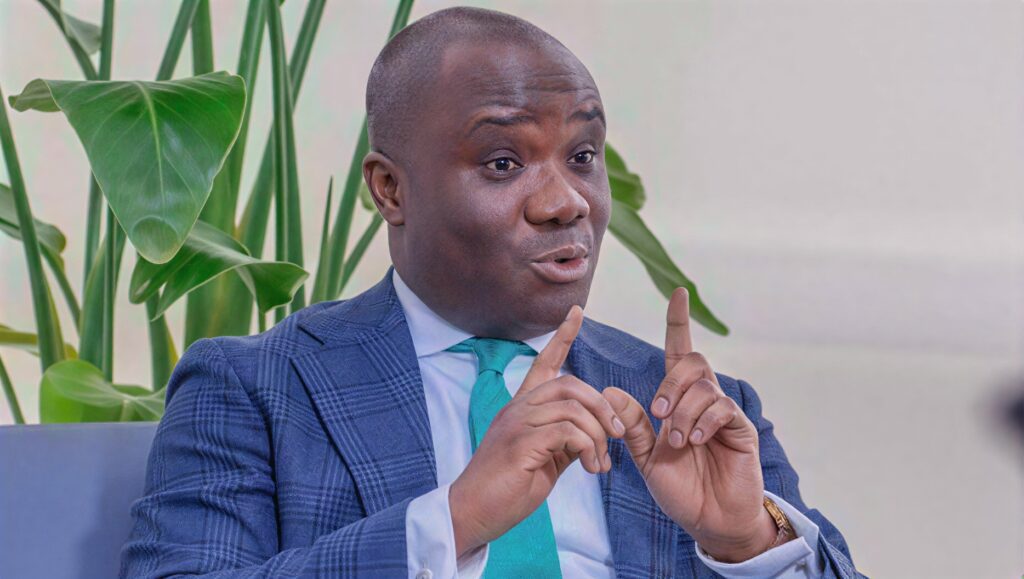
The Minister of State in charge of Government Communications, Honourable Felix Kwakye Ofosu, has rejected claims that government is using law enforcement to suppress freedom of expression. He explained that the government’s position is to protect the right to free speech while distinguishing lawful criticism from conduct that allegedly amounts to a criminal offence.
Addressing current issues, the Government Communications Minister argued that public criticism of government is permissible, including expressions that may be considered unpleasant or offensive. He noted that political discourse in Ghana has historically included strong language, meaning the mere use of harsh or irreverent expressions does not automatically constitute grounds for criminal prosecution.
Honourable Ofosu Kwakye, however, pointed to alleged threats against the President and his family as a separate matter requiring consideration under criminal law. He referenced statements attributed to Ghana Jollof, including alleged threats to poison the President and his children, as well as remarks concerning violence against the President and his wife.
“Except that a clear distinction must be drawn between speaking freely, letting people know what you think about any number of issues, and criminal behaviour. We are free to say whatever we want about government, and let me stress that unpleasant speech, irreverent commentary, even insults, regrettably, have been with us for as long as politics has been practised in Ghana.”
Honourable Felix Kwakye Ofosu
Directing attention to the legal threshold involved, the Minister of State explained that threats of death are recognised as an offence under Ghana’s Criminal Code. He indicated that the law addresses both the capacity to carry out such a threat and conduct intended to create fear in the person targeted.
Honourable Ofosu Kwakye further noted that law enforcement’s intervention in the case involving Salomey was based on an alleged connection to the person accused of making the threats. He explained that she was questioned and subsequently put before the court, leaving the judicial process to determine the appropriate course.

Meanwhile, the Government Communications Minister rejected the suggestion that such action automatically amounts to an attack on free expression. He argued that enforcement of criminal law against alleged threats should be distinguished from restrictions imposed simply because an individual has criticised or insulted those in government.
The Minister also drew attention to his own political career as an illustration of his position on free speech. He noted that he has publicly expressed strong views for decades and therefore would not support measures designed to prevent others from articulating their opinions.
Political Insults Have Long Shaped Ghana’s Discourse
The Minister of State in charge of Government Communications, Honourable Felix Kwakye Ofosu, also argued that abusive political language has been part of Ghana’s political discourse for decades. He therefore challenged attempts to present the current controversy surrounding offensive political commentary as an entirely new development.
The Government Communications Minister recalled several incidents involving prominent political figures to demonstrate the longstanding nature of inflammatory exchanges. He explained that media organisations had previously introduced measures to control abusive language because such conduct had become common during political discussions.
Honourable Ofosu Kwakye cited a programme as an example, recalling how the host introduced rules warning panellists that they would be removed from the studio if they used insulting language. He noted that the rules were subsequently enforced when prominent political figures breached them during separate editions of the programme.
The Minister of State further recalled other instances of offensive political commentary involving figures from the NPP and NDC. He acknowledged that both sides have engaged in such conduct, making the issue one that extends beyond a particular political party or period.
Furthermore, Honourable Ofosu Kwakye referred to documented instances of insults directed at His Excellency John Mahama and Her Excellency Lordina Mahama between 2013 and 2017. He noted that political opponents also faced personal attacks during that period, reinforcing his argument that partisan abuse has historical roots.
Directing attention to the current debate, the Government Communications Minister rejected attempts to explain recent offensive commentary solely through one political development. He argued that such an explanation overlooks earlier instances in which politicians and commentators used highly inflammatory language against opponents.
Meanwhile, Honourable Ofosu Kwakye stressed that recognising the historical pattern should not be interpreted as defending abusive speech. He expressly condemned offensive language while arguing that similar conduct should be assessed consistently regardless of the political affiliation of those involved.
Consequently, the Minister also disputed claims that abusive political commentary automatically determines how citizens vote.
READ ALSO: Hamza Obeng Confident Kotoko Will Bounce Back Against Karela United