The Advisor on Gender and Social Protection to the New Patriotic Party (NPP) flagbearer, Akosua Manu has questioned the treatment of Salomey Awiti Baffoe following her arrest and subsequent two-week remand in connection with the Ghana Jollof investigation. Ms. Manu argued that the circumstances surrounding the detention raise serious questions about whether the punishment being imposed before trial was proportionate to the allegations against her.
The Advisor drew attention to the sequence of events surrounding the arrest and the subsequent account presented by the Criminal Investigations Department (CID). She noted that the CID Director General, COP Lydia Yaako Donkor, indicated that Salomey was arrested on September 17 while other reports placed the beginning of her detention several days earlier.
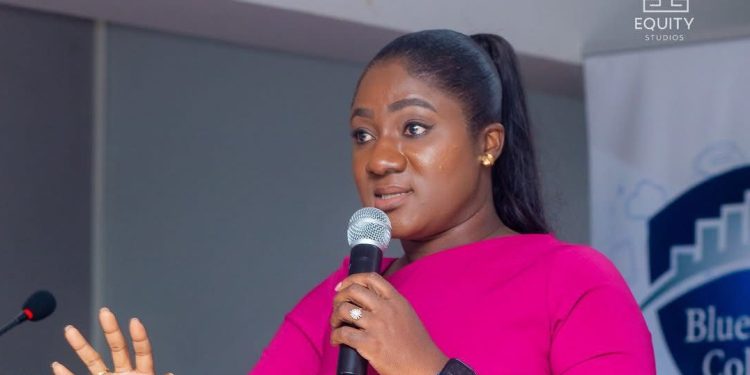
From her perspective, the timeline needs greater clarity because Ghana’s constitutional safeguards place limits on how long an arrested person can remain in custody without appearing before a court. The lawyer representing Salomey has separately argued that she was detained for several days before her arraignment and that the 48-hour constitutional requirement was breached.
“The injustice on women demands a lot of female lawyers to speak up, honestly. It is a shame and a blot on the conscience of this country for this to have happened.”
Akosua Manu
Ms. Manu also questioned the weight being attached to the alleged connection between Salomey and the operator of the Ghana Jollof account. Police have disclosed that investigations identified interactions and money transfers between the two women and have alleged that Salomey assisted in redistributing content.
Analysing the claim, the Advisor argued that communication or financial interaction alone should be examined within its full context before it is treated as proof of criminal participation. She illustrated her point with the example of an ordinary personal donation that could later be misinterpreted if the recipient became associated with controversial online activity.
The comparison is intended to highlight the need for investigators to establish the precise conduct that forms the basis of an offence. Ms. Manu therefore questioned whether keeping Salomey in custody for two weeks was necessary when investigators have already secured her phone and were examining alleged links.
According to her, continuous detention could create the impression that an accused person is being punished before the court determines the allegations. The Adenta Circuit Court 1 denied Salomey bail after she pleaded not guilty to a charge of abetment of crime relating to the alleged publication and circulation of false news.
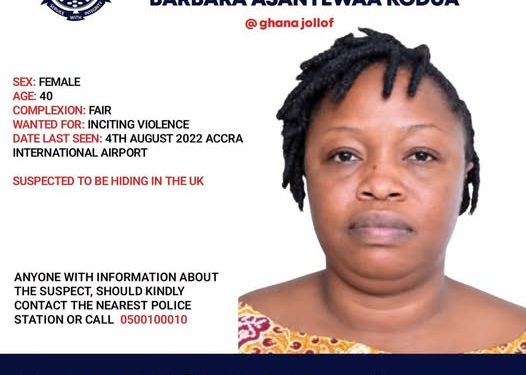
The Advisor further questioned the circumstances under which Salomey was taken from her home in Techiman. Reports from her family indicated that she was taken away at about 11:30pm on September 13 and that relatives initially struggled to establish where she had been taken.
For Ms. Manu, the treatment of a woman who is also a mother requires particular sensitivity from state institutions. She argued that the manner of an arrest should preserve the dignity of the individual while allowing investigators to perform their statutory duties.
Ghana Jollof Case Deepens Debate Over Free Speech And Arrests
The debate surrounding the Ghana Jollof case has widened into questions about the limits of free speech and the treatment of people accused of facilitating controversial online content. The Advisor on Gender and Social Protection to the NPP flagbearer, Akosua Manu argued that the Salomey case should be viewed through the wider principle of protecting individual freedoms within the law.
Ms. Manu distinguished between unlawful conduct online and ordinary interaction with people who operate social media platforms. She acknowledged that freedom of expression can have limits while arguing that those limits should be applied through established legal standards and evidence specific to the alleged offence.
Addressing the wider implications, the Advisor cautioned that treating ordinary communication as sufficient grounds for punitive action could create an uncomfortable precedent. She questioned whether someone who shared or interacted with controversial content could later face consequences solely because the person behind that content became a subject of a criminal investigation.
“Certainly not. Because then you are literally dismantling the very tenet of democracy, which is free speech.”
Akosua Manu

The argument places particular emphasis on the distinction between association and criminal responsibility. Ms. Manu suggested that investigators should establish the conduct that allegedly constitutes an offence and demonstrate how the accused person participated in it.
Meanwhile, the police investigation is continuing beyond the individuals already identified in the case. The CID has indicated that investigators are working to trace other people suspected of redistributing the material and persons alleged to have provided financial support.
The police have also reminded social media users that activity on digital platforms remains subject to Ghana’s criminal laws. Investigators have indicated that forensic records, mobile phone data and financial information gathered during the inquiry will be relied on as the case progresses.
READ ALSO: Mahama Pitches Resetting Ghana Agenda to Global Leaders In New York