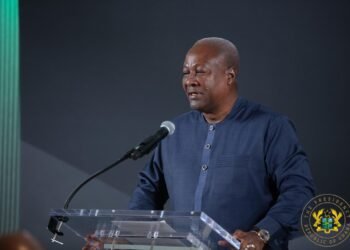
President John Dramani Mahama has presented his government’s Resetting Ghana agenda to world leaders as proof that the Global South’s demand for control over its own development must be matched by accountability at home.
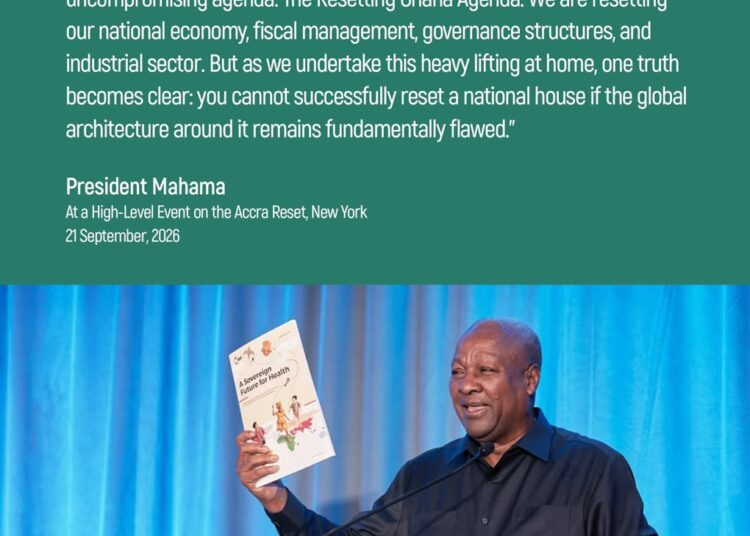
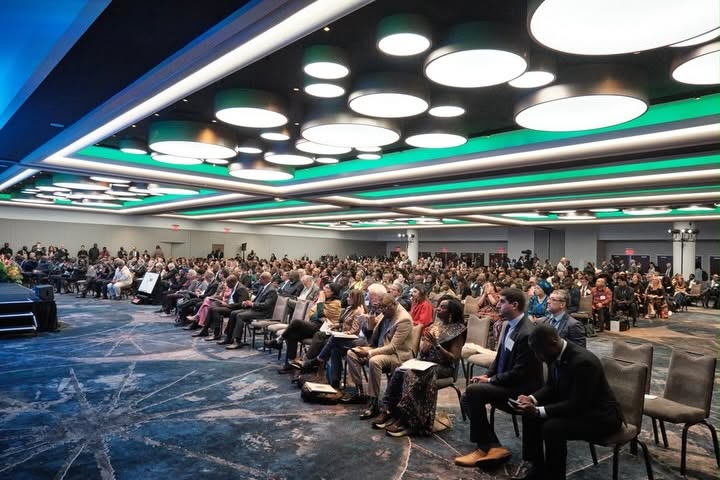
He made the case on Monday, 21 September 2026, at a high-level Accra Reset event in New York on the sidelines of the 81st United Nations General Assembly.
The President framed domestic reform and global reform as mutually dependent, and held up Ghana’s own programme as the model for the discipline Southern governments must show. In doing so, he set a public standard against which his government’s fiscal record at home will now be judged.
The Four Fronts Of The Reset
President Mahama told the gathering he had laid a clear and uncompromising agenda before Ghanaians, and set out its scope in a single sequence. “We’re resetting our national economy. We’re resetting our fiscal management, our governance structures, and our industrial sector.“
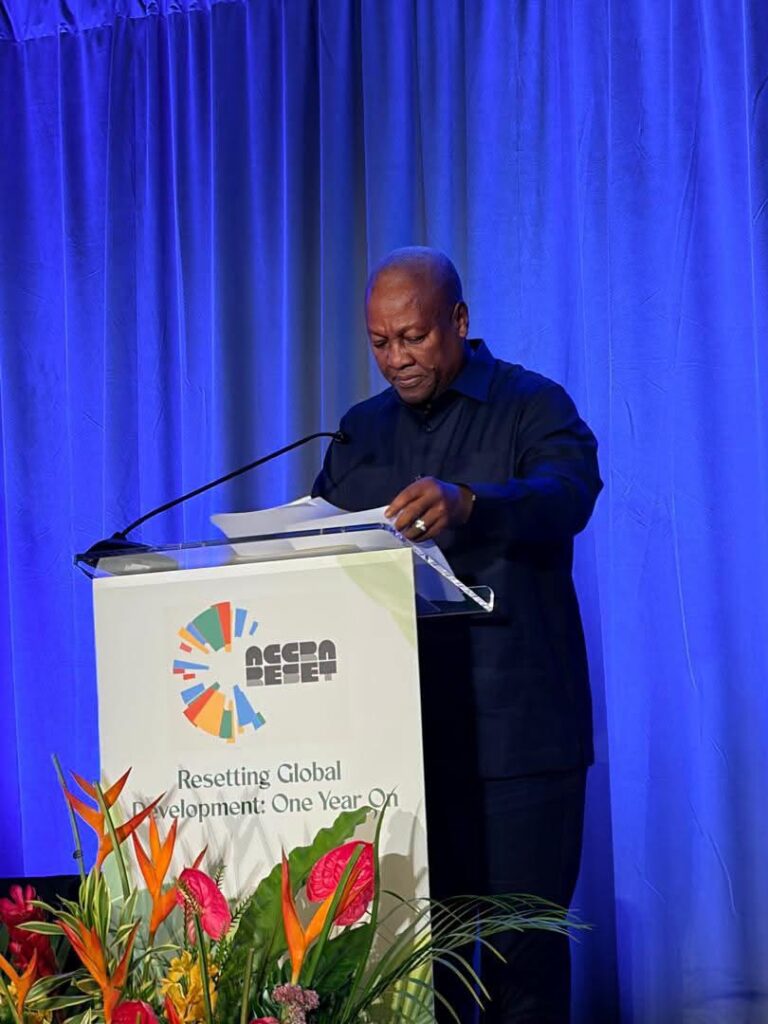
He described the agenda as resting on economic self-reliance, local value addition, strong public health infrastructure, transparent governance, and the 24-hour economy initiative, one of his administration’s flagship policies.
Those priorities, he said, mirror the objectives of the Accra Reset, making the domestic programme a working model of what the international initiative asks of other countries.
The framing presents the Resetting Ghana agenda as more than a campaign slogan carried into government. On the New York stage, it became evidence that Ghana practises the reforms it preaches.
Heavy Lifting At Home
The President was candid that the domestic work alone would not be enough. “But as we undertake this heavy lifting at home, one truth becomes clear. You cannot successfully reset at home if the global architecture around it remains fundamentally flawed.”
That argument draws on the three burdens the Accra Reset identified at its launch a year ago: marginalisation in the rooms where global rules are written, vulnerability to decisions taken far away that can undo national plans overnight, and dependence on donor funding for essential services.
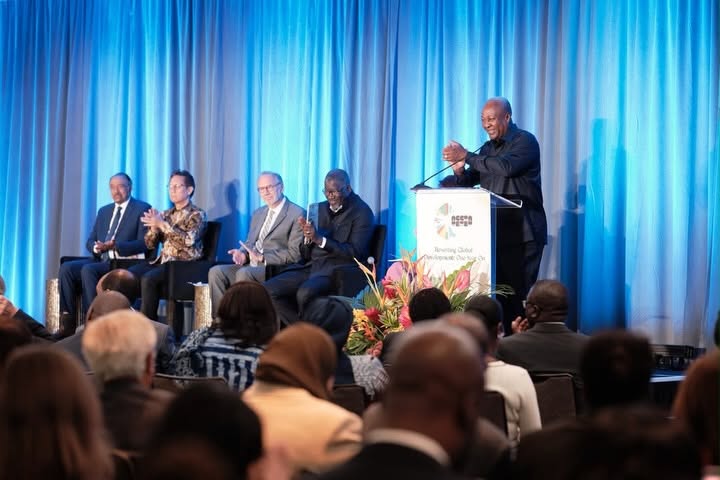
He put the last of these in pointed terms. “We refuse to accept that our people’s health, dignity, and future should remain perpetually tied to the shifting political winds of donor magnanimity.”
Accountability Down To The Last Pesewa
The sharpest passage on the domestic agenda concerned public money. President Mahama said his government is tightening fiscal controls, fighting corruption and ensuring that public funds are accounted for down to the last pesewa.
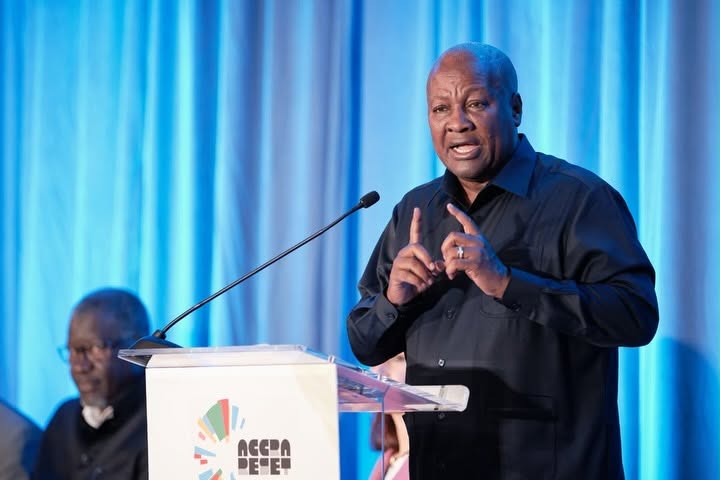
He placed that commitment at the centre of the Accra Reset’s argument about sovereignty. “No ownership without control, yes, but no control without absolute accountability to our people.”
The line cuts in two directions. It tells donors that Southern governments deserve authority over their own development, and it tells those same governments that the authority must be earned through transparent use of public resources. By setting that test, President Mahama invites scrutiny of Ghana’s own fiscal record against the standard he has announced.
Two Sides Of The Same Coin
The President rejected the idea that global reform could substitute for discipline at home. “Likewise, a global reset without domestic discipline is unfeasible. They are two sides of the same coin.”
The message was aimed as much at fellow leaders in the Global South as at donor governments, warning that demands for a fairer global order carry little weight from countries unable to manage their own finances. For Ghana, which is emerging from a painful debt restructuring, that warning also reads as a statement about its own recent history.
The Reset Beyond The Rhetoric
The New York remarks echo themes President Mahama has pressed at home in recent days. At the launch of the Agbogbloshie waste evacuation in Accra on 18 September, he cited the Reset Agenda to justify deploying equipment already bought with public money, insisting that every public asset must serve a purpose and every cedi must deliver value.
On Founder’s Day, marked the same day as the New York event, he urged Ghanaians to draw strength from Kwame Nkrumah’s vision and contribute to attaining the Resetting Ghana agenda, presenting it as the continuation of the struggle for economic freedom.
The consistency of that message gives the agenda a recognisable identity abroad. Its credibility, however, will rest on outcomes that can be measured at home, from fiscal performance and audited accounts to corruption cases that reach conclusion.
Having told the world that control must be matched by absolute accountability, the government has handed its critics the yardstick by which the Resetting Ghana agenda will be judged.
READ ALSO: Mahama Backs Local Medicine Manufacturing To Cut Maternal Mortality In Ghana