President John Dramani Mahama says the Accra Reset is moving from design to execution, with Ghana set to turn the initiative’s recommendations into compacts at country level over the coming months.
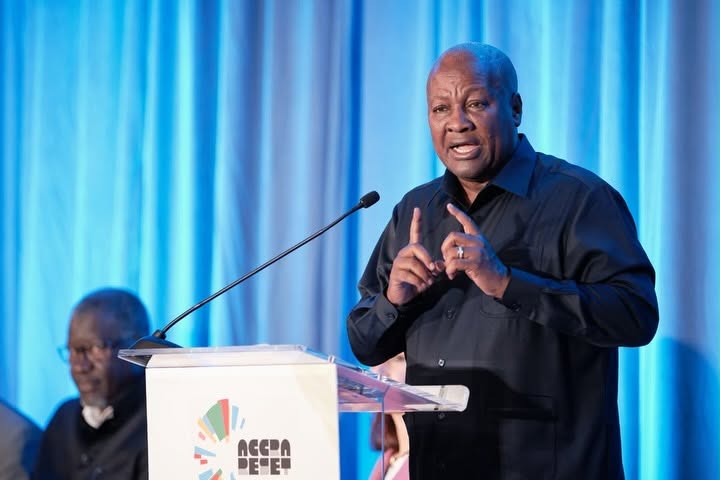
He announced the shift on Monday, 21 September 2026, at a high-level event in New York marking one year since the initiative’s launch, on the sidelines of the 81st United Nations General Assembly.
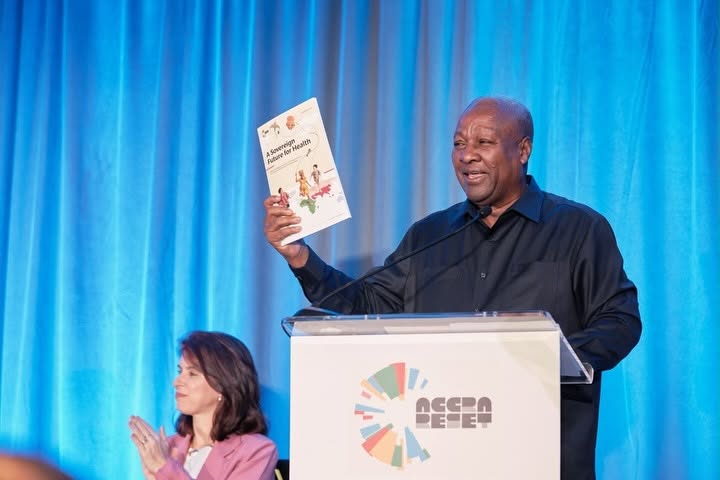
The transition follows a year spent building the initiative’s machinery, including a Presidential Council, a Guardians’ Circle and a High-Level Panel whose health report he launched at the same gathering. He also pledged to carry the agenda into the African Union’s policy framework when Ghana assumes the chair of the continental body in January 2027.
President Mahama was blunt about the initiative’s risks. “Too often, visionary ideas are born with great fanfare only to die quietly in New York’s diplomatic corridors. We will not let that happen to the Accra Reset,” he said.
Over the coming months, he said, Ghana will work with the initiative’s Presidential Council to convene governments, global health bodies, development finance institutions, philanthropies and the private sector.
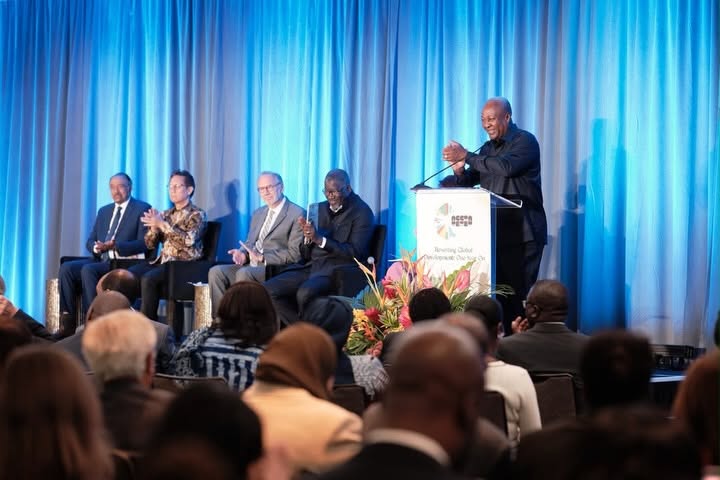
The aim is to translate the recommendations of the newly launched health report into compacts at country level, turning a policy document into commitments that can be measured.
The machinery for that work was built over the past year, when Ghana established the Presidential Council, the Guardians’ Circle and a High-Level Panel on the reform of global health governance.
A Crowd Twice The Size Expected
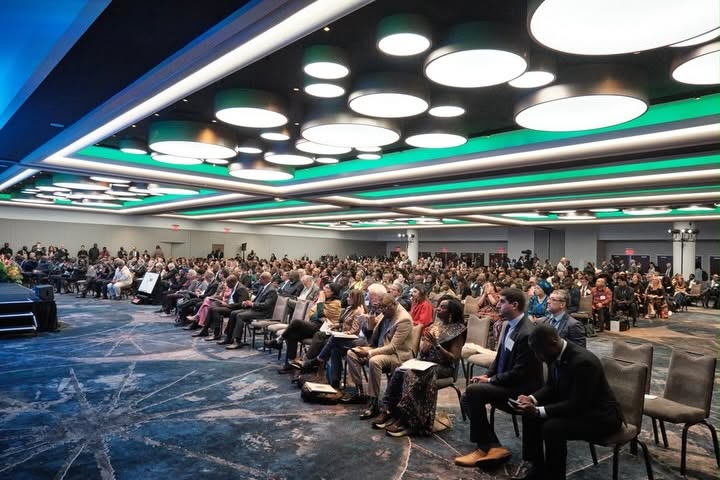
The President opened his remarks by noting the scale of the gathering. Organisers had expected about 350 participants, he said, but more than 600 attended, a sharp increase on the smaller audience at last year’s launch.
He read the turnout as a sign that the initiative is gaining momentum, though attendance at a UNGA side event remains a modest measure of whether a reform agenda will change how money and authority move through the global health system.
President Mahama extended an invitation to strategic partners across the developing world, naming Brazil’s Oswaldo Cruz Foundation, leading institutions in India and Indonesia, the Gulf states and countries across Africa.
The objective, he said, is to build self-sustaining networks that link research, regulatory oversight, local manufacturing and reliable distribution. He also welcomed participants from the Global North, including France, Spain and the United Kingdom, alongside representatives of the G77, the Organisation for Economic Co-operation and Development and the Commonwealth.
The President reserved particular thanks for former British Prime Minister Gordon Brown, who has agreed to take on the task of mobilising global political leadership around what the initiative calls a new global bargain.
Prime Minister Brown’s involvement gives the effort a senior voice in Northern capitals, where much of the resistance to transferring control is likely to sit.
Reform Cannot Wait For Calm
President Mahama rejected the argument that structural reform should be deferred until geopolitical tensions ease. Periods of crisis, he argued, are exactly when new paradigms are forged. “Many a time out of chaos are born new ideas and partnerships,” he said.
The timing argument matters for an initiative born in a period of shrinking aid budgets and strained multilateral institutions, conditions that have weakened the old model without yet producing a replacement.
Health is only the starting point. President Mahama said the wider ambition of the reset is a new global order that is fair to all, one in which nations big and small have an equal seat at the table, which places the initiative in a longer contest over the governance of trade and finance.
Taking The Agenda To The African Union
The AU chairmanship gives the initiative its most significant institutional platform yet. President Mahama said Ghana would work alongside the Non-Aligned Movement and the G77 in carrying the agenda forward, broadening its base beyond Africa.
Holding the rotating chair would allow Ghana to set priorities for continental summits and shape the AU’s engagement with global health bodies and development partners through 2027.
He closed his remarks by reflecting on the year since the launch. “We’ve come full circle. But let us not go around in circles.” That line captures the challenge now facing the initiative. A year of convening has produced a council, a panel, a report and a larger crowd.
The next twelve months, culminating in Ghana’s term at the head of the African Union, will show whether those structures can deliver compacts that shift real authority and resources, or whether the Accra Reset joins the long list of well-received agendas that never left New York.
READ ALSO: UK Agrees to Provide Military Support to Saudi Arabia