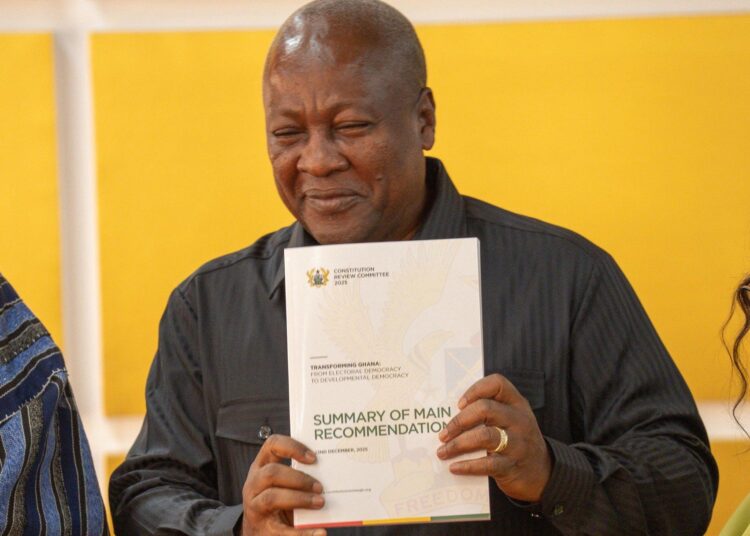
Ghana’s third attempt at comprehensive constitutional reform begins under better conditions than its two failed predecessors, according to the Ghana Center for Democratic Development (CDD-Ghana).
The think tank set out its assessment in the October 2026 edition of its Democracy Watch newsletter, which reviews the work of the Constitution Review Committee (CRC).
CDD-Ghana credits the Committee’s standing, the NDC’s parliamentary supermajority and the President’s pledge to implement the proposals. It warns, however, that success depends on a bipartisan process, early reforms that restrain executive power, and sustained public pressure.
“…the reforms that most constrain executive power must be implemented first to demonstrate that the government’s commitment to reform is genuine rather than self-serving”
No. 41 Democracy Watch, CDD-Ghana
A Third Attempt After Two Stalled Efforts
The eight-member CRC was chaired by Henry Kwasi Prempeh, Executive Director of CDD-Ghana. President John Dramani Mahama set up the Committee in January 2025, and on December 22, 2025, it submitted a summary report titled “Transforming Ghana: From Electoral Democracy to Developmental Democracy.”
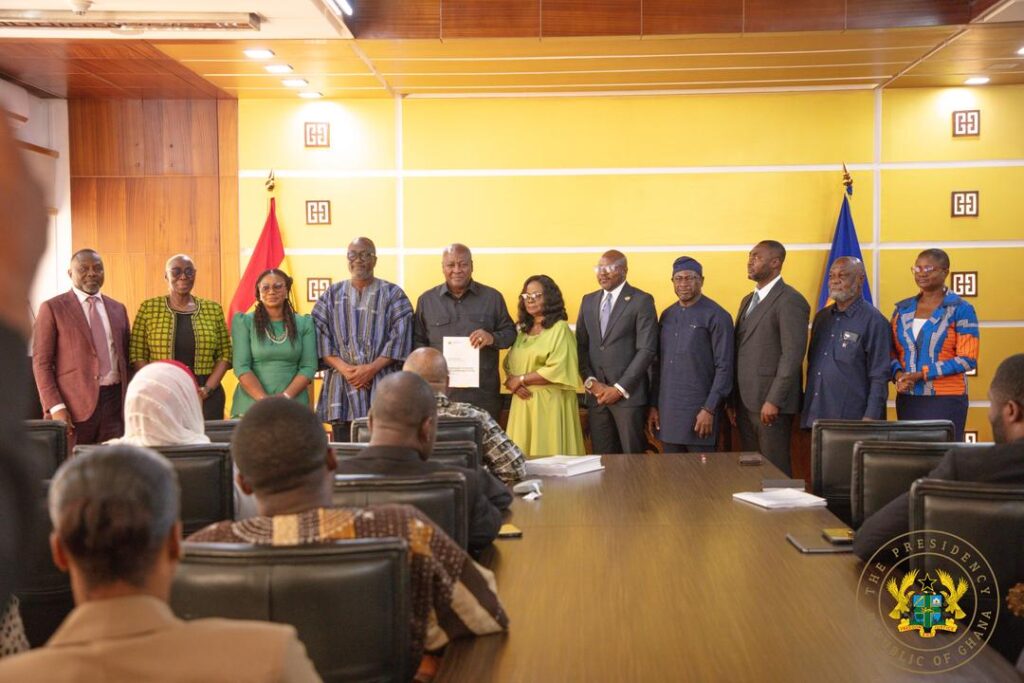
The document followed nearly a year of nationwide consultations and marks the most comprehensive review of the constitutional architecture since the process of 2010 to 2011.
President Mahama called the report a “beautiful Christmas gift” and declared that “as soon as we resume early next year, we are moving from the constitutional review process into the implementation process.”
Two earlier efforts collapsed. The first, begun under the late President Mills in 2010, produced a thorough report but stalled after his death and President Mahama’s 2012 election victory. The second, a proposed amendment under President Akufo-Addo, was narrowly focused and ultimately abandoned.
Why Conditions Look Better This Time
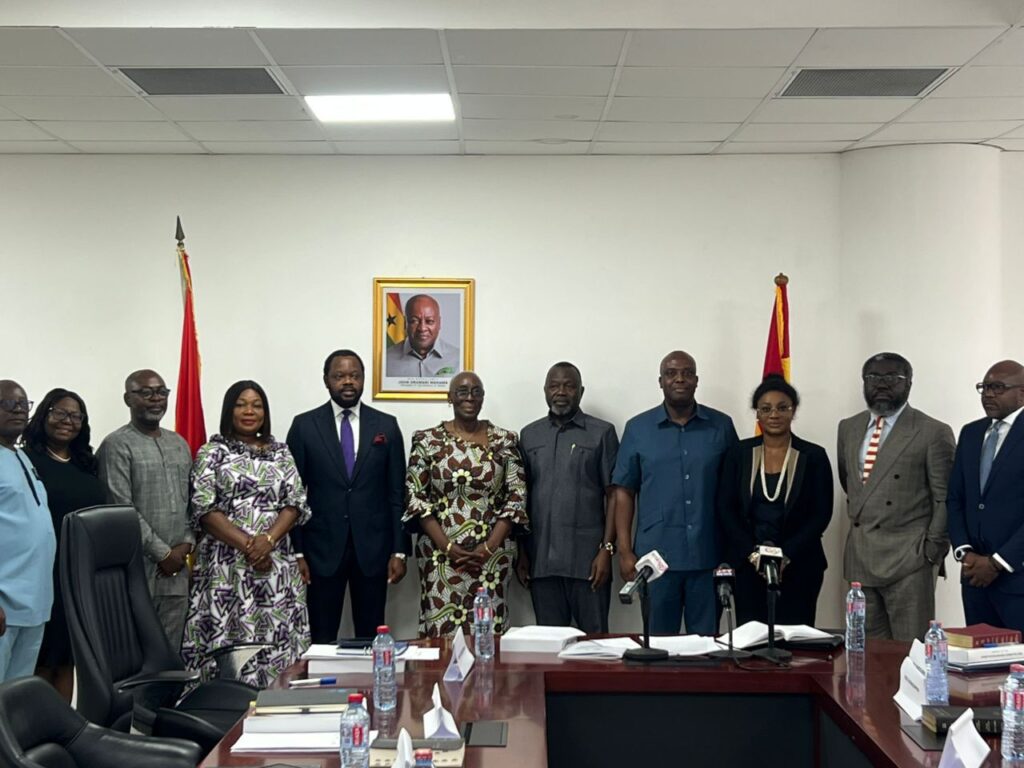
CDD-Ghana points to three advantages. The Committee’s composition and its chairman’s standing give the review credibility and nonpartisan weight. The NDC holds a parliamentary supermajority large enough to pass constitutional amendments.
The President has also publicly committed to implementation. An Implementation Committee has since begun work and targets a November timeline. The think tank describes the review as more than a technical legal exercise.
In its reading, the process renegotiates the balance among state power, democratic accountability and citizen participation, at a time when worries about executive dominance, weak local governance and the monetisation of politics keep growing.
Recommendations on the Table
The CRC proposes extending the presidential term from four to five years, electing Metropolitan, Municipal and District Chief Executives, and bringing traditional authorities into local government structures. It also wants a cap on the number of ministers and an end to the hybrid system that lets MPs serve as ministers.
Further proposals would expand the Council of State’s vetting role in presidential appointments and split the Commission on Human Rights and Administrative Justice (CHRAJ) in two.
One body would handle human rights and ombudsman functions, while the other would merge with the Office of the Special Prosecutor to form an anti-corruption and ethics body. Electoral Commission chairpersons and deputies would serve a single ten-year term that cannot be renewed.
CDD-Ghana singles out the ministerial and independent bodies proposals for approval, noting that they tackle the concentration of authority in the presidency that has shaped Ghanaian politics since 1992.
The government has since published its position on the recommendations, and civil society groups have backed 16 government proposals while opposing the five-year term and 15 other positions.

Term Extension Draws Suspicion
CDD-Ghana accepts the CRC’s argument that four years is too short for effective governance and development planning. The political reaction has been less kind. Some suspect the change, combined with ambiguity about its start date, could extend President Mahama’s current term.
Professor Prempeh has answered the charge directly. He explained that the extension cannot apply to President Mahama, because constitutional amendments cannot retroactively alter the conditions under which a sitting president was elected, and President Mahama won under the four-year framework.
The Committee has also ruled out any change to the two-term limit after finding no public or political demand for a third term. CDD-Ghana takes these assurances seriously but notes that Professor Prempeh’s dual role as CRC chairman and its own Executive Director is a fact readers should weigh.
Three Conditions for Success
CDD-Ghana names three conditions that its predecessors failed to meet. The first is a genuinely bipartisan process, because amendments seen as crafted for the NDC’s benefit will lack the legitimacy for durable change. It welcomes the Committee’s engagement with the NPP and urges that the opposition be given a real voice in drafting amendment bills.
The second is sequencing. The think tank wants the reforms that most constrain executive power implemented first. The real test, it argues, is whether an NDC-dominated Parliament will limit ministerial appointments from its own ranks and accept the Electoral Commission terms, which would bind future NDC governments as much as NPP ones.
The third is public engagement. Prof. Prempeh stressed this at the launch of the process. “It takes sustained public interest and pressure.”
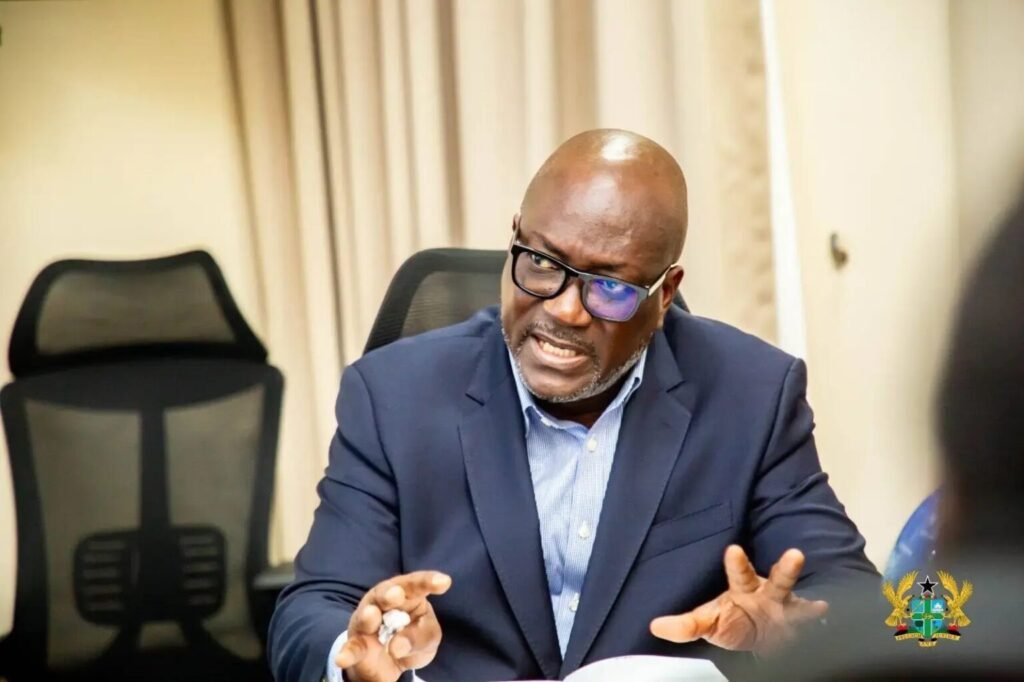
Parliamentarians, he added, “don’t represent themselves; they represent us,” and he believes a political response will follow as long as Ghanaians stay involved. CDD-Ghana expects civic education, open consultation and bipartisan negotiation to protect public confidence.
It has committed to staying engaged, reporting honestly on progress and calling out both advances and backsliding as they occur.
READ ALSO: Oil Nears $110, Putting Ghana’s Fuel Relief at Risk